

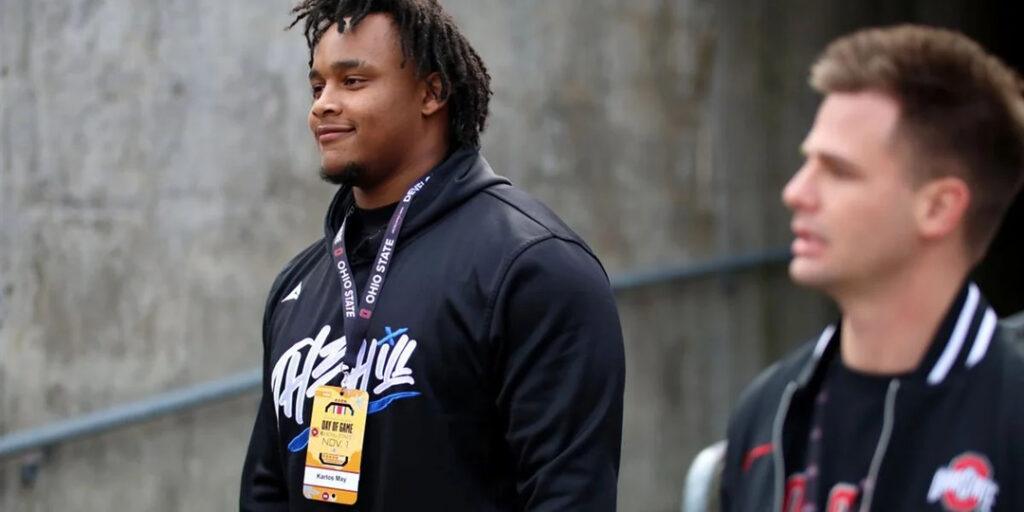
Karlos May FSU visit is exactly the kind of late-spring recruiting development Florida State needs, because defensive line recruiting does not wait politely for a program to settle its broader questions. A four-star trench prospect scheduling an official visit to Tallahassee gives Mike Norvell’s staff a real chance to change the tone of the 2027 cycle, but only if the Seminoles treat the weekend like a priority moment rather than another name on the calendar.
Why The Karlos May FSU Visit Matters
The latest Karlos May FSU visit gives Florida State something tangible in a recruiting cycle that needs defensive line momentum. May, a four-star defensive lineman from Ramsay High School in Birmingham, Alabama, has finalized an official visit to Florida State for May 29-31. That matters because the Seminoles are not casually involved. They are positioned early in a high-profile recruitment that also includes Georgia, Auburn, Ohio State, and Ole Miss.
That top group tells the story. This is not a regional depth target or a late-board evaluation. May is the kind of interior defensive line prospect who attracts national competition because his size, movement ability, and positional value translate cleanly to major college football. Florida State getting the first official visit window gives the staff a chance to set the emotional and football standard before several heavyweights get their turn.
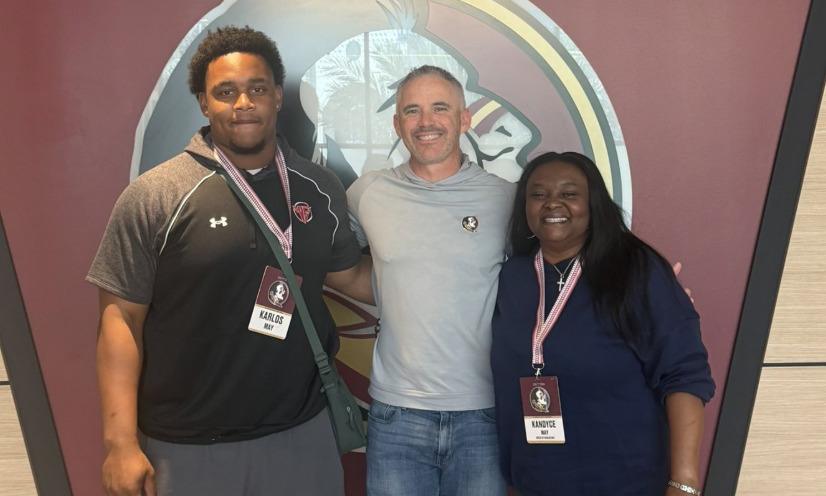
The value of that first impression should not be overstated, but it should not be minimized either. Official visits are not just campus tours. They are relationship audits. They test whether a staff’s long-term messaging matches the in-person experience. They reveal whether the player can see himself in the locker room, in the scheme, in the academic environment, and in the larger life of the program. For Florida State, this is a priority visit.
May’s recruitment also arrives at a moment when the Seminoles need to keep proving that their defensive front plan is more than theoretical. Fans can debate quarterbacks, schedules, and bowl projections, but defensive line recruiting often tells the deeper truth about a program’s direction. Elite teams stack bodies up front before the need becomes desperate.
Defensive Line Recruiting Is A Program Health Check
I tend to judge major programs by how they recruit the line of scrimmage. Skill talent creates headlines, but defensive line talent creates the weekly floor. If a team can pressure the quarterback, hold up against the run, rotate bodies, and survive injuries without collapsing, it has a foundation. If it cannot, every defensive plan becomes fragile.
That is why May’s visit matters beyond one commitment chase. Florida State needs depth and quality in the trenches, especially as roster movement makes long-range planning harder. The transfer portal can help patch a need, but programs that rely too heavily on short-term fixes eventually pay a price. High school defensive line recruiting remains essential because it gives a staff time to develop strength, technique, leverage, and positional versatility.
May represents that kind of long-term investment. At roughly 6-foot-3.5 and over 300 pounds, he already has the body type that makes defensive coaches pay attention. His junior-season production added substance to the frame, with disruptive plays that suggest he is more than a space-eater. Interior defenders who can affect the pocket carry premium value because they compress everything an offense wants to do.
Florida State cannot build a serious defensive identity without players like that. The Seminoles need linemen who can win early downs, create third-and-long situations, and reduce the burden on linebackers and defensive backs. That requires power, but it also requires discipline. The best defensive tackles do not simply charge forward. They understand blocks, angles, timing, and responsibility.
That developmental pitch should be central when May arrives. Florida State needs to show him not just that it wants him, but that it knows exactly what he can become.
The First Official Visit Window Is A Real Advantage
Recruiting is a sequence. The order of visits can matter because every school is trying to frame the recruit’s expectations. Florida State getting May on campus before Georgia, Auburn, and Ohio State gives the Seminoles a clean first shot to define the race.
That advantage carries pressure. A first official visit can become the emotional benchmark. It can also be forgotten if the experience feels ordinary. Florida State has to make the weekend specific, personal, and detailed. A blue-chip lineman does not need generic enthusiasm. He needs a clear explanation of role, development, culture, NIL environment, academic support, and competitive opportunity.
The staff should make Terrance Knighton’s voice central. Defensive line recruits want to know who will coach them every day. They want to know how corrections are delivered, how film is taught, and how strength development is integrated into football technique. Knighton’s ability to connect with May could be one of the most important pieces of the weekend.
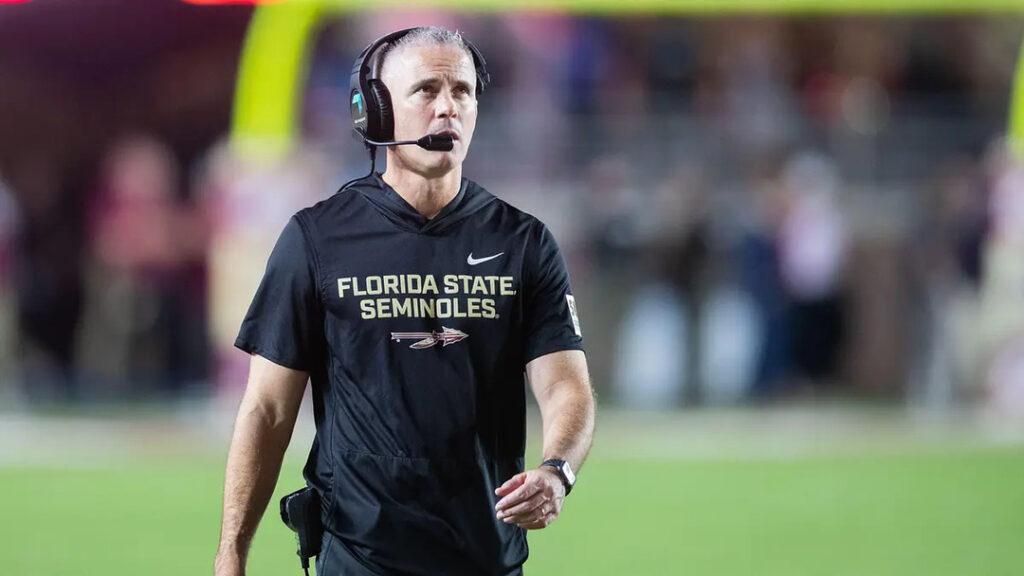
Mike Norvell’s role is different but just as important. The head coach has to connect the individual recruitment to the broader program vision. What does Florida State want its defense to be in 2027 and beyond? How does May fit into that picture? Why is he being prioritized now? Those answers shape trust.
A strong visit will not guarantee a commitment, especially with that finalist list. Georgia can sell defensive line tradition. Auburn can sell proximity and SEC intensity. Ohio State can sell national visibility. Ole Miss can sell tempo, opportunity, and momentum. Florida State has to sell its own case with clarity, not imitation.
The Competition Makes This Recruitment More Revealing
May’s top five is exactly why this recruitment is worth watching. Georgia, Auburn, Ohio State, and Ole Miss all bring credible football arguments. Nobody in that group is there by accident. If Florida State wins, it would be a legitimate recruiting statement. If it loses, the response still matters because the staff has to show it can stay competitive for elite trench players.
Georgia is the obvious measuring stick because of its defensive front reputation. The Bulldogs have built much of their modern identity on line-of-scrimmage dominance. Defensive linemen notice that. They also notice draft development, rotation patterns, and the way elite defenders are used in high-leverage games.
Auburn brings regional pressure. For an Alabama prospect, Auburn’s pull is real even when another program has early momentum. Ole Miss has become a dangerous recruiting factor because it can offer offensive visibility, SEC exposure, and a modern player-friendly pitch. Ohio State adds national scale, playoff relevance, and a powerful brand.
Florida State does not need to pretend those challenges are small. The staff needs to confront them directly by presenting a superior fit. That means showing May where he would line up, how he would be developed, what his early opportunity might look like, and why Tallahassee offers the right combination of growth and visibility.
The Seminoles should also lean into the culture of defensive pride. Florida State’s best teams have always had edge, speed, and violent defensive identity. Recruits do not need a history lecture, but they do need to feel that the program’s defensive standard is alive rather than archived.
Karlos May At A Glance
| Category | Detail |
|---|---|
| Player | Karlos May |
| Position | Defensive line |
| High school | Ramsay High School |
| Hometown | Birmingham, Alabama |
| Class | 2027 |
| Listed size | Around 6-foot-3.5, 305 pounds |
| Final group | Florida State, Georgia, Auburn, Ohio State, Ole Miss |
| FSU official visit | May 29-31 |
| Recruiting significance | Blue-chip trench target with national competition |
| Key FSU recruiter | Defensive line coach Terrance Knighton |
The table makes the stakes plain. This is a high-value position, a national finalist list, and a visit window that gives Florida State a chance to create momentum before the recruitment enters its June stretch.
Florida State Needs Defensive Line Answers For More Than 2027
Recruiting May is about the future, but it also reflects current roster reality. Defensive line depth is never a one-cycle problem. It is a pipeline issue. Teams that wait until they need linemen usually end up overpaying in the portal or forcing young players into roles before they are ready.
Florida State has to think two years ahead. By the time May would arrive, the Seminoles’ current defensive line room will have changed significantly. Older players will move on. Portal movement will reshape the depth chart. Injuries and development curves will create unexpected needs. A staff that recruits well now gives itself options later.
That is why the 2027 defensive line board matters. It is not just about collecting stars. It is about building a room with different body types and roles. A championship-level defensive front needs nose tackles, penetrators, strong-side bodies, pass-rush versatility, and developmental prospects who can grow into specialized roles.
May’s profile is attractive because he can be sold as more than a rotational piece. His size suggests interior value, while his production hints at disruptive upside. The public version of his recruitment also points to a player who is being treated like a major target by programs that understand defensive line value.
The Seminoles need that kind of evidence on the trail. Recruiting rankings are imperfect, but the schools pursuing a player often reveal how the industry views him. When multiple major programs converge on one defensive lineman, the evaluation carries more weight.
The Visit Has To Feel Personal
Too many official visits can start to feel similar. Great meal. Nice facilities. Jersey photo. Coach meeting. Player host. Stadium moment. That routine is not enough when the recruit has options like May’s. Florida State needs the weekend to feel tailored.
That begins with football. May should leave Tallahassee knowing exactly how Florida State evaluates him. Is he viewed as a three-technique? A nose with pass-rush upside? A movable interior piece? What weight range does the staff want? How would his first year be handled? What does the development calendar look like?
The answer cannot be vague. A recruit of this caliber wants specificity. His family likely wants it too. They should hear how Florida State will manage strength training, nutrition, academic planning, injury prevention, and life beyond football. The whole pitch has to feel connected.
The player-host element matters as well. Recruits often learn more from current players than from coaches. If May hears genuine belief from linemen already inside the program, that can carry real weight. If the weekend feels staged, he will know.
Florida State also has to show comfort, not desperation. There is a difference between making a recruit feel wanted and making him feel like the program is pleading. The first creates confidence. The second creates doubt. Elite recruiting requires a calm kind of urgency.
Why This Recruitment Connects To FSU’s Bigger 2026 Conversation
Florida State’s 2026 storyline is already loaded with pressure. The Seminoles are trying to reestablish postseason credibility, strengthen the roster, and restore confidence in the direction of the program. A strong 2027 recruiting cycle would help reshape that conversation.
May’s visit fits directly into that wider picture. Defensive line recruiting is one of the easiest ways for a staff to show that it is building forward rather than reacting backward. If Florida State can land blue-chip trench players while also improving on the field, the program’s pitch becomes more convincing.
That is where recruiting and results meet. A team can talk about development all it wants, but recruits believe what they can see. If Florida State’s defensive front plays with better consistency in 2026, a prospect like May can imagine himself joining something upward. If the front struggles, the staff must sell opportunity without letting it sound like weakness.
For fans following the program’s larger state of play, the conversation around Florida State’s postseason expectations gives this recruitment extra meaning. A bowl projection may seem separate from a defensive line official visit, but both speak to the same question: is Florida State building back with purpose?
The answer will come in layers. Winning helps. Recruiting helps. Staff alignment helps. The May visit is one of those smaller moments that can later look bigger if it becomes part of a pattern.
What May’s Skill Set Could Mean In Tallahassee
A defensive lineman with May’s frame gives a coordinator flexibility. At 300-plus pounds, he can project inside, but the key is whether he can stay active while carrying that mass. The best interior linemen are not just big. They are difficult to reach, hard to move, and quick enough to disrupt blocking schemes before they settle.
May’s listed production as a junior shows playmaking flashes. Tackles for loss, sacks, and even interceptions from a defensive lineman suggest a player who does more than occupy space. That matters because modern defensive tackles need to affect both the run and pass game.
If Florida State sees May as a long-term interior disruptor, the pitch should include examples of technique development. Hand placement, pad level, first-step quickness, block recognition, and pass-rush counters are the difference between a big recruit and a productive college lineman. That is where coaching has to become visible.
The staff should also show him how defensive linemen rotate in real games. Young players often want early opportunity, but the best pitch may not be “you will play immediately.” It may be “you will have a clear path to earn snaps without being rushed into a role that damages your development.” That kind of honesty creates credibility.
A player like May can help define a class because trench recruits often attract other serious players. Skill players recruit flash. Linemen recruit toughness. If May were to choose Florida State, it would send a message that the Seminoles are building the kind of defensive front that can hold up against elite competition.
What Florida State Must Avoid
The Seminoles must avoid turning the visit into a generic recruiting production. Facilities and branding matter, but May’s decision will likely come down to fit, relationships, and belief in the developmental plan. Florida State cannot win this recruitment on aesthetics alone.
The staff also has to avoid sounding like every other finalist. Recruits hear similar lines from every major program: family, development, opportunity, national stage. Those words are not meaningless, but they need proof behind them. Florida State has to make its message more concrete than the competition’s.
Another mistake would be treating the first official visit as enough. The follow-up after the visit may matter even more. Georgia, Auburn, Ohio State, and Ole Miss will have their chances. Florida State has to keep the relationship warm without becoming repetitive. That requires patience and timing.
Recruiting also tests internal alignment. If the head coach, position coach, defensive coordinator, academic staff, strength staff, and player hosts deliver disconnected messages, the recruit feels it. If everyone speaks from the same plan, the visit gains force. That is execution.
Florida State’s challenge is not simply to impress May for one weekend. It is to remain memorable after he sees the rest of his options.
The Stakes For Mike Norvell’s Staff
For Norvell, defensive line recruiting carries added significance because it reflects whether Florida State can compete for foundational players against national brands. Fans may judge recruiting classes by overall ranking, but coaches know the room-by-room composition matters more. A class can look good on paper and still leave a program exposed if it misses on the trenches.
Landing May would not single-handedly define the 2027 class. Missing him would not destroy it. But the recruitment is still a useful test of process. Can Florida State identify an elite target early, build the relationship, secure the official visit, and close against heavyweight competition? That is the standard.
This is also a test for Knighton. Position coaches are judged by development and recruiting, and defensive line recruiting requires both technical credibility and personality. May’s visit gives Knighton a chance to show why Florida State’s defensive line room is a place where a blue-chip prospect can be challenged and improved.
The staff’s message should be simple: Florida State needs impact players up front, and May is being recruited as one. Not as a backup plan. Not as a late addition. Not as a name added because other targets moved. He is near the top of the board, and the visit should feel like it.
That clarity matters because recruits want to know where they stand. They also want to know who else is being pursued. A confident staff can explain the board without making the room feel overcrowded. That takes judgment.
Why Fans Should Watch The Visit Closely
Fans do not need to track every social media post from the weekend, but they should watch the broader signals. Does May speak positively afterward? Does Florida State get another visit? Does the staff keep pushing after he sees Georgia, Auburn, and Ohio State? Does the recruitment appear to tighten or drift?
Recruiting momentum often reveals itself gradually. A great official visit may not lead to an immediate commitment, especially for a player with national options. But it can shift tone. It can create comfort. It can make Florida State the school every other program has to beat.
The opposite is also true. If May leaves Tallahassee and quickly gains more public traction elsewhere, that would suggest Florida State’s first shot did not fully land. That would not end the recruitment, but it would increase the difficulty.
Fans should also remember that defensive line recruiting is rarely clean. Prospects at premium positions often take their time because the market keeps expanding. New offers can arrive. Staff changes can shift interest. NIL conversations can evolve. Patience is part of the process, but passivity is not.
Florida State’s job is to stay present, organized, and persuasive. The staff has enough time to win this recruitment. The first official visit gives the Seminoles the first real chance to make the race feel different.
The Bigger Meaning Of A Blue-Chip Visit
The May visit is valuable because it says Florida State is still moving in the right recruiting circles. Programs do not get official visits from prospects like this without doing real work. That does not guarantee the finish, but it confirms the Seminoles are in the fight.
The next step is converting access into commitment-level belief. That is the hard part. Blue-chip recruiting is not about being liked. It is about being trusted more than the alternatives. It is about making the recruit and his family believe the program can deliver on its promise.
Florida State has a real opportunity here. The Seminoles can show May a defensive line plan built around development, competition, and early relevance. They can present Tallahassee as a place where he can grow into a central piece of the future. They can use the first official visit to define the recruitment before others try to reshape it.
Karlos May FSU visit matters now because it gives Florida State a direct chance to strengthen its 2027 defensive line board, challenge national competitors, and show that its recruiting operation still has serious authority where games are often decided. The risk is that the Seminoles make a good impression but fail to close; the opportunity is that one carefully handled weekend can become the beginning of a major trench win.