

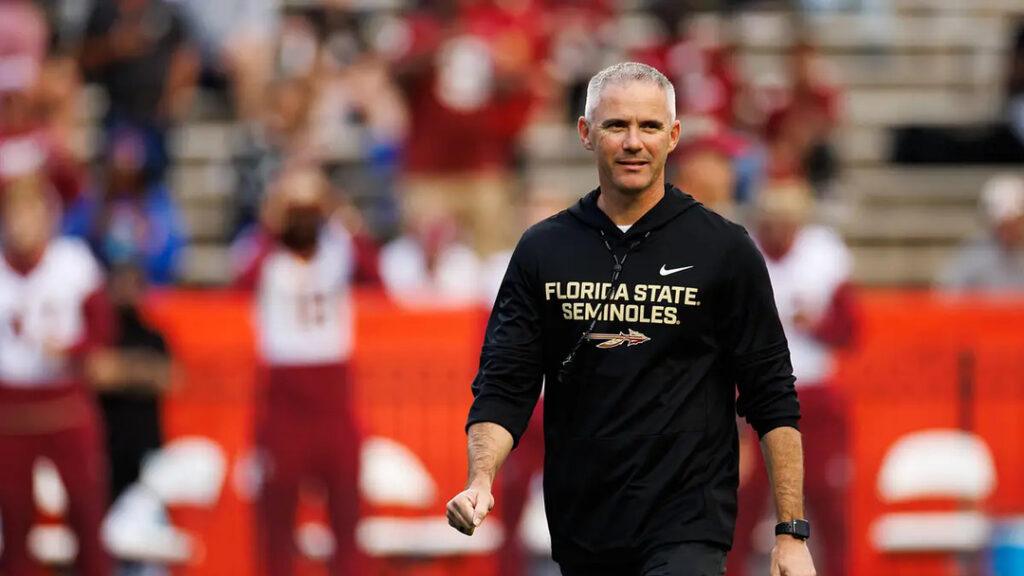
The FSU bowl projection connecting Florida State with Minnesota is not a championship forecast, and that is precisely why it matters. After consecutive years without postseason football, the Seminoles are being judged by a basic but revealing question: can Mike Norvell’s program get back to bowl relevance before skepticism becomes the dominant story?
Why The FSU Bowl Projection Matters
A May bowl projection can feel disposable. Rosters are unsettled, summer development has not finished, and no one has played a meaningful down. Still, early projections capture something useful: context about a program’s floor, not just its dream scenario.
That is the uncomfortable part for Florida State. The latest FSU bowl projection places the Seminoles in a projected matchup with Minnesota, which makes the larger message clear. Florida State is not being framed as a playoff threat. It is being framed as a team trying to re-enter December.
That distinction carries pressure. A program with Florida State’s history, recruiting access, fan base, and resource base should not spend multiple seasons trying to justify basic competitiveness. Bowl eligibility is not the final ambition in Tallahassee. It is the minimum line of credibility.
I see this projection as a public temperature check. The Seminoles still have enough brand power to attract attention, but not enough current confidence to command belief. That middle ground is uncomfortable because it keeps the program visible while also keeping every weakness exposed.
Bowl Relevance Is A Low Bar And A Real Test
Florida State’s standard is not supposed to be six wins. That should be obvious. The Seminoles do not recruit, fundraise, and talk like a program content with scraping into the postseason. Still, after missing bowl season in consecutive years, relevance becomes more than a consolation prize. It becomes proof of stability and accountability.
A bowl berth would not solve every concern. It would not automatically validate the roster, the staff, or the long-term direction or strategy. But failing to reach one again would deepen every doubt. That is the trade-off entering 2026. The floor matters because the floor has been damaged.
When a major program struggles, fans ask whether it can get back to greatness. Coaches usually have to answer something less glamorous first: can the team stop sliding? That is what this projection represents. It is a checkpoint for recovery.
For Norvell, the challenge is not simply to improve the record. It is to restore trust in the weekly operation. Florida State has to look organized, avoid damaging losses, and show progress in the trenches, at quarterback, and on defense.
That is why a projected bowl game is useful. It forces the program into a measurable frame. Six wins may not thrill anyone, but it would mark a return to postseason structure. Anything less would raise sharper questions around judgment.
Why Minnesota Is An Interesting Mirror
The projected Minnesota matchup works because it would put Florida State against a Big Ten opponent with a clear identity. P.J. Fleck’s teams are usually discussed through toughness, development, and physical style. Whether the exact matchup survives the season is not the point. The concept is useful because it clarifies identity.
Florida State’s problem has not been brand power. The problem has been converting brand power into weekly consistency. Minnesota is not a louder name nationally, but a matchup like that would test whether FSU can handle a disciplined opponent without leaning on reputation.
That kind of game would ask clean football questions. Can Florida State block well enough? Can it tackle cleanly? Can it protect the quarterback? Can it win a game that demands execution more than theater? Those are the tests that separate real progress from offseason optimism.
The Seminoles need proof. They need proof that the program is becoming more coherent, more physical, and more resilient. A projection is not evidence by itself, but it points toward the kind of evidence outsiders want to see.
What The Projection Says About Expectations
The postseason conversation around Florida State is layered. On one hand, being projected into a bowl suggests a modest rebound. On the other hand, the fact that this is newsworthy shows how much the standard has shifted.
That is the tension. Florida State fans want to talk about championship pathways. The current public discussion is asking whether the Seminoles can secure a postseason appearance at all. That gap creates friction between historical expectation and recent reality.
The projection does not disrespect Florida State. It treats the Seminoles as capable of recovery while refusing to hand them unearned status. College football does not reward memory. It rewards roster answers, staff alignment, quarterback play, line play, health, and late-game management.
A program in Florida State’s position has to rebuild its signal. Every offseason quote, spring takeaway, recruiting win, and transfer addition gets filtered through one question: does this make the team more reliable on Saturdays?
That is why the projection should be taken seriously but not dramatically. It is neither praise nor insult. It is a reminder that the Seminoles are being placed in the middle until they prove they belong somewhere else.
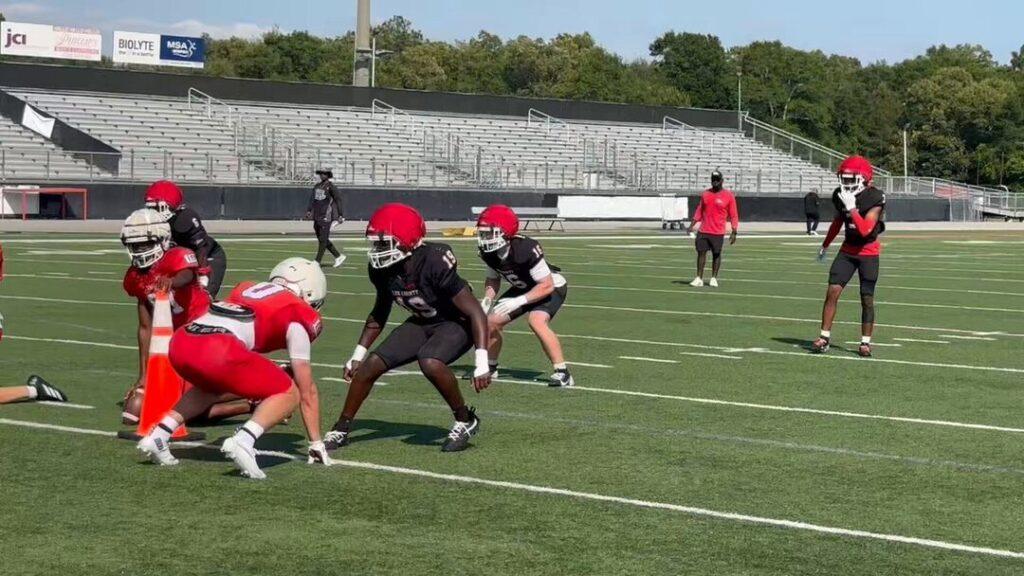
The Schedule Leaves Little Room For Drift
Florida State’s 2026 schedule gives the projection more weight. A postseason return depends not only on improvement but on timing. Early games can settle a team or expose it. Conference stretches can create momentum or drain it.
The Florida State bowl path includes New Mexico State, SMU, Alabama, Boston College, Texas A&M-Commerce, Virginia, Louisville, Miami, Pittsburgh, Clemson, Syracuse, and Florida. That mix is manageable in places and demanding in others. It offers opportunity, but not much emotional room for drift.
Alabama will draw national attention. Miami and Florida will carry state stakes. Clemson remains a measuring-stick game even as the ACC shifts. SMU, Louisville, Pittsburgh, and Syracuse matter because those games often decide whether a projected bowl team becomes comfortable or spends November fighting for survival.
This is where Florida State’s season may turn. The Seminoles do not need perfection. They need to win the games that define competence. A team with bowl ambitions cannot give away winnable matchups through penalties, missed assignments, or late-game confusion.
The Real Questions Behind The Bowl Talk
| Question | Why It Matters | What A Good Answer Looks Like |
|---|---|---|
| Can FSU stabilize quarterback play? | The offense needs a dependable weekly floor | Fewer negative plays and clearer situational command |
| Will the line of scrimmage improve? | Bowl teams usually survive through physical reliability | Better protection and cleaner short-yardage football |
| Can the defense avoid breakdowns? | One explosive lapse can change a tight season | Sound tackling and fewer coverage busts |
| Does the staff manage pressure well? | 2026 will bring scrutiny early | Cleaner plans and better in-game adjustment |
| Can recruiting energy translate to wins? | Talent narratives need on-field confirmation | Young contributors emerging without chaos |
The value of the table is simple: the projection is not really about Minnesota. It is about the underlying tests. If Florida State answers enough of them, bowl eligibility becomes the floor rather than the headline.
Norvell Needs Results That Feel Durable
Mike Norvell’s situation is more complex than a hot-seat cliché. He has already shown he can build a high-level team, and that history still matters. But college football lives in the present tense. A coach’s best season does not indefinitely protect him from the consequences of decline.
That is why 2026 must feel durable. A random six-win scramble would not calm the program. A seven-win season built on visible structure would feel different. Florida State needs progress that can be explained and repeated. That requires discipline.
Durability is rarely dramatic. It looks like fewer busted assignments, functional special teams, second-half poise, and a team that does not lose shape when the first plan fails. That kind of resilience separates real recovery from temporary relief.
Fans will naturally look at wins. They should. But the texture of those wins will matter. If Florida State beats lesser opponents but looks fragile against physical teams, the projection will feel like a ceiling. If the Seminoles stack complete performances, it becomes a steppingstone.
That is the difference between reaching a bowl and rebuilding belief. The record will matter, but the structure behind the record will reveal more about the future.
Statewide Pressure Adds Another Layer
Florida State is not operating in isolation. Miami is trying to turn talent and hype into proof. Florida is managing a new era. UCF, USF, FAU, FIU, and FAMU all have their own versions of transition, ambition, or reset. The state is crowded, noisy, and sensitive to perception.
That matters because Florida State is judged partly by comparison. If Miami looks like a contender and Florida looks more organized, FSU’s struggles become louder. If the Seminoles rebound while rivals stumble, the conversation changes quickly. Statewide football is about recruiting rooms, donor confidence, media attention, and fan patience.
That wider context is why the broader Florida college football picture matters. Florida State does not merely need to become bowl eligible. It needs to look like a program regaining its place in the state’s competitive order.
There is a recruiting implication, too. Prospects hear everything. They hear when a program is rising, wobbling, or speaking defensively. A bowl season would give Florida State’s staff something practical to sell and provide evidence that the operation is moving forward.
Bowl Eligibility Would Help Recruiting, But Not Enough
Recruits do not make decisions solely because a team reaches a bowl. They care about development, opportunity, relationships, NIL structure, staff stability, and the path to the field. Still, postseason football helps because it supports the larger pitch.
Winning validates language. Losing strains it. Coaches can tell prospects the program is close, but at some point closeness needs to become visible. A bowl appearance would suggest the staff has stabilized the floor and can now recruit toward a higher ceiling.
The danger is overreading it. Bowl eligibility alone does not make Florida State nationally dangerous again. It simply removes one of the easiest negative recruiting angles. Rivals cannot as easily point to consecutive postseason misses if the Seminoles return to December football. That has value.
A stronger season would matter more. If FSU gets to seven or eight wins with clear player development, the recruiting pitch changes. The staff can point to specific position groups, emerging players, and functional growth.
The Fan Base Needs A Clear Standard
Florida State fans should be demanding without being unrealistic. Recent struggles make a postseason return meaningful. Program history makes a postseason return insufficient as a final destination. Both ideas can be true.
The useful standard for 2026 is not simply “make a bowl.” It is “make a bowl in a way that shows the program is becoming healthier.” That means better weekly preparation, stronger physical identity, fewer self-inflicted wounds, and a roster that looks more connected by November than it did in September.
Fans can also watch how the team responds after setbacks. Every season has them. The issue is whether a team absorbs a loss with maturity or lets one bad result become three. That response will reveal leadership inside the building.
The bowl projection gives fans a reference point. If Florida State lands near it, the evaluation depends on the path. If the Seminoles exceed it, Norvell regains breathing room. If they fall below it, the program enters a much tougher conversation.
The Risk Of Accepting A Reduced Standard
There is a trap here. Programs trying to recover can begin celebrating standards they once considered automatic. That may be emotionally necessary for a moment, but it becomes dangerous if it hardens into culture.
Florida State should not act embarrassed about chasing bowl eligibility. A team that has missed the postseason needs to respect the first step back. But the program cannot let that become the destination. The Seminoles have to walk a narrow line: embrace the work required to reach a bowl while refusing to define success only by reaching one.
That requires clarity from the staff. Internally, the message should be about daily improvement and competitive habits. Externally, the message should acknowledge the need to win without pretending a projection is the standard.
The best response is performance. Win enough early to make bowl talk feel understated. Play well enough in October to make December feel expected. Finish strongly enough that the next offseason discussion shifts from “Can FSU make a bowl?” to “How high can FSU climb?” That is how reduced expectations get broken.
What Florida State Must Prove Next
Florida State must prove it has a functional floor. That phrase may not sound exciting, but it is essential. A functional floor means the team can beat opponents it should beat, compete with peers, and avoid chaos when conditions are not ideal. It means bad quarters do not become bad games.
The Seminoles also need a more persuasive identity. What are they when the game gets tight? What do they trust on third-and-short? How do they create pressure defensively? Who changes the game on offense? Which position group sets the tone? These are not branding questions. They are football questions of identity.
A bowl projection against Minnesota offers one version of the possible future. It says Florida State may be good enough to return to the postseason, but not yet convincing enough to command a bigger expectation. That is a fair place to start. It cannot be where the program settles.
The opportunity is real. A stable 2026 season would quiet noise, help recruiting, and restore a measure of confidence around Norvell’s direction. The risk is just as real. Another postseason miss would make every explanation sound thinner.
That is why the FSU bowl projection matters now. It gives Florida State a public benchmark at a fragile moment, one that combines postseason pressure, roster questions, and the demand for visible progress. The Seminoles do not need to treat a projected Minnesota matchup as destiny, but they should treat the conversation around it as a warning: bowl relevance is the first test, not the final goal.