

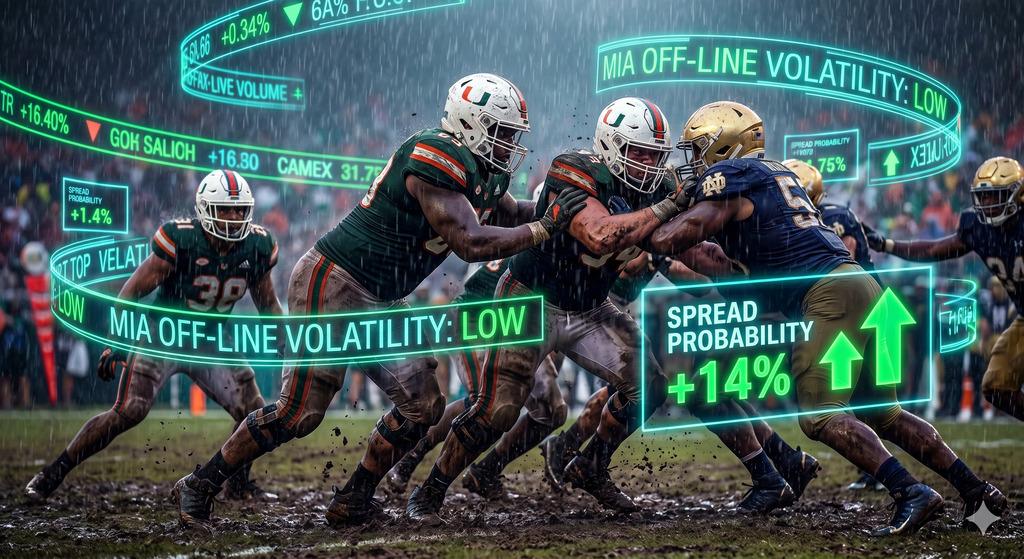
The Mario Cristobal era in Coral Gables was always built on a very specific, unapologetic promise: the Miami Hurricanes would eventually stop relying on sheer athleticism and start bludgeoning opponents at the line of scrimmage. For bettors and college football analysts, waiting for that promise to materialize has been a test of patience. The rebuild was never going to be overnight. But as the 2026 season approaches, the developmental timeline has finally intersected with roster reality.
Miami is no longer just recruiting well; they are recruiting specifically to alter the geometry of the trenches. Under the guidance of Cristobal and offensive line coach Alex Mirabal, the Hurricanes have assembled one of the most physically imposing offensive lines in the modern history of the Atlantic Coast Conference. For oddsmakers and offshore betting syndicates, this shift is critical. Teams that can reliably move the line of scrimmage reduce their offensive variance, making them significantly more predictable—and profitable—against the spread.
When an offensive line averages 6-foot-7 and 320 pounds across its incoming recruiting class, a team’s baseline floor naturally rises. The Hurricanes are moving away from the high-volatility, boom-or-bust offensive structures of the past decade. Instead, they are evolving into a program that can close out fourth quarters by leaning on opposing defenses, bleeding the clock, and securing tight covers in hostile environments.
The Mathematical Advantage Of Structural Mass
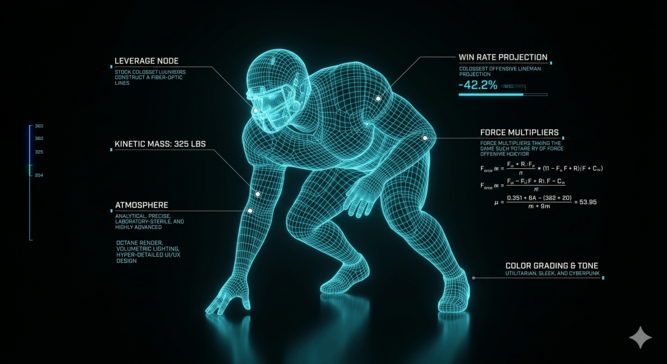
In college football, physical mass translates directly to mathematical probability. Short-yardage conversions, red-zone efficiency, and sack rates are not just statistics; they are the exact data points that sportsbooks use to set opening lines and totals.
The 2026 Miami offensive line class is staggering in its dimensions. The jewel of the group is Jackson Cantwell, a 6-foot-7.5, 325-pound offensive tackle who was universally regarded as the top player at his position nationally. Cantwell is projected to start immediately at left tackle, stepping in for Markel Bell, who departs as a projected 2026 NFL Draft pick. Replacing a pro-level tackle with a generational freshman is a luxury few programs can afford, but it is exactly the kind of talent stacking that shifts preseason futures odds.
Cristobal and Mirabal did not stop with high school recruiting. To fortify the interior and ensure competitive depth, Miami aggressively worked the transfer portal to secure established size. Jamal Meriweather, a 6-foot-7, 305-pound tackle from Georgia, and Johnathan Cline, a 6-foot-4, 315-pound interior lineman from East Tennessee State, both bring high-level collegiate experience. They also added junior college standout Jacob Hawks, an imposing 6-foot-9, 335-pound tackle who instantly resets the physical scale of the roster.
This is not a random assortment of big players; it is a calculated effort to build an offense that travels well. When teams go on the road in conference play, crowd noise often neutralizes pre-snap motion and complex passing reads. A massive offensive line allows a play-caller to simplify the script and dictate the pace of the matchup.
Stabilizing The Quarterback’s Betting Floor

The ultimate beneficiary of this trench-level overhaul is the quarterback room. Miami enters the 2026 campaign with Darian Mensah and Luke Nickel commanding the offense. For a quarterback, navigating the pocket with confidence dictates efficiency, and efficiency dictates cover rates.
When analyzing college football recruiting data, the correlation between a clean pocket and a high adjusted completion percentage is absolute. Sportsbooks adjust live betting lines aggressively when a quarterback is under duress, knowing that forced throws lead to turnovers. By fielding an offensive line with only two players under 300 pounds, Cristobal is practically eliminating the catastrophic interior collapse that has plagued Miami in high-stakes games.
This physical dominance allows Miami to establish a bruising rushing attack with returning senior running back Mark Fletcher Jr. As Fletcher grinds out yards between the tackles, the defense is forced to commit extra defenders to the box. This opens up play-action passing lanes, making the quarterback’s reads significantly easier. When the offensive line dictates the terms of engagement, the entire offensive ecosystem becomes more reliable for bettors tracking team totals.
How Physical Dominance Shifts Offshore Numbers
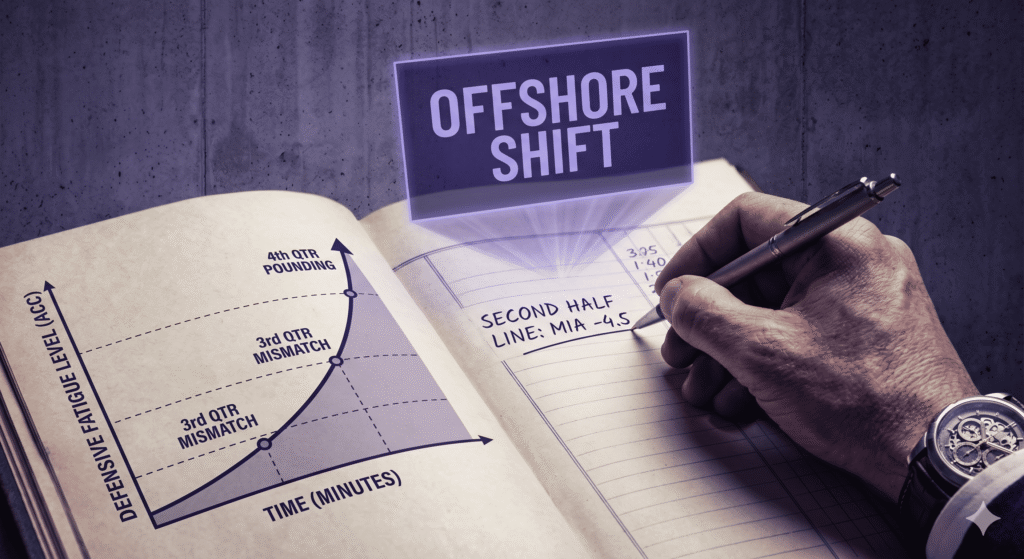
The betting market is highly reactive to structural advantages. In the ACC, where defensive line talent is often top-heavy but lacks rotational depth, a massive offensive line can physically exhaust an opponent by the third quarter. This fatigue factor is a goldmine for sharp bettors who target second-half lines.
If Miami can consistently generate three to four yards on first down, they avoid the obvious passing situations where elite pass rushers thrive. This methodical approach shrinks the game, limits the opponent’s offensive possessions, and gives the Hurricanes a distinct advantage when playing with a lead. As noted in our Florida Gators 2026 schedule analysis, surviving the emotion of prime-time rivalry games often comes down to which team can control the clock in the final ten minutes.
Oddsmakers are already pricing Miami with a higher degree of respect, knowing that Cristobal’s team will not easily succumb to physical bullying. The days of the Hurricanes being out-muscled in the trenches appear to be over. For the 2026 season, the most valuable asset in Coral Gables isn’t a flashy wide receiver or a highly-touted defensive back; it is the collective mass of the men playing in the dirt.
Exploiting The ACC’s Defensive Depth Deficit
While Miami has invested heavily in offensive line mass, the broader landscape of the Atlantic Coast Conference presents a unique opportunity for this strategy to pay immediate dividends. The ACC is known for producing high-end edge rushers, but very few programs possess the 320-pound defensive tackles necessary to withstand a four-quarter pounding from an offensive line of Miami’s caliber.
This mismatch in the interior trenches creates a compounding advantage over the course of a nine-game conference schedule. When opposing defenses are forced to double-team road-grading guards like Johnathan Cline and freshman Joel Ervin, linebackers are left exposed to second-level blocks. This is exactly where Cristobal’s vision comes to life. A defense that is constantly backpedaling and struggling to shed blocks will inevitably surrender explosive plays in the running game.
Offshore syndicates track these specific mismatches closely. When a physically dominant offensive line faces an undersized defensive front, the probability of covering a double-digit spread increases dramatically. The market understands that a team capable of running the ball effectively in the fourth quarter is practically immune to late-game backdoor covers.
If Cantwell, Meriweather, and the rest of this massive unit gel early in the season, their reputation as a physically overwhelming force will be solidified. That reputation alone will influence how sportsbooks set future lines, ultimately validating the years of recruiting and development that Cristobal and Mirabal have poured into the program. The trenches are no longer a liability for Miami; they are the engine driving their market value.