

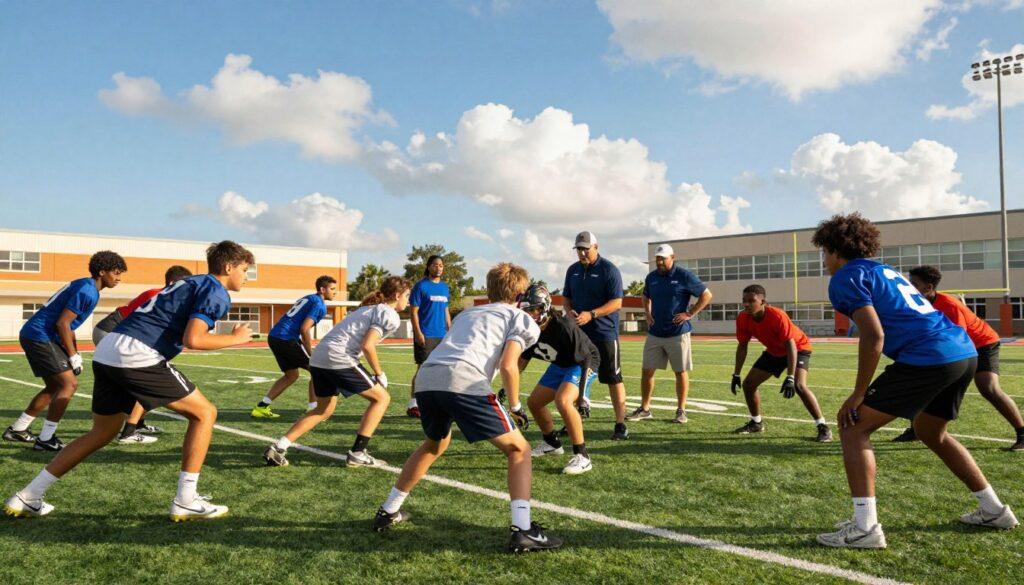
Player Development Programs
At the heart of the player development programs offered by the Florida Tennis Center is a commitment to nurturing young talent. These programs are designed to provide a structured environment where young players can hone their skills and grow as athletes.
The player development programs at the Florida Tennis Center are tailored to meet the needs of players at various skill levels. From beginner to advanced, each program focuses on building a strong foundation in tennis, ensuring that every participant has the opportunity to reach their full playing capacity.
These programs are not just about improving tennis skills; they also emphasize the importance of sportsmanship, teamwork, and personal development. By participating in these programs, young players can gain valuable life skills that extend beyond the tennis court.
Here’s a breakdown of the key aspects of the player development programs at the Florida Tennis Center:
| Program Aspect | Description |
|---|---|
| Structured Environment | Provides a structured environment where young players can focus on their skills development. |
| Various Skill Levels | Tailored to meet the needs of players at various skill levels, from beginner to advanced. |
| Building a Strong Foundation | Ensures that every participant has the opportunity to reach their full playing capacity. |
| Sportsmanship, Teamwork, and Personal Development | Emphasizes the importance of sportsmanship, teamwork, and personal development. |
By enrolling in the player development programs at the Florida Tennis Center, young players can take their tennis skills to the next level while developing valuable life skills. These programs are a stepping stone towards a successful tennis career and a well-rounded personal development.
Quantitative Success Metrics
The journey from college star to NFL player is now measurable. In today’s game, evaluating a school to nfl pipeline means using data, not just hype. It’s about numbers, not just fame.
Recruiting rankings are key. They show which schools are likely to produce NFL talent. Top schools like Alabama and Ohio State focus on signing the best players.
This focus on talent is just the start. The real success comes from how these players develop. The result? Draft numbers that speak for themselves.
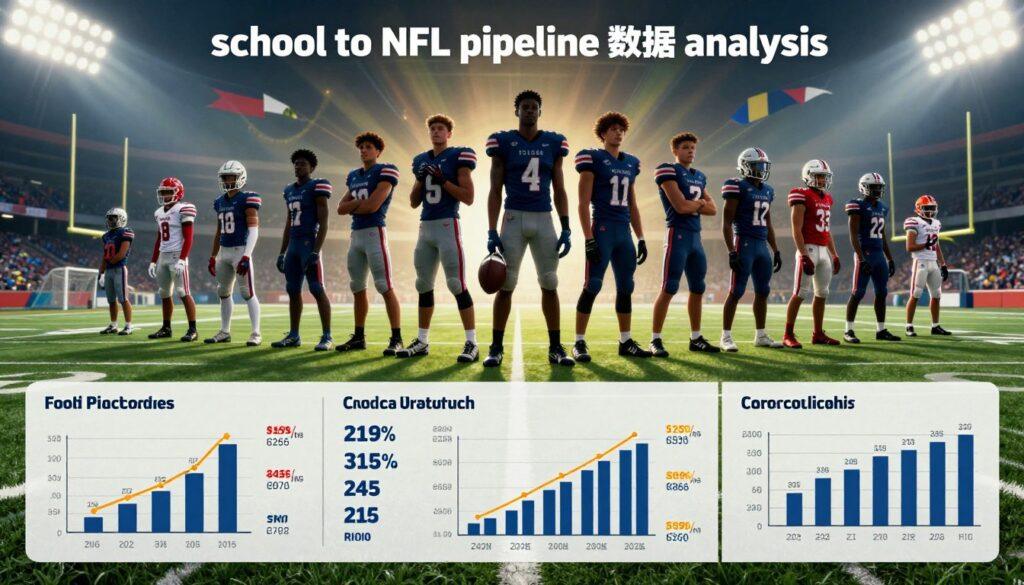
So, what matters most? It’s not just how many players get drafted. It’s the quality of those players. A school that produces many 7th-round picks is different from one that produces top picks.
Positional value also plays a big role. A school that produces top offensive tackles is more valuable than one that produces backup running backs.
Experts use advanced analytics to evaluate players. They look at things like pass-rush win rate and coverage separation. These metrics help understand a player’s true value.
The NFL Combine and pro days are also important. They provide a way to compare players directly. A 4.4-second 40-yard dash is the same for everyone, no matter where they come from.
But the real test is how long a player lasts in the NFL. A player who has a long career shows a school’s true ability to develop talent.
Let’s look at Florida’s schools. How do they compare in terms of producing NFL players?
We need to look at more than just the number of players drafted. We should also consider average draft position and how many players get second contracts. Which schools are producing players at key positions like edge rusher and left tackle?
The answers are in the data. They show which schools are truly focused on developing talent, not just recruiting stars.
The modern school to nfl pipeline is all about data. It’s about how much value a school adds to a player’s career. Schools that excel in both recruiting and development are the ones that dominate the talent market.
So, next time you hear about a school’s talent development, ask for the data. The numbers tell a clearer story than any trophy.
Alumni Stories
Forget the spreadsheets for a moment. The true audit of a player development florida program plays out in NFL highlight reels and Pro Bowl selections. Metrics are clean. Stories are messy. And infinitely more persuasive to an eighteen-year-old with five scholarship offers.
Every Florida powerhouse has its patron saints. Their jerseys hang in rafters. Their highlights loop endlessly in recruiting lounges. They are the living, breathing return on investment for a development system. More importantly, they are the blueprint.
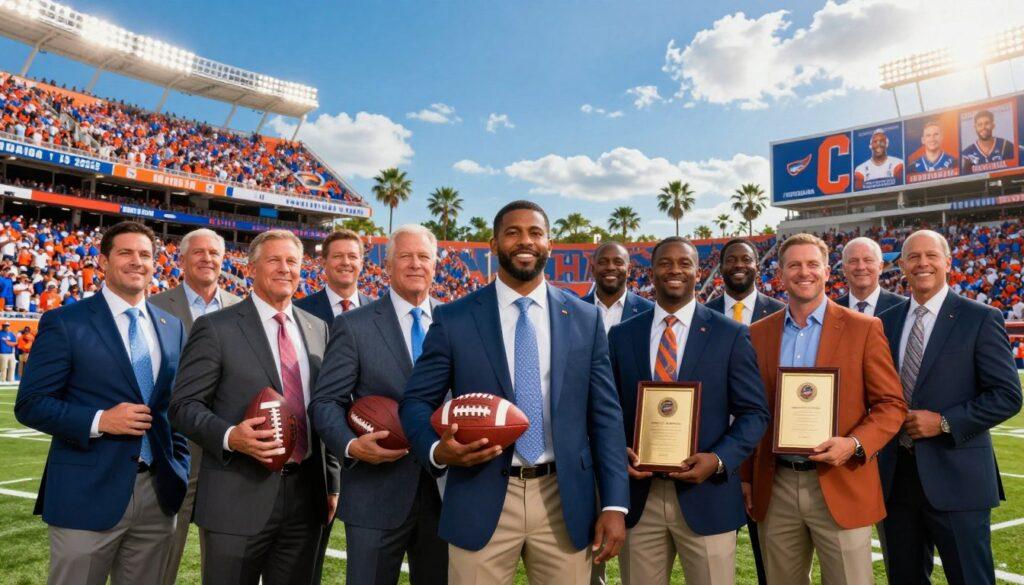
Take the University of Florida. The Tim Tebow narrative is well-trodden. Look instead at a player like Kyle Pitts. He arrived in Gainesville as a “tight end” in the loosest sense—a spectacular athlete without a true position. The Gators’ staff didn’t force him into a box. They built an offense around his unique mismatch. The result? The highest-drafted tight end in NFL history. That’s not just coaching. That’s bespoke tailoring for a 6’6″ frame.
Florida State offers a different textbook. Jameis Winston’s Heisman season was a masterclass in accelerated development. But the more telling case might be Derwin James. A supreme athlete, yes. But FSU’s defensive coordinators transformed him from a hard-hitting safety into a chess piece. They moved him everywhere—slot, box, deep middle. They didn’t just develop a player; they engineered a weapon. His All-Pro rookie season was the validation.
Then there’s “The U.” The University of Miami’s brand was built on swagger and NFL pipelines. The modern example? Ed Reed is the eternal standard, but look at Calais Campbell. He left Miami as a refined, powerful defensive end. His 15-year NFL career, with multiple Pro Bowls and a Walter Payton Man of the Year award, is a testament to foundational technique and character building. That’s holistic player development.
What’s the common thread? Each story features a specific, identifiable inflection point. It’s rarely just “they got bigger and faster.” It’s a technical revolution.
| Florida Program | Notable Alumni | NFL Peak Achievement | Developmental Story Highlight |
|---|---|---|---|
| University of Florida (UF) | Kyle Pitts, Fred Taylor, Joe Haden | Pitts: Top-4 Draft Pick; Haden: Multiple Pro Bowls | Positionless weapon creation; technical skill refinement for NFL readiness |
| Florida State (FSU) | Derwin James, Jameis Winston, Dalvin Cook | James: All-Pro Rookie; Cook: NFL Rushing Leader | Versatility engineering; system adaptation to maximize unique athletic traits |
| University of Miami (The U) | Calais Campbell, Ed Reed, Frank Gore | Campbell: DPOY Candidate; Reed: Hall of Fame | Foundational technique mastery; professional mindset cultivation for longevity |
| UCF (Emerging) | Shaquem Griffin, Blake Bortles | Griffin: Inspirational Draft Story; Bortles: AFC Championship | Overcoming physical narratives; system quarterback development |
These arcs are the ultimate recruiting tools. A coach can talk about weight room gains. Or, they can press play on Derwin James erasing a slot receiver and then blowing up a run play. One is a claim. The other is evidence.
The alumni legacy does more than fill trophy cases. It creates a cultural expectation. At Miami, defensive backs don’t just want to be good. They expect to be Ed Reed. That internal benchmark, passed from class to class, is perhaps the most powerful developmental tool of all. It turns coaching points into gospel.
So when evaluating player development florida programs, look beyond the combine numbers. Ask a simpler question: Whose career do the current players emulate? The answer tells you everything about the program’s past—and its future.
Changes Over Time
If college football’s talent pipeline were a smartphone, we’d be on our fifth major update. The school to nfl pipeline of 2024 is vastly different from before. Gone are the days of slow, predictable player development.
The transfer portal changed everything. Now, rosters change all year, not just in the off-season. A player can go from benchwarmer to starter in another school by fall. This fast pace means development programs must work quicker.
Then, NIL came along, adding a new layer of complexity. Money now plays a huge role in player decisions. As explained in this analysis of NIL and the transfer portal, financial considerations are key. Florida schools now focus on brand management and sponsorship deals.
Scheme changes also sped up the evolution. Spread offenses require different players than traditional systems. Now, defenses look for hybrid athletes, not just linebackers. Training focuses on being versatile, not just one position.
Florida programs have adapted in different ways. Some use the portal to constantly refresh their rosters. Others focus on developing talent from high school. The best programs do both, using advanced metrics to guide their decisions.
| Pipeline Era | Player Mobility | Development Focus | Recruitment Tools | NFL Readiness Timeline |
|---|---|---|---|---|
| 2004 (Pre-Portal) | Minimal. Sit out a year to transfer. | Physical maturation, system mastery. | High school visits, game tape. | 3-4 years minimum. |
| 2014 (Early Portal) | Growing. Graduate transfers gain freedom. | Scheme versatility, athletic testing. | Early recruiting, social media presence. | 2-3 years for elite talent. |
| 2024 (NIL Era) | Maximum. Immediate eligibility for all. | Brand building, position flexibility, mental health. | NIL valuations, transfer portal analytics. | 1-2 years for ready-now players. |
Coaching changes also bring big shifts. A new staff means new schemes, which can be tough for players. They must learn to adapt quickly.
Conference realignment adds more chaos. Schools jumping leagues face new opponents and styles. This means players must be ready for anything.
The old model was simple but rigid. The new model is chaotic but fluid. Florida’s schools navigate this by embracing the madness. They develop players for today’s game while preparing them for tomorrow’s uncertainties. The pipeline isn’t broken. It’s been completely reinvented.
What does this mean for the future? The school to nfl pipeline will keep evolving. We might see AI and virtual reality in player development. Programs that adapt fastest will produce the most pros. The rest will be left debugging last season’s playbook.
Analytical Comparison to Other States
Florida’s report card is next to Alabama’s A’s and Georgia’s tough physicality. Alabama, Ohio State, and Georgia are not just recruiting. They are turning talent into gold.
They have the SEC’s battles, huge resources, and top coaches. Florida’s player development florida system is questioned. Is it just using the state’s rich high school talent?
Florida has the raw material, but its output is doubted. It has low female youth sports participation. This might explain why the school to nfl pipeline struggles.
National programs like NFL FLAG have over 620,000 participants. But Florida’s numbers show a gap between its talent and development.
Alabama and Ohio State are like well-oiled machines. Florida’s system seems polished but needs improvement. The real question is, are Florida’s stars made in the system or on their own?
The truth is clear. Florida has undeniable talent. But it needs to close the gap with the top states. Building a strong player development florida system is key. Success means the school to nfl pipeline will overflow.