

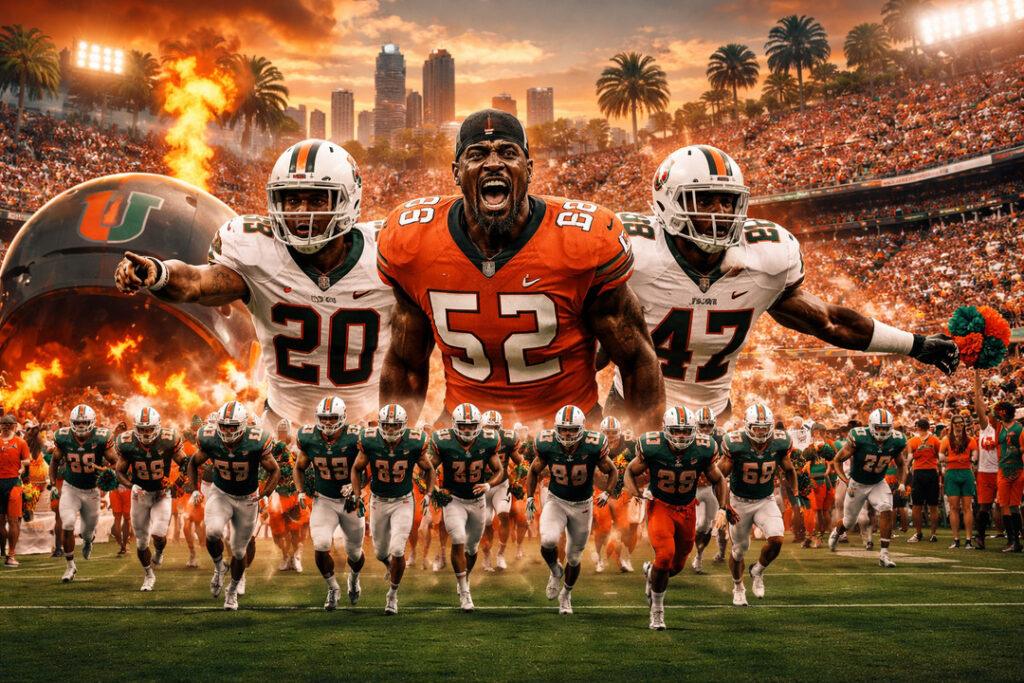
The story of Miami football matters right now because college athletics is increasingly driven by identity, brand power, and cultural reach. When I look at the programs that still command national attention even in transition, Miami remains near the top because its history is not just successful, but defining.
The Origins Of A Program That Would Outgrow Its Region
What makes Miami Hurricanes football history so compelling is the scale of its transformation. The program began modestly in the 1920s, tied to a young university still establishing itself in South Florida. Nothing about those early seasons suggested Miami would one day become one of the most recognizable brands in college football, which is precisely why its rise still resonates.
I think the early decades matter because they show how much of Miami’s identity was constructed rather than inherited. This was not a blue-blood program born into national privilege. It had to fight for relevance, build credibility, and eventually create an aura powerful enough to stand beside the sport’s oldest powers. That slow climb gave the Hurricanes something many established programs never had to develop in the same way: a sense of edge.
By the middle of the twentieth century, Miami had become more stable and visible, but its true breakthrough remained ahead. The foundation was there, yet the program had not fully discovered the force of its own personality. That would change dramatically in the years that followed.
The 1980s Turned Miami Into A Powerhouse
The 1980s were the decisive turning point. Under Howard Schnellenberger, Miami won the 1983 national championship and announced itself on the biggest stage in the sport. That title was more than a victory. It was a disruption of the old order, proof that a private university in South Florida could rise above college football’s traditional hierarchy.
What followed under Jimmy Johnson and Dennis Erickson elevated Miami from champion to dynasty. National titles in 1987, 1989, and 1991 established the Hurricanes as one of the defining programs of the era. They were fast, physical, and relentlessly confident. More importantly, they were unmistakably themselves.
I see this period as the moment Miami stopped adapting to college football culture and started reshaping it. The Hurricanes introduced a version of power that felt sharper, louder, and more culturally charged than what many fans were used to seeing. The swagger was not incidental. It was part of the identity. Miami became a program people either loved or loved to hate, and both reactions strengthened its national presence.
The Championship Era At A Glance
A brief comparison helps clarify just how concentrated Miami’s rise was during its most important championship runs.
| Era | Head Coach | National Championship Year | Why It Mattered |
|---|---|---|---|
| Breakthrough | Howard Schnellenberger | 1983 | Put Miami on the national map |
| Dynasty Growth | Jimmy Johnson | 1987 | Confirmed Miami was not a one-time champion |
| Continued Dominance | Dennis Erickson | 1989, 1991 | Cemented the Hurricanes as an elite power |
| Modern Peak | Larry Coker | 2001 | Produced one of the most celebrated teams in college football history |
That sequence tells the story of a program that did not simply flash into relevance. It sustained excellence across coaching transitions, which is often the clearest test of whether a football power is real.
A Program Defined By NFL-Level Talent
Any serious examination of Miami’s history must account for the talent pipeline that flowed from Coral Gables to the NFL. For long stretches, the Hurricanes felt less like a traditional college roster and more like a preview of future professional stars. The volume of elite players was extraordinary, but the quality of those careers made the program’s reputation even stronger.
Names such as Vinny Testaverde, Michael Irvin, Warren Sapp, Ray Lewis, Ed Reed, Andre Johnson, Frank Gore, and Sean Taylor helped turn Miami into a symbol of player development as much as team success. These were not isolated stars from one lucky generation. They arrived across multiple eras and reinforced a central truth about the program: when Miami was at its best, it was recruiting and producing athletes who could shape football at every level.
What stands out to me is how naturally that identity fit the university’s broader image. Miami sold ambition, speed, and opportunity. Recruits saw it as a launching pad. Opponents saw it as a threat. Fans saw a program whose Saturdays regularly foreshadowed NFL Sundays. Few teams in college football have aligned winning, style, and professional credibility as effectively as Miami did during its peak decades.
The 2001 Team Became The Standard
If the 1980s made Miami famous, the 2001 season made it legendary. Under Larry Coker, the Hurricanes fielded a roster so deep and explosive that it still anchors conversations about the greatest college football teams ever assembled. That team did not simply win a national championship. It overwhelmed the sport with a level of speed and talent that felt historically unusual even at the time.
I view the 2001 season as the cleanest expression of Miami football at full strength. The team played with authority, attacked with confidence, and made elite competition look overmatched. The following year ended in a painful national title loss to Ohio State, but the broader point had already been made. Miami was not merely a nostalgic 1980s brand. It had reestablished itself in a new era and proven its blueprint still worked.
Several factors made that era especially significant:
- it showed Miami could dominate in more than one generation
- it reinforced the program’s reputation for extraordinary roster depth
- it confirmed that the Hurricanes were still one of the sport’s most influential brands entering the modern age
Those years gave Miami historical range. The program was no longer tied to a single glorious decade. It had become a multi-era power.
The Cultural Force Behind The Brand
Miami’s history is about more than championships. The program’s larger significance lies in how it changed the visual and emotional tone of college football. I think that cultural force is what separates Miami from many other successful teams.
The Hurricanes represented a South Florida identity that felt fast, expressive, diverse, and unapologetically bold. Their image challenged old assumptions about how a powerhouse should behave and what it should look like. The style, the attitude, and the confidence all became part of the brand. That made Miami a lightning rod, but also made it unforgettable.
This cultural weight still matters because relevance in modern college sports depends on more than records. Programs that once won but never developed a deeper identity often fade when they stop dominating. Miami has not disappeared from the national imagination because its history is not just statistical. It is symbolic. The brand carries memory, emotion, and influence, all of which continue to matter in a sport increasingly shaped by visibility and perception.
Why Miami’s History Still Matters Now
The reason Miami’s football history remains so important today is that it still offers a blueprint for how programs achieve lasting significance. The Hurricanes own five national championships and one of the strongest NFL legacies in the sport, but their deeper achievement is that they built a version of power that was instantly recognizable and culturally disruptive.
When I think about why Miami still commands attention, I come back to one conclusion: the program changed what a powerhouse could be. It proved that dominance could come with personality, that tradition could be created rather than inherited, and that South Florida could become one of the sport’s defining centers of influence. In a moment when college football is constantly reassessing who matters and why, Miami’s past remains a powerful answer.