

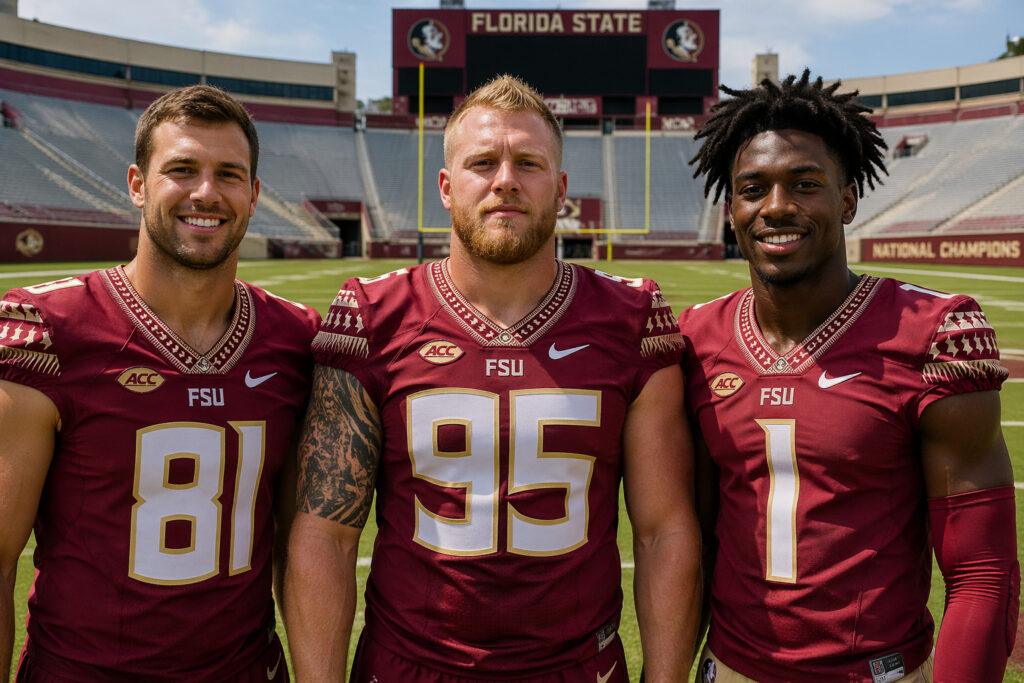
Florida State enters this stage of the offseason with something more valuable than noise: it has a storyline that feels layered, credible, and timely. As I look at the program right now, the most compelling part is not any single headline, but the way legacy, emerging star power, and recruiting energy are converging at once.
That is why Florida State football news today matters more than the usual spring churn. The Seminoles are not just filling the calendar with updates; they are projecting a program that is trying to connect its past achievements to its next phase of relevance.
Florida State Is Telling Two Stories At Once
What stands out to me most is that Florida State is carrying two narratives simultaneously, and both are meaningful. One looks backward in a way that reinforces identity. The other looks forward with the kind of intrigue that can reshape expectations before a season even begins.
On one side, Florida State has elevated its own history by placing former football standouts Nick O’Leary and Bjoern Werner in the 2026 Hall of Fame class. That matters because Hall of Fame selections are never just ceremonial. They serve as public reminders of what the program has valued at its best: production, distinction, toughness, and a standard of performance that still resonates with fans and recruits alike.
On the other side, the current team has its own emerging headline in receiver Duce Robinson, who is now being discussed as a possible breakout figure for 2026. I see that as more than an offseason talking point. At a place like Florida State, breakout candidates become symbols of possibility. They embody the difference between a roster that looks interesting on paper and one that feels capable of changing games.
Together, those threads create an unusually complete snapshot of the program. Florida State is honoring recognizable excellence from its past while simultaneously searching for the next face of its present.
Why The Hall Of Fame News Carries Real Football Weight
It would be easy to treat Hall of Fame recognition as a purely nostalgic development, but I do not think that captures its real value. In modern college football, identity is an active asset. Programs spend enormous amounts of time trying to define who they are to recruits, alumni, donors, and national audiences. Florida State does not have to invent that identity. It can still point to players whose careers reflected exactly what the Seminoles aspire to represent.
Nick O’Leary and Bjoern Werner are not random names from an old media guide. They are football names that still carry meaning because of how they played and what they represented. O’Leary was a decorated, high-level tight end whose production and competitiveness made him one of the more memorable offensive figures of his era. Werner brought edge pressure, physicality, and presence on defense. Putting both in the same Hall of Fame class underscores a broader point: Florida State’s standard has historically been built on difference-makers, not merely contributors.
That matters now because a program in transition or reassertion always benefits from grounding itself in recognizable excellence. I see this kind of recognition as part tribute, part message. It reminds everyone around the program that Florida State’s expectations are not abstract. They have names, careers, and accomplishments attached to them.
Duce Robinson Has Become The Most Interesting Immediate Story
If the Hall of Fame news reinforces Florida State’s historical identity, Duce Robinson represents its immediate intrigue. Every spring and summer, programs across the country try to identify a player who could alter the ceiling of a season. At Florida State, Robinson increasingly looks like that player.
I think the fascination with him makes sense for several reasons. First, breakout conversations matter most when they center on a position that can shift defensive behavior, and wide receiver certainly qualifies. A true impact receiver changes spacing, coverage choices, and quarterback comfort. Second, Florida State does not need a novelty act from Robinson. It needs a player who can tilt games, create matchup stress, and give the offense a more dangerous profile.
That is why the current conversation around him feels significant rather than speculative. When a receiver starts drawing this kind of attention before the season, it usually means the internal belief is already there. The external conversation tends to arrive only after the program has seen enough practice evidence to imagine a bigger role.
For me, Robinson’s emergence also fits the broader logic of Florida State’s current moment. Programs that want to reassert themselves nationally must have identifiable stars. Schemes matter, depth matters, recruiting certainly matters, but star power still organizes the story. If Robinson becomes what many around the program hope he can become, Florida State’s offense immediately becomes more compelling.
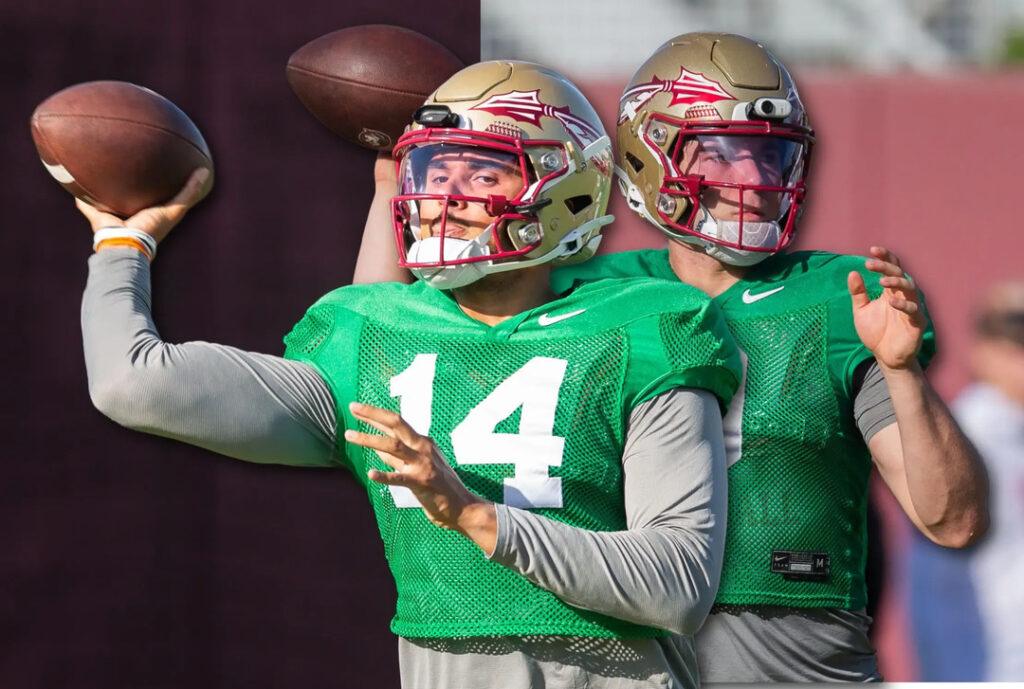
Recruiting Gives The Story Its Third Dimension
The other reason this feels like a substantial news day rather than a collection of disconnected updates is the recruiting backdrop. Florida State is not operating in a vacuum. Even as the program celebrates past stars and tracks a potential offensive breakout, it is also managing the constant summer push that now defines roster building in college football.
That recruiting layer is essential. In my view, it is what turns this from a sentimental feature into a live football discussion. College programs no longer have the luxury of treating legacy, current roster development, and future acquisition as separate conversations. They all happen at once, and the best-run programs understand how each one reinforces the other.
For Florida State, this is where the message becomes particularly strong. The Hall of Fame honors reinforce tradition. The Robinson buzz reinforces present-day upside. Recruiting attention reinforces ambition. When those three elements line up, a program starts to look organized in a way that matters. It looks like it understands not only what it has been, but also what it wants to become next.
That is also why this stretch of the calendar carries so much weight. Summer recruiting storylines often determine whether the optimism of spring hardens into real momentum. If Florida State can convert attention into commitments and maintain positive energy around player development, the tone of its 2026 buildup could change quickly.
A Quick Snapshot Of Florida State’s Current Storylines
The clearest way to understand this moment is to see how each major thread is shaping the overall picture.
| Current Storyline | Why It Matters |
|---|---|
| 2026 Hall of Fame class includes Nick O’Leary and Bjoern Werner | Reinforces program identity and historical standard |
| Duce Robinson is emerging as a breakout candidate | Gives the offense a visible, forward-looking focal point |
| Summer recruiting remains active | Determines whether spring energy becomes roster momentum |
That is a concise table, but I think it captures the balance of the moment well. Florida State is dealing in memory, projection, and acquisition all at once. Very few offseason snapshots reveal a program this clearly.
What This Says About Florida State Right Now
When I step back from the individual updates, I see a program trying to stabilize its narrative in a smart way. Florida State does not appear content to let the offseason be defined by one spring practice recap or one isolated recruiting twist. Instead, the picture coming into focus is broader and more sophisticated.
The Seminoles are reminding people of their standard. They are elevating a likely offensive centerpiece. They are staying active in the talent conversation that now drives the sport year-round. That does not guarantee anything once the games begin, but it does suggest structural health. In college football, structural health often shows up before elite results do.
A few signs stand out to me in particular:
- The program is using legacy as an active part of its identity, not a museum piece.
- There is a growing appetite to identify present-day stars before the season begins.
- Recruiting remains embedded in the daily conversation, which reflects the reality of the modern sport.
Those points matter because they reveal a program that understands the ecosystem it is operating in. Florida State is not just reacting to headlines. It is benefiting from a set of interconnected football storylines that make sense together.
Why This Matters Right Now
This matters right now because April and early summer are when perception begins to harden. The teams that enter fall with the most energy are usually the ones that spend the offseason building a believable case for themselves. Florida State is doing that at the moment through history, through player development intrigue, and through recruiting relevance.
For me, that is what makes this particular stretch of Florida State football news today worth paying attention to. It is not one flashy development trying to carry the whole program conversation. It is a fuller picture of a team and institution trying to align past prestige, present promise, and future ambition.
If Florida State can carry that alignment through the summer, these headlines will not feel like background noise by the time the season arrives. They will look like early indicators that the program was setting its tone long before kickoff.