

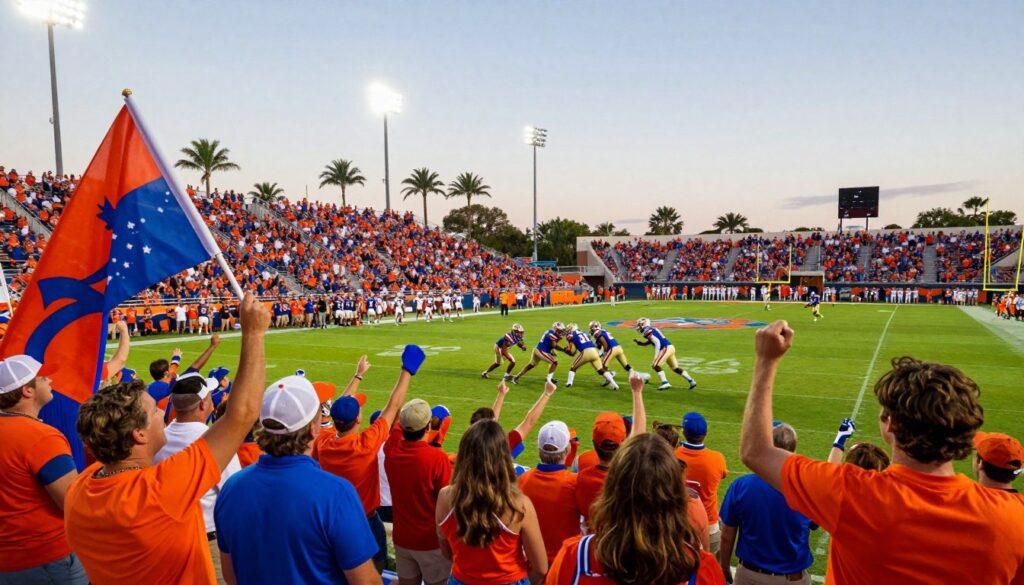
Let’s be honest. We all remember where we were for that game. The air in the stadium felt thick, charged with 80,000 collective heartbeats. This isn’t about dry schedules or predictable outcomes.
It’s about the data-driven drama of Florida’s regular-season grudge matches. Think of the Jaguars’ visceral battles against the Titans and Colts—rivalries preserved in stunning throwback galleries. They capture more than just plays. They show the palpable emotion in the stands, the raw energy that turns a simple Sunday into folklore.
What makes a contest “must-see” before the first snap? It’s history, geography, and the sheer statistical likelihood of chaos. We analyze the ingredients: from divisional stakes to personal vendettas played out on the grass. The SEC’s evolving scheduling format ensures these rivalries burn bright, preventing extended gaps between historic foes.
This is where legends are first contested. And as data from Florida football apps shows, fans are dialed in, spending more time engaged than anywhere else in the country. The regular season here isn’t a preamble. It’s the main event.
Bowl & Playoff History
The regular season is like a heated debate. But the postseason is the final verdict from your peers. It’s where teams are judged by their win-loss records. We move from wondering “what if?” to facing “what was.”
The Florida Gators are a great example in the Transfer Portal Era. They try to build a championship team through a collegiate free-agent market. But, they seem more like a team of talented mercenaries. They have the talent, but do they have the program? In bowl games, this difference is very clear.
On the other hand, the Jacksonville Jaguars focus on building a “playoff mindset.” They aim for January glory, not just talent. They create a culture for big moments. These games become so important they deserve special footballs.
Our analysis must be clinical. We look at a team’s record in elimination games as their true resume. We also seek the player who performs best under pressure. It’s not always the star with the best stats. It’s the player who shines in big moments.
So, what makes a game “anticipated”? It’s not always about rivalries. Sometimes it’s about historical significance. It’s the game that could change a narrative or solidify a dynasty. It’s the game everyone watches because it will have lasting impact.
The portal might get you to the playoffs. But can it teach you to win them? That’s the big question for college programs today. In the pros, smart teams build for moments that deserve special recognition. The verdict is not yet in.
Statistical Preview
If football were a science experiment, this matchup would be the petri dish where hypotheses go to either flourish or spectacularly implode. We’re moving past the tailgate talk and into the ruthless calculus of possession. Points per drive, success rate on third-and-manageable, defensive havoc rate—these are our new holy trinity.
Let’s start with the betting market’s cold diagnosis. The spread tells us who the smart money favors, but the over/under whispers about expected fireworks. Is this a defensive grind or a track meet? The number rarely lies about the game’s probable personality.
Now, returning production. This metric is the comfort food of analysts. A team bringing back 85% of its offensive snaps is like a band on their reunion tour—they know all the chords. Continuity in the offensive line, specificially, is an underrated superpower. It’s the difference between a quarterback having a clean pocket and performing a desperate escape act every third down.
Flip the script to defense. That “havoc rate” we mentioned? It’s the percentage of plays where a defense records a tackle for loss, forced fumble, or pass deflection. A high havoc rate defensive line against a shaky offensive line is a recipe for disaster—or a highlight reel, depending on your allegiance.
So, who wins in the trenches? We must compare two key stats: offensive line yards before contact versus defensive line stuff rate. It’s a sumo match played at lightning speed. The team that controls this invisible battle usually controls the clock, the field position, and ultimately, the scoreboard.
Then there’s the aerial chess match. Secondary efficiency metrics like passer rating against and completion percentage allowed on throws 15+ yards downfield reveal everything. Are the defensive backs ballhawks or spectators? While, quarterback stability—measured by things like adjusted completion percentage and turnover-worthy play rate—shows us which signal-caller is more likely to pilot the ship through a storm.
This statistical deep dive transforms a must-see game from a vague promise into a specific forecast. We’re not just saying “watch this.” We’re explaining why you should watch it and what patterns to look for. The beauty—and absurdity—is that humans have to play the game. The numbers provide the blueprint, but the players bring the chaos.
Ultimately, a great statistical preview doesn’t give you a guaranteed winner. It arms you with the questions to ask during each possession. Will the offensive line’s continuity hold? Can the quarterback exploit the secondary’s one weakness? The data has whispered its clues. Now we get to see if the players were listening.
Key Players by Era
From the one-team legends to the stars of the transfer portal, the idea of a ‘key player’ in Florida football matchups has changed a lot. Games are like blueprints, but players are the spark that makes them come to life or fail.
So, what makes an athlete key? The answer changes with the sport’s culture and money.

In the old days, a key player was a team’s rock. Think of the Jaguars’ Prowler throwback jerseys. They’re not just clothes; they’re a nod to when a player could shape a city’s sports scene for years. Back then, being loyal and making a lasting impact were key.
Now, it’s different. Today’s key player might be someone who came through the transfer portal. Or it could be a draft star like the Jaguars’ Brian Thomas Jr. His fame is built not just on the field but also on podcasts like The Pivot.
The idea of what makes a player key has changed a lot. Let’s look at how it’s shifted.
The Franchise Icon (1980s-2000s)
This player was a big deal. They weren’t just about stats; they were about being there for years. They were the face of the team. Opponents planned for their legend as much as their skills.
The System Superstar (2000s-2010s)
Here, knowing the game was key. The top player was the one who got the complex scheme. They were a product of a certain coaching style. Their value was all about fitting into the right system.
The Volatile Asset (2020s-Present)
We’re in the era of the individual. Being athletic is just the start. Now, being adaptable and marketable is key. Can this player do well in different systems? Can their story connect with fans? Their impact is fast, short, and very personal.
The table below shows how Florida’s football battles have changed:
| Era | Defining Trait | Player Archetype | Impact on Florida Matchups |
|---|---|---|---|
| 1980s-1990s | Loyalty & Longevity | Franchise Cornerstone | Created lasting rivalries; gave a psychological edge through familiarity. |
| 2000s-2010s | Scheme Intelligence | System Specialist | Won games through smart play; the best-coached team had the edge. |
| 2020s-Present | Adaptability & Brand | Portal Star / Draft Phenom | Brings new challenges; matchups depend on how well players fit together quickly. |
So, what’s next for Florida football matchups? The main thing is finding a player who can change the game. Everything else—how they got to the team, their career, and their media presence—is up for grabs.
The Gator in the transfer portal and the Jaguars rookie on podcasts are more than athletes. They’re examples of how players are more mobile, self-aware, and powerful than ever.
The game is the same, but the players are changing the rules as they play. This makes every Florida football matchup exciting and unpredictable.
Betting & Prediction Trends
In sports, anticipation comes with a price. The betting market turns hype into real numbers. For big games, the spread and total show what everyone expects.
Boise State is favored by 6.5 points against USF. This line suggests the Broncos are seen as a touchdown better. The over/under at 63.5 hints at a high-scoring game, showing faith in both teams’ offenses.
This tells us a lot about the game’s story. A 6.5-point favorite is expected to lead but not win by a lot. The high total means we’re in for a back-and-forth game, where a single stop could change everything.
So, where should you bet? The spread is close, but USF’s quick pace and Byrum Brown’s skills might keep them close against Boise’s defense. The over is tempting, given both teams’ ability to score. The smart bet? Take USF’s points, but expect a high-scoring game. In a shootout, 6.5 points is a small margin.