

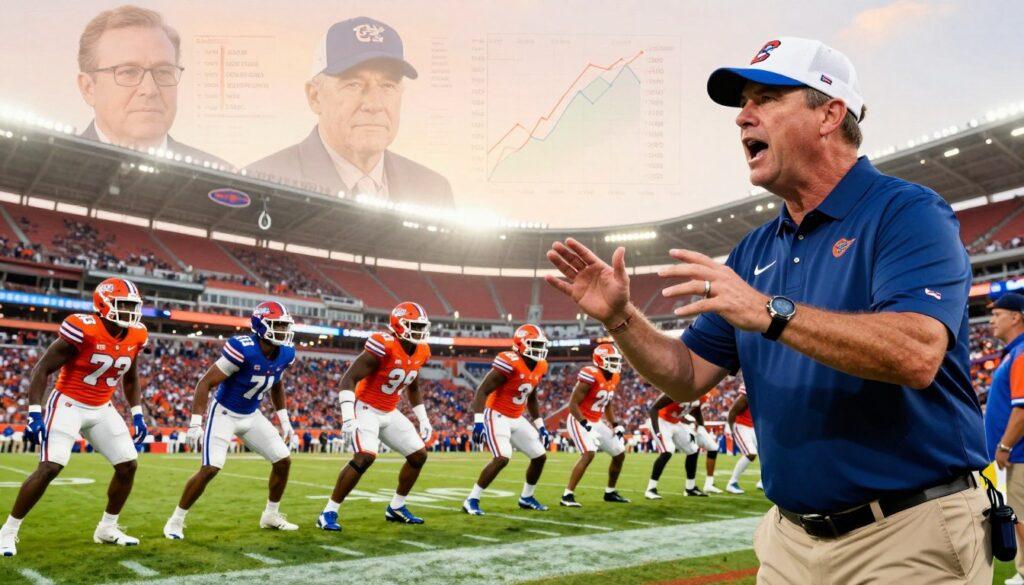
Imagine a disco ball caught in a tornado. That’s what college football looks like today—a mix of chaos, big dreams, and huge buyouts. When LSU fired Brian Kelly in the middle of the season, it was more than a local issue. It was a big change that shook the whole college football world.
Athletic directors are looking at their lists like they’re bad poker hands. There’s a shortage of top leaders, making it hard to find the right person. This season, we’ve seen a record number of power conference jobs open up.
The demand for successful coaches is higher than ever. It’s not just about filling spots. It’s about a rush to find the best leaders.
Most new FBS coaches start as assistants or high school coaches. They’re usually around 43 years old when they get their first big job. But this year, finding the right person is harder than ever because of big contracts and broken dreams.
The SEC is leading the way, hiring 20.9% of all new coaches. In the South, college football is more than a game. It’s a market where hope is the main product. The current program trends show a unique case of fear leading to big spending.
Every AD’s decision comes down to one question: can we afford not to join the rush? It seems the answer is driving the most expensive change in history.
Quantitative Analysis Before/After
Modern college football is more about numbers than emotions. The real story is in the financial reports and coaching analytics. This is where a team’s future is decided, not on the field.
This season, ten head coaches left their jobs, costing a total of $169.4 million. It’s not about talent or facilities. It’s about the big severance checks.

Florida State spent over $400 million on new facilities. Now, they might have to pay $59 million to fire Mike Norvell. It’s like spending on a spaceship and then scrapping it for more than its worth.
Auburn had to pay $15.4 million to let go of Hugh Freeze. In today’s market, that’s a small price to pay.
Where do these expensive coaches come from? The path is clear and almost predictable. It’s not about mentorship, but about quick promotions.
Most Power-Five head coaches start by managing specific positions. About a third of them have been associate head coaches for an average of 2.7 years. It’s a stepping stone, but a big one.
The best way to get a top job? Be a successful Group of Five head coach. One-third of all Power-Five hires follow this path. It’s like moving up from the minor leagues, but with huge buyouts.
Here’s the raw data on coaching pathways, the numbers that define the “before” in every hiring search:
| Career Path | Percentage of FBS Hires | Key Insight |
|---|---|---|
| Former Power-Five Associate Head Coach | 32.6% | The “heir apparent” role, averaging under 3 years. |
| Power-Five Positional Coach | 69.8% | The overwhelming majority grind here first. |
| Former Group of Five Head Coach | 33.8% | The most common external path to a top job. |
| Internal Promotion | 9.4% | The rarest move, showing a stark aversion to homegrown talent. |
And that last figure is the kicker. Internal promotions account for less than 10% of hires. Schools prefer to spend big on an external “savior” over promoting someone from within.
The “before” is a fair contract with bonuses. The “after” is a huge financial hole. This isn’t just about winning or losing. It’s a high-risk financial game where the biggest gamble is the coach’s severance package.
Key Turnaround Stories
The world of college football coaching is full of ups and downs. Every new hire is a big bet on a coach’s ability to lead a team to success. The most interesting stories often come from unexpected places.
Take the recent change at Florida coach changes. They let go of Billy Napier, who had done well in the Sun Belt. Then, they brought in Jon Sumrall, who also had success in the Sun Belt. It’s like trading a car for another car with different wheels. Fans wanted a big change, but they got a smaller one instead.
This isn’t just Florida being Florida. It’s a common pattern. Coaches who did well in smaller leagues often struggle in bigger ones. Luke Fickell, Scott Frost, and Mike Norvell are examples of this.
But, there’s also the other side. Texas A&M paid Jimbo Fisher a lot to leave. People thought it was crazy. Then, Mike Elko came in and started winning. It looks like a smart move now.
There are also the coaches who were almost hired. Auburn wanted Lane Kiffin, but he stayed at Ole Miss. It shows that sometimes, the best candidates aren’t interested. You can learn more about Florida Gators coaching strategies and history in our analysis.
What makes a coach succeed? It’s not just about winning games. It’s about fitting in with the team’s culture. A coach’s success in one place doesn’t always translate to another. For example, the Steve Pyne high school football rebuild is a different story than a Power Five team.
The real story of florida coach changes and others isn’t just about winning games. It’s about the hard work done before the season starts. The carousel is just the beginning. The real story is what happens after everyone is watching.
Predicting the Future
Trying to guess who will be the next college football coach is like playing roulette during an earthquake. The calendar is like a villain. It forces teams to choose: take a risk on a mid-season change or lose a whole recruiting class.
Desperate teams might spend big money, hoping to win. To find the next big thing, look at coaching trees. Coaches like Urban Meyer and Brian Kelly have grown many successful head coaches. Nick Saban and Todd Graham have branches all over the map.
Data can guide us. The SEC is not just a league; it’s a factory for head coaches, making up over 20% of all hires. But the best moves often come from Conference USA. Maybe the next big hire is a hidden talent from a smaller school.
The future looks fast-paced. More money will be spent. More coaches will fail. In Florida, success is measured by your bank account. The carousel keeps spinning. We just hope our team stays safe.