


Before algorithms tracked engagement, sociologists were studying fan passion. A 2002 paper called Gator fans’ love for football “serious leisure.” It’s like earning a Ph.D. in being a fan.
This wasn’t just watching games. It was a career that required dedication and personal investment. Fans saw their team as a key part of their identity. It was a place where they felt at home.
The numbers showed the depth of fan commitment. 85,000 fans filled The Swamp for games. Eighty percent of non-students traveled from afar to watch. Tailgating was a sacred tradition, not just a party.
This history shows a fundamental truth. The passion wasn’t created by marketing. It came from a basic human need for belonging. The stadium was more than a place to watch games; it was the heart of a community.
Key Programs’ Influence
To see real influence in college sports, look at the financials, not just the scores. The florida impact NCAA football is a big deal. It turns Saturday games into major economic boosts.
The University of West Florida, a Division II school, is a great example. Its athletic department is like a big company. It projects an average annual economic output of $49.7 million. That’s a lot of money.

Let’s dive into the numbers. Those 15 varsity programs support 648 jobs every year. This includes not just coaches and trainers but also hotel staff, restaurant workers, and even the barista at the tailgate.
The personal income generated is $91.6 million in Escambia County alone. Tax revenue adds another $31.2 million to the government’s coffers. This shows the florida impact NCAA athletics has on the economy.
Now, let’s talk about football. UWF’s program, started in 2016, is a big deal. It accounts for 24% of athletic expenses. Its five-year economic output is projected to be $23.3 million, supporting 88 jobs.
Think about that. A new football program at a D-II school is like a $23 million economic boost. This shows the huge impact Florida’s Power 5 programs have.
The UWF case study proves the florida impact NCAA model works at all levels. It’s like a big economic circle. A football game in Pensacola has the same economic effect as one in Gainesville, just on a different scale.
What makes this unique in Florida? The state’s tourism, population, and fan culture make games big events. Visitors spend a lot, boosting local businesses.
Every dollar spent at the concession stand helps the local economy. The construction of a new facility is not just an upgrade. It’s a jobs program. The florida impact NCAA programs create jobs in many areas.
This influence goes beyond money. Success in programs like UWF’s football team boosts enrollment and alumni engagement. It puts the university and community on the national map.
The data shows a hard truth. College football in Florida is more than a sport. It’s a partnership between public and private sectors. The wins are important, but the financial impact is more so for locals.
So, when you see a Florida team play, remember what’s at stake. It’s not just about winning. It’s about jobs, projects, and community growth. The most valuable player might be the economic impact.
Innovations from Florida Teams
Forget what you know about SEC football—Florida teams have changed the game. The florida impact SEC is about more than winning. It’s about changing how games are played.
Women’s soccer in Florida is a whole different story. It’s fast-paced and clean, with quick restarts. This style is unique and backed by data.
This approach is not just about winning. It’s about playing by new, innovative rules. And where does this happen?
Sunshine State academies and colleges feed into the USWNT pipeline. They teach a high-pressing, chance-creating mentality. This is the real florida impact.
The men’s side of Florida football is just as bold. The SEC became top by trying new things. Remember the spread offense? Florida teams were early adopters.
The Gators’ coaching strategies were often experimental. Some worked; others didn’t. But they always pushed the limits.
Florida’s defense was also innovative. They recruited fast players and created unique schemes. This was not just evolution—it was re-engineering.
The innovation goes beyond the field. Gatorade, born from University of Florida research, changed sports nutrition worldwide. This is the Florida approach.
Florida’s innovative streak comes from its culture. There’s a willingness to challenge the status quo. Whether it’s developing a dual-threat quarterback or championing women’s soccer, Florida reinvents football.
This innovation affects the SEC as a whole. When one Florida program succeeds, others must adapt. This shifts the entire competitive landscape.
The next time you watch a Florida team, look beyond the scoreboard. You’ll see innovations that could change the sport forever.
Talent Pipeline to Pros
Florida’s real export isn’t oranges; it’s professional football players ready for the big leagues. The state doesn’t just find talent; it creates it in a unique environment. The draft is seen as a graduation ceremony, not the end.
This process starts early. The “serious leisure” fan base is not just watching; they’re demanding. High school football games are like auditions, making players mentally tough.
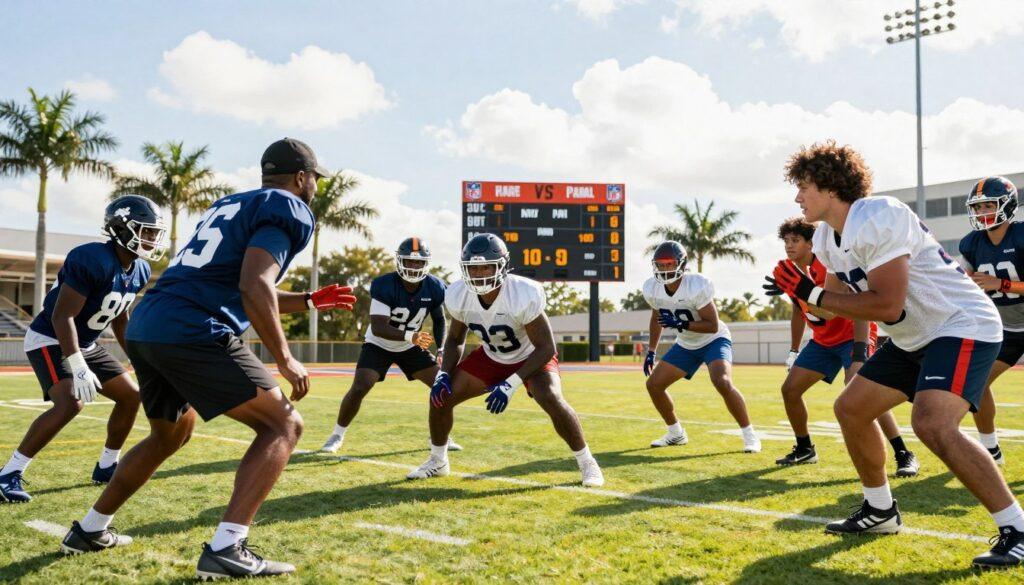
College programs then refine this talent with top-notch facilities. These places rival professional teams. The investment in these programs is huge, focusing on player development.
Florida’s football culture values speed, space, and explosive athleticism. This style fits the modern NFL perfectly. It’s football for the highlight-reel era.
What traits does this environment instill? Let’s break it down:
- Speed processing: Players learn to read and react at NFL tempo
- Positional versatility: The spread offense era demands players who can do multiple things
- Big-play mentality: Florida football rewards the spectacular, not the conservative
- Competitive resilience: Every practice, every game is a battle for status
This isn’t by chance. It’s a philosophy that prepares players for the next level. When scouts watch Florida tape, they see players ready for the pros.
| Pipeline Metric | Florida | Texas | California | National Average |
|---|---|---|---|---|
| NFL Players per Capita | 1 per 83,000 | 1 per 97,000 | 1 per 105,000 | 1 per 212,000 |
| Top-100 Draft Picks (Last 5 yrs) | 24 | 19 | 17 | N/A |
| HS to NFL Conversion Rate | 0.8% | 0.6% | 0.5% | 0.2% |
| Average NFL Career Length | 4.2 years | 3.9 years | 3.7 years | 3.3 years |
The numbers show Florida’s system is effective. It produces players who last longer in the NFL. The high school to NFL conversion rate is key here.
Florida focuses on football IQ for the modern game. Players learn to operate in space and make quick decisions. These skills are essential in today’s NFL.
The florida impact NFL story is about quality, not just quantity. Players arrive ready to compete, thanks to intense development. This is what happens when your minor league system is as intense as the pros.
Understanding the florida impact NFL means looking at the whole ecosystem. From intense Friday night crowds tracking every performance to top college facilities. This pipeline transforms talent, making players ready for Sundays.
So, when you see a Florida player picked early in the draft, remember: it’s not a surprise. It’s the result of a massive investment in football. The florida impact NFL is a testament to this investment.
National Perception
From up high, Florida football culture looks like a sun-kissed stereotype. It’s seen as bold, wild, and a bit out of control.
The 2023 College Football Playoff selection put this image to the test. An undefeated Florida State was passed over for a one-loss Alabama. The debate was fierce. Was it about one player, or the whole system?
It’s a common issue. Critics often judge women’s soccer by men’s standards. The same happens with Florida football, judged against traditional, Midwestern norms. These stereotypes are outdated and unfair.
But the truth is different. Florida football is a big economic driver. It’s a talent pipeline to the NFL. Fans’ loyalty is unmatched. The focus on flaws misses the culture’s true power.
Florida’s football scene is always ahead of the game. It’s creating new trends and success stories. While outsiders are stuck on past issues, Florida keeps pushing forward. Its influence is unstoppable, and the rest of the world is always trying to catch up.