

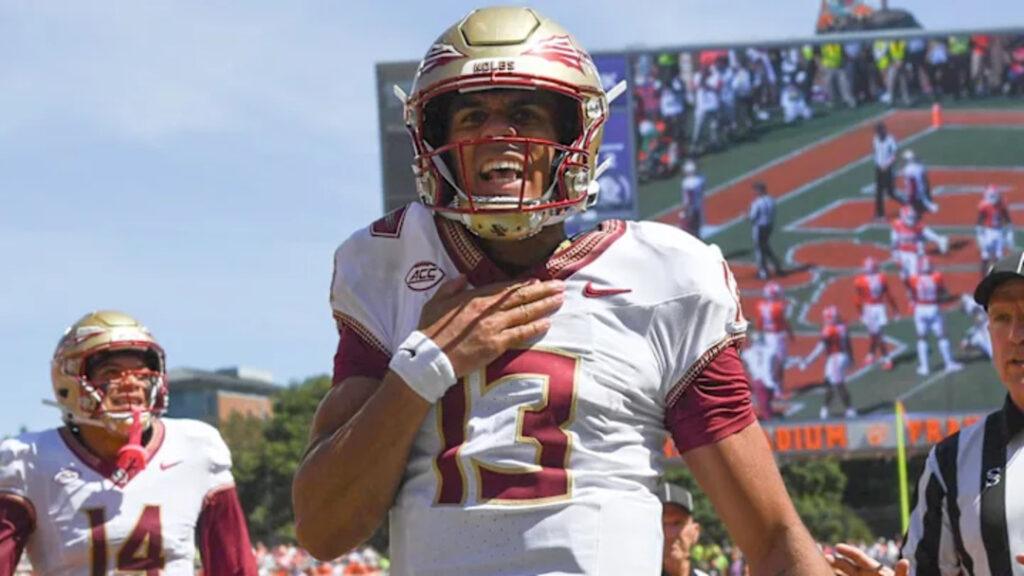
Florida State is making a deliberate bet on familiarity, trust and emotional equity at a moment when college athletics is being reorganized in real time. Jordan Travis’s return in a new off-field role matters now because the modern football economy increasingly rewards programs that can turn beloved former stars into year-round engines of connection, loyalty and revenue.
I see this move as more than a feel-good reunion. It is a revealing sign of how major programs are redefining influence, using former players not simply as symbols of the past but as working parts of a more aggressive future.
A Familiar Face Returns at a Strategic Moment
Jordan Travis remains one of the most resonant figures of Florida State’s recent era, and that resonance carries real weight. He is stepping into a role with Seminole Boosters tied to the launch of Seminoles United, a new initiative designed to deepen engagement with alumni, donors and fans through exclusive access, original content and premium experiences.
That kind of assignment is not ceremonial. It places Travis in the middle of a broader effort to keep supporters connected to the program long after Saturdays end and long before kickoff returns. In practical terms, the job blends storytelling, relationship building, brand identity and fundraising. In emotional terms, it gives Florida State a trusted voice at a time when many supporters want to feel closer to the program while also understanding why financial participation matters more than ever.
I think that combination is exactly why this role stands out. Programs across the country are searching for new ways to make loyalty feel tangible. Florida State is trying to do it with a player whose bond with the fan base was built in full view, through setbacks, growth, victories and a career that became inseparable from the program’s climb back toward national relevance.
Why Jordan Travis Fits This Role So Naturally
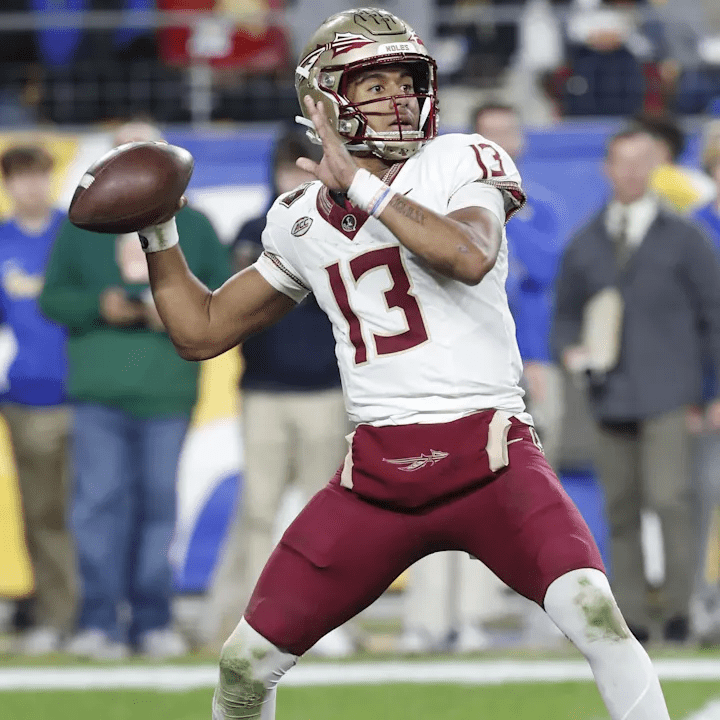
Travis is not simply a recognizable former quarterback. He is one of the most productive and meaningful players Florida State has had in recent memory. His career in Tallahassee was defined by durability of public connection as much as by production. He evolved from an intriguing dual-threat option into the face of the program, then into a player whose leadership and improvisational style helped restore belief around Florida State football.
That matters because the modern booster and fan-engagement environment is built on authenticity. A famous name alone is not enough. The person has to feel credible to longtime donors, younger fans and alumni who want their support to be attached to someone who reflects the program well. Travis checks those boxes cleanly. His public image has long been tied to resilience, accessibility and emotional investment in Florida State itself.
His football résumé strengthens that credibility. During his Seminoles career, he compiled elite dual-threat production and left holding or sharing major program marks in total offense, touchdown responsibility and quarterback rushing production. More important than the numbers, though, is what those years came to represent. He became a central figure in Florida State’s return to national conversation, which means he carries not just statistical authority but symbolic capital.
That is why Jordan Travis Seminole Boosters is such a compelling phrase right now. It captures more than a staffing update. It signals an attempt to convert affection into structure and memory into momentum.
Seminoles United Reflects a Bigger Shift in College Football
The larger significance of Travis’s new role lies in what it says about the state of the industry. College football’s financial model has become more layered, more public and more demanding. Programs are balancing traditional booster culture, NIL-era expectations, donor fatigue, content strategy and brand management all at once. In that climate, fan engagement can no longer be treated as a seasonal accessory.
Seminoles United appears to be designed as an answer to that challenge. The concept points toward a more curated membership experience, one that promises supporters more consistent touchpoints with the program through storytelling, access and community-building. That is a familiar strategy in professional sports and premium media, but in college athletics it carries a different emotional texture. The connection is not only transactional. It is generational, regional and identity-driven.
I read Florida State’s decision here as a sign that the program understands this evolution clearly. Supporters are not just buying tickets or making one-off donations. They are being asked to participate in an ecosystem. That ecosystem needs recognizable people to give it shape. Travis offers the kind of built-in legitimacy that a new initiative needs during its early phase.
The key insight is that this hire is not really about nostalgia; it is about conversion. Florida State is trying to convert personal attachment into sustained engagement, and Travis gives the school a uniquely credible bridge between institution and audience.
The Timing Is Especially Important
The timing also makes sense for Travis personally. His playing career took a difficult turn after injury complications ultimately led him away from professional football, a painful outcome for a player who had once looked positioned for a longer on-field future. Returning to Florida State in a meaningful professional capacity offers a different kind of continuity. It keeps him close to the community where his stature is strongest and where his story still carries emotional force.
That matters because college football has become more conscious of life-after-playing pathways for high-profile athletes. The most successful programs increasingly understand that former stars can remain valuable long after they stop taking snaps, especially when they are articulate, personable and comfortable occupying public-facing roles. Travis has already shown a willingness to stay active in the Florida State orbit, and this move formalizes that presence.
For Florida State, it also sends an internal message. The program is reinforcing the idea that major contributors remain part of the family, and that their influence can continue in visible ways. That sort of continuity helps with culture as much as fundraising. Recruits notice it. Current players notice it. Donors certainly notice it.
What This Means for Florida State’s Brand
Brand building in college football used to be driven primarily by wins, recruiting rankings and television exposure. Those pillars still matter, but they no longer operate alone. Now the strongest brands are the ones that can tell a coherent story across multiple platforms and throughout the calendar.
Florida State’s story under this approach is not just about what happens on the field in the fall. It is also about who represents the program between seasons, how fans are invited inside the tent, and whether supporters feel that their connection is being respected rather than merely monetized. Travis is a useful figure in that framework because he does not feel manufactured. He feels earned.
I suspect that is exactly why this role has immediate traction. Supporters can understand it without explanation. They know who he is, what he meant to the team, and why his presence carries emotional legitimacy. That gives Seminoles United a head start that many new initiatives lack.
There is also a practical media value here. Travis knows how to command attention without sounding overly corporate. In a landscape crowded with subscription pitches, club launches and fan-experience branding, that matters. Programs need faces who can humanize the sales pitch. Florida State now has one of its most recognizable recent stars doing precisely that.
The Real Test Comes Next
Of course, the success of this move will not be measured by the announcement alone. It will depend on execution. If Seminoles United becomes a genuinely valuable experience with distinctive content, meaningful access and a clear sense of community, Travis could become one of its biggest strategic assets. If the initiative feels thin or overly transactional, even a beloved former quarterback will not be enough to sustain excitement.
That is the real standard here. Personality can open the door, but substance has to keep people inside. Florida State will need to prove that this effort offers more than branding language and sentimental appeal. The fan base has shown repeatedly that it will respond to authenticity, especially when the program presents a clear vision. Travis helps establish that tone, but the broader platform will have to deliver on it.
Why This Matters Right Now
This development matters because it captures where college football is heading. Programs are no longer competing only for wins, recruits and airtime. They are competing for attention, emotional investment and year-round financial participation. Florida State’s decision to put Jordan Travis in a visible role within Seminole Boosters is a direct response to that reality.
I view it as a shrewd move with implications beyond one job title. It ties a modern engagement strategy to one of the most trusted faces of the program’s recent revival, and it does so at a moment when fan connection has become inseparable from competitive ambition. If Florida State wants to build a stronger future, this is exactly the kind of move that shows it understands what the present now demands.