

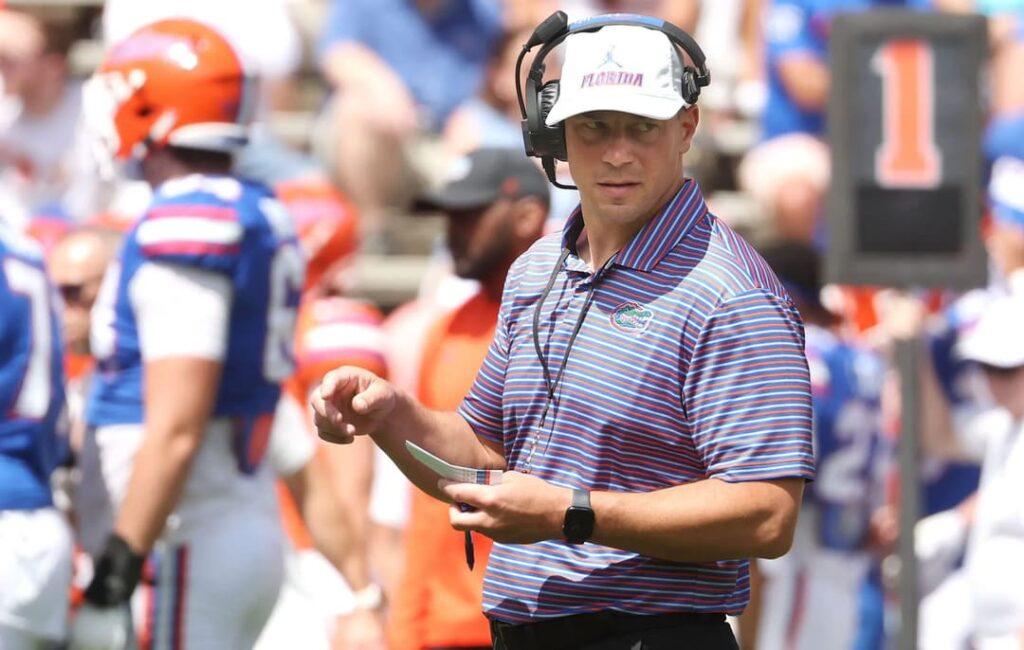
Florida Gators recruiting is about to give Jon Sumrall something more valuable than offseason applause: a live read on whether his first-year energy is translating with prospects. The first official visit weekend of the summer matters because Florida is no longer just selling a coaching change; it is selling a future that recruits have to believe before the Gators prove it on Saturdays.
That makes this weekend a pressure point, not a calendar item. Florida’s early momentum sounds promising, but the next step is turning visits, relationships, and roster needs into commitments that strengthen the first real Sumrall blueprint, especially after Florida’s first Jon Sumrall season received its pressure dates on the 2026 schedule.
Florida Gators Recruiting Now Has to Move From Buzz to Proof
The first months of a new coaching era are often filled with clean language. Energy. Culture. Direction. Belief. Those words matter, but recruiting is where the message starts facing its first real audit.
Florida can tell prospects that Gainesville is changing. The staff can sell the SEC stage, The Swamp, development, early opportunity, and the chance to help define the new era. But official visits ask a sharper question: does the pitch feel real when players and families sit inside the building?
That is why this weekend matters. A strong visit cycle can turn Florida’s offseason into something more concrete. A flat one would not ruin the class, but it would raise the first real question about whether Sumrall’s momentum is carrying beyond the fan base.
The timing also helps. Florida’s 2026 season has its early TV windows, its Auburn stress test, and its Florida State ending already attached to the calendar. Recruits can now see not just the idea of Sumrall’s first season, but the pressure points that will define it.
That gives the staff a useful message: come now, and the climb can be yours too.
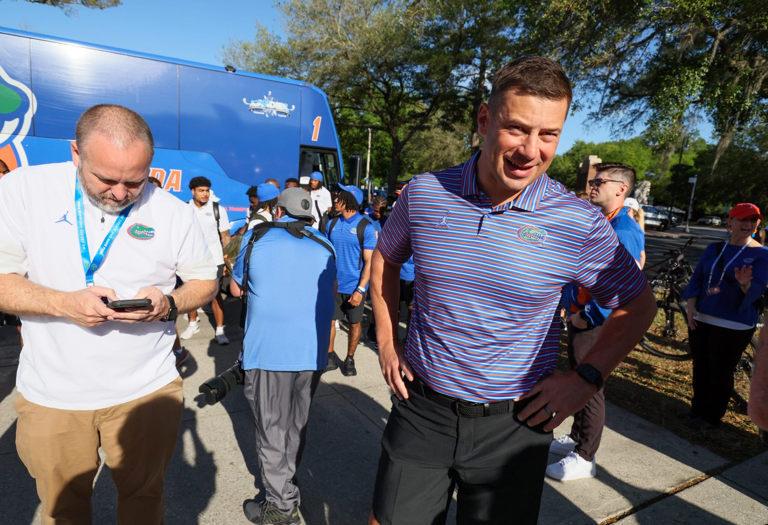
Official Visits Are Where a New Coach’s Message Gets Tested
Official visits are different from game-day visits. There is less crowd noise, less emotional cover, and more time for direct conversations. Prospects get a clearer look at staff relationships, positional plans, facilities, campus life, player development, and the honesty of the depth chart.
That is where Sumrall’s staff has to be sharp. Florida does not need to sell itself like a desperate program. It needs to sell itself like a major program with a new plan and a clear path to playing time.
The broader NCAA football recruiting calendar gives this part of the year its structure, but each school still has to create its own urgency. For Florida, the goal is not simply to host prospects. It is to make the weekend feel like a coordinated argument for why the Gators are moving quickly.
That argument has to be specific. Offensive linemen need to hear how they fit. Linebackers need to see a role. Defensive backs need to understand why the roster path is real. Skill players need to believe the offense will become attractive enough to justify the leap.
The best recruiting weekends do not feel like tours. They feel like program auditions.
The Visitor List Shows Where Florida Wants to Build
The names around Florida’s first official visit weekend point to a staff trying to reinforce premium positions. Offensive line, linebacker, defensive back, running back, and defensive front targets all matter because they reveal how the Gators want the next class to look.
High-profile prospects such as Kennedee Jackson, Ja’Bios Smith, and Kamauri Whitfield give the weekend a clearer shape. Jackson brings the kind of offensive tackle profile that can define a class if the staff keeps stacking line talent. Smith would address linebacker, a position where Florida needs real long-term answers. Whitfield adds an in-state defensive back angle, which matters for a staff trying to hold ground inside Florida.
The wider group of visitors also gives the weekend a competitive edge. Some prospects are committed elsewhere. Others have heavyweight SEC and national options. That is exactly why the weekend is useful. Florida does not need a recruiting class built only from easy wins. It needs to win battles that tell the rest of the board the Gators are credible again.
The clearest way to read the weekend is by position group:
| Recruiting Area | Why It Matters for Florida | What a Strong Weekend Would Signal |
|---|---|---|
| Offensive line | Sumrall needs a physical foundation for the rebuild | Florida can sell development and early identity up front |
| Linebacker | The class needs defensive structure beyond the front | The staff can close on priority defenders |
| Defensive back | SEC depth demands constant competition | Florida can turn roster needs into opportunity |
| Running back | Skill talent helps define offensive direction | The offense has enough appeal to attract playmakers |
| Defensive line | Physical recruiting shapes long-term SEC viability | Florida can keep building a tougher roster core |
The table shows the bigger point. This is not just about collecting stars. It is about building the kind of class that matches what Sumrall says Florida is becoming.
The Gators Cannot Recruit on New-Coach Energy Forever
New-coach energy is powerful, but it has a shelf life. The first summer gives Sumrall a window where prospects can buy into possibility before the first season starts answering questions in public.
That window is valuable because recruits can imagine themselves as part of the turning point. They can be told they are not joining a finished product; they are joining the group that helps shape it. That message can be persuasive, especially when a coach arrives with a reputation for toughness and program-building.
But the risk is hype without conversion. If Florida hosts major targets and does not turn enough of that interest into commitments, the story changes. Momentum becomes speculation. Confidence becomes pressure. Fans start asking why visits are not becoming pledges.
That does not mean every visitor has to commit immediately. Recruiting timelines vary, and serious prospects often take multiple visits before deciding. But Florida needs enough positive movement to keep the board warm and the class narrative strong.
Summer recruiting is a sequence. The first weekend sets the tone. The follow-up work determines whether the tone becomes a trend.
Sumrall’s Recruiting Pitch Has to Match the Roster Reality
Florida’s staff has a useful advantage: it can point to real opportunity. The roster is not so settled that recruits have to squint to see a path. That is especially true in areas where the Gators have been active after spring, including defensive back depth and broader competition across the roster.
Opportunity, though, has to be handled carefully. Prospects want a path, not a panic signal. Florida has to show that playing time can be earned because the staff is building competition, not because the roster is desperate.
That distinction matters. The best programs recruit urgency without sounding unstable. They tell prospects the standard is rising, not that the cupboard is empty.
This is where Sumrall’s staff can separate itself. If it presents Florida as a place where development, early competition, and SEC exposure all meet, the pitch becomes stronger than a generic “come help us rebuild” message. Recruits hear that everywhere. The Gators need to make it feel more credible in Gainesville.
The program’s current recruiting push, including the monitored names around Florida’s first official visit weekend, gives Sumrall a chance to show that his pitch can travel from spring optimism into summer decisions.
The Next Signal Is Not Just Who Commits First
The immediate temptation will be to judge the weekend by commitments alone. That is understandable, but too narrow.
The stronger signals will be broader. Do prospects extend conversations after leaving campus? Do Florida predictions increase around priority targets? Do recruits talk about the same themes the staff is trying to sell? Do visitors schedule return trips, move timelines, or publicly narrow their focus?
Those details matter because recruiting momentum often arrives before the commitment graphic. A strong official visit can shift a family’s comfort level, alter a prospect’s comparison of programs, or put pressure on another school to respond.
The staff also needs to protect against one of recruiting’s most common traps: chasing headlines instead of fit. Florida should want elite talent, but it also needs prospects who align with the roster plan. A top-heavy class that misses positional needs would create a different problem later.
The weekend’s value will come from whether it creates lasting recruiting traction. If Florida exits with stronger position in multiple battles, Sumrall’s first summer starts to look more serious. If the buzz fades without movement, the Gators will have to work harder on the next visit cycle.
Florida Gators recruiting is entering a revealing stretch because the sales pitch is no longer abstract. Sumrall has his first season framed, his roster needs becoming clearer, and a group of prospects arriving while the program still has fresh-start momentum. If Florida turns this weekend into real traction, the 2027 class can become more than a promising early headline. It can become the first roster-level proof that the new era is not just being sold well it is being built.