

The pressure on mid-tier college football programs has never been higher, and that is exactly why Florida Atlantic’s offseason feels more important than it might have a year ago. At a time when rosters can change overnight and continuity is increasingly rare, I see one of the most meaningful spring storylines in the country taking shape in Boca Raton: a program trying to turn stability into momentum.
For Florida Atlantic Owls football, the 2026 season is not simply about improvement. It is about proving that a roster can stop drifting, a coaching vision can begin to take hold, and a team that finished 4–8 can move from transition into traction.
Why Quarterback Continuity Changes Everything
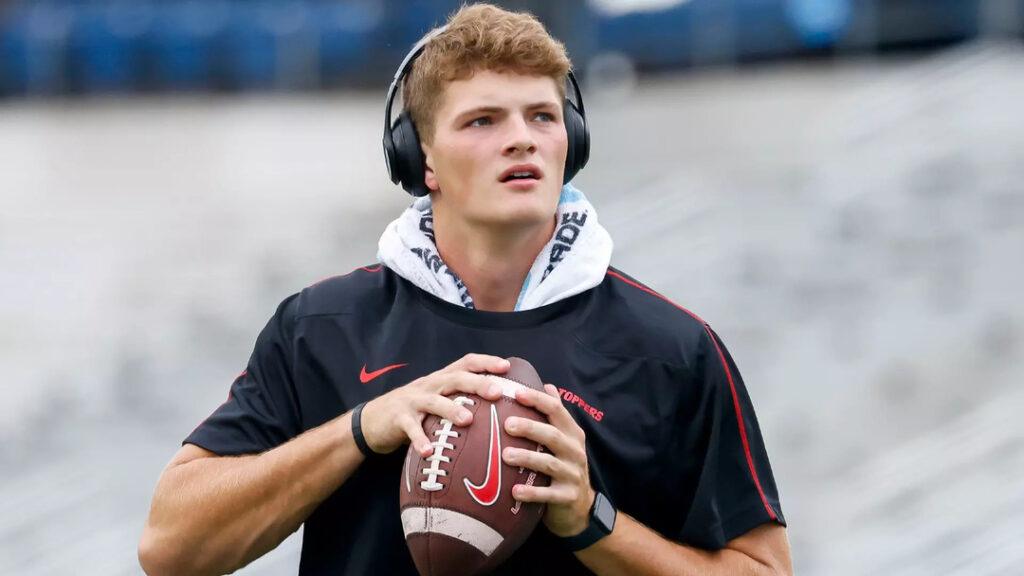
In modern college football, the return of a starting quarterback is no longer a routine development. It is a competitive advantage. With Caden Veltkamp back for the 2026 season, FAU enters the year with something many programs spend the entire offseason chasing: a known answer at the game’s most important position.
That matters on multiple levels. The obvious benefit is on the field, where repetition and familiarity can sharpen timing in the passing game, improve pre-snap recognition, and create a more efficient offense. But the larger impact is often cultural. A returning quarterback gives a program an internal reference point. He becomes the bridge between what the coaching staff wants and what the locker room is actually capable of executing in real time.
I think that distinction is especially important for FAU right now. The Owls are still in the early phase of establishing their identity under head coach Zach Kittley, and that process becomes far more realistic when the offense is not relearning itself from scratch. Year 2 in any system should bring a clearer understanding of expectations, but that is only meaningful if the players running it can translate theory into rhythm. Veltkamp’s return gives FAU its best chance to make that leap.
This is not just about arm talent or experience on paper. It is about command. When a quarterback returns in an era defined by movement, he sends a signal to the roster that the program is worth investing in. That kind of continuity can settle an offense, calm a team, and offer a level of leadership that cannot be manufactured in August.
Zach Kittley’s Second Year Brings Sharper Expectations
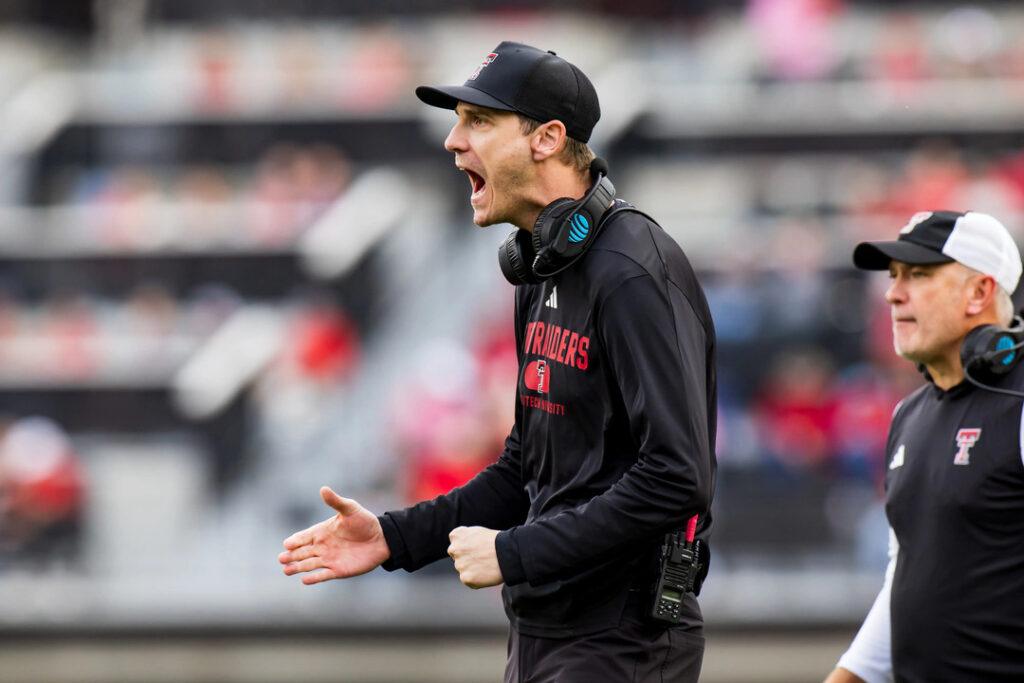
Coaching transitions are usually judged too early and too simplistically. First seasons often produce more noise than clarity, especially when staff changes, scheme installation, and roster evaluation are happening all at once. By the second year, the excuses shrink and the framework becomes visible.
That is where FAU now finds itself under Kittley.
The first thing I look for in a coach entering Year 2 is whether the team appears more coherent than it did at the same point the previous spring. Not necessarily more polished, but more sure of what it is trying to become. The Owls seem to be moving toward that stage. The tone around the program is less about introduction and more about refinement. That shift matters because it suggests the staff is no longer spending most of its energy on basic installation. It can now focus on consistency, accountability, and detail.
Kittley’s background naturally raises expectations for offensive improvement. His reputation is tied to pace, aggression, and production, which means FAU will be judged heavily by whether it looks more dynamic and more decisive on that side of the ball. A second spring in the same system should help. Concepts that once required explanation should now require execution. That is a major difference.
Still, the real challenge is not whether the Owls can flash during practice. It is whether the offense can sustain drives, protect the football, and create enough week-to-week reliability to support a program trying to climb out of a losing season. Explosiveness is attractive. Stability is what wins enough games to alter a team’s trajectory.
The Transfer Portal Is No Longer Optional
Every roster in the country now lives in two realities at once: the one built through development and the one reshaped through acquisition. FAU’s portal activity reflects that new normal, but it also reveals something more specific about the state of the program.
The Owls have used the portal to add wide receiver help, build out depth, and strengthen special teams with a new kicker. None of those moves should be dismissed as secondary. In fact, I would argue they say more about the staff’s evaluation of the roster than any public spring optimism ever could.
Adding receivers suggests an effort to support the returning quarterback and make the passing game more competitive, more flexible, and more resilient. Bringing in depth pieces indicates the coaching staff knows it cannot survive a season with thin position groups or limited internal pressure. Upgrading special teams is often one of the clearest signs that a program is trying to become more complete rather than merely more exciting.
That matters because rebuilds can fail in subtle ways long before they fail in the standings. A team can improve its offense and still lose games because it lacks rotational depth, struggles in field-position battles, or cannot survive injuries over a full schedule. I see FAU’s portal approach as an attempt to avoid exactly that trap.
The most effective transfer strategies are not only about star power. They are about insulation. They give a coaching staff more options, force more competition, and raise the floor of the roster. For a team coming off a 4–8 season, that floor may be just as important as the ceiling.
Spring Practice Is About More Than Optimism
Every program sells hope in the spring. The useful question is whether the hope sounds generic or specific.
What stands out to me about FAU’s current posture is the emphasis on improvement and consistency rather than inflated promises. That is the language of a team that understands where it fell short and knows progress will come from disciplined repetition, not offseason hype. It is also the kind of framing I would expect from a staff that sees 2026 as a pivotal year.
Spring practice is where teams begin to answer the uncomfortable questions they could not fully solve in the fall. Can the offense operate with cleaner timing? Is the quarterback processing faster? Are younger or newer players ready to contribute? Can the team avoid the unevenness that defined too many stretches last year?
Those are not glamorous questions, but they are the right ones. Programs in FAU’s position do not move forward through branding. They move forward through sharper execution in ordinary moments. Third downs. Red-zone possessions. Special teams assignments. Defensive communication. The cumulative effect of competence is often what changes a season.
If the Owls leave spring with a stronger internal standard, that may be more meaningful than any single highlight. Improvement at this level is often measured less by spectacular plays than by the disappearance of preventable mistakes.

The 4–8 Record Still Frames the Conversation
No amount of offseason optimism can erase the fact that FAU is coming off a losing year. Nor should it. The 4–8 record is not just a number attached to the past; it is the context that gives urgency to everything happening now.
A season like that tends to expose structural weaknesses. It suggests the team was not reliable enough, deep enough, or consistent enough to compete across the full schedule. It often reveals a roster caught between what it wants to be and what it can actually sustain. That is why 2026 feels less like a fresh start and more like an audit.
I think the Owls have to show tangible progress in three areas if this season is going to look meaningfully different. First, the offense must become steadier around Veltkamp instead of asking him to carry the burden of weekly reinvention. Second, the broader roster must prove that portal additions are translating into better competition and cleaner execution. Third, the team has to demonstrate that the coaching staff’s second year brings not just schematic familiarity, but operational control.
That does not require FAU to become a finished product overnight. It does require the program to look more intentional, more resilient, and more difficult to knock off course.
Why This Matters Right Now
The reason this story matters in April is simple: college football has become so volatile that continuity itself now deserves attention. Programs outside the sport’s financial and recruiting elite often live season to season, quarterback to quarterback, portal cycle to portal cycle. When a team like FAU retains its starter, reinforces the roster, and enters Year 2 under the same head coach, that is not background noise. It is the foundation of a possible turning point.
I do not think the Owls need to be framed as a miracle team or an overnight contender to make this season compelling. Their significance lies in something more revealing: they are a case study in how a program tries to regain control in an era built on instability. If FAU can turn quarterback continuity, roster competition, and second-year coaching clarity into real progress, it will have achieved something increasingly difficult in modern college football: a credible reset.
And right now, that may be the most important spring development of all.