

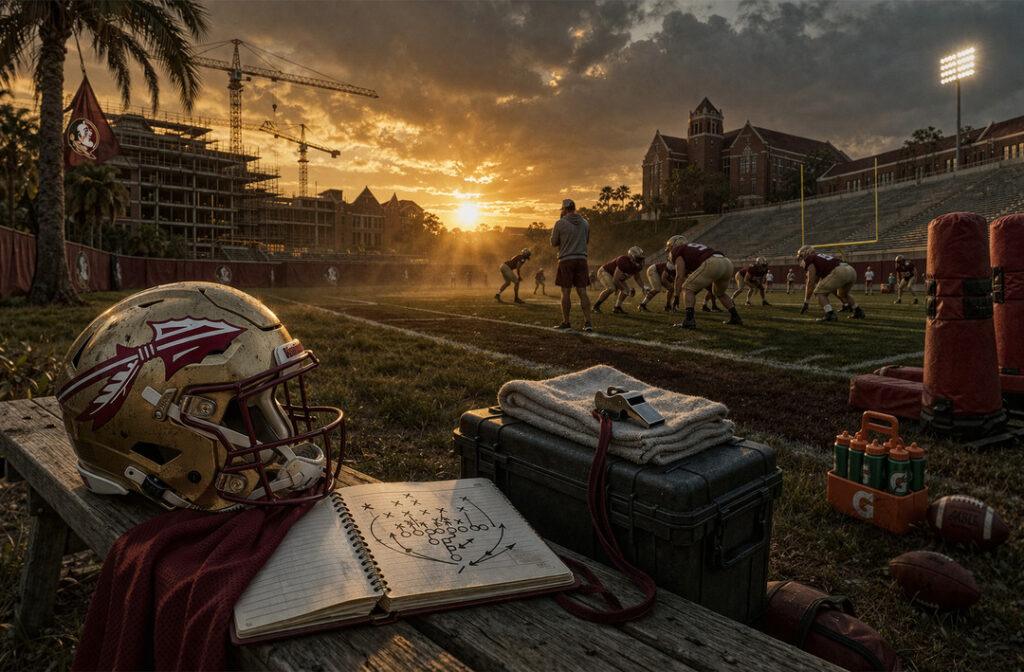
As I evaluate the current direction of the Florida State Seminoles football, one thing becomes immediately clear: this is a team in transition. The Florida State Seminoles strategy 2026 is not about flashy dominance or explosive headlines it’s about rebuilding a foundation that can sustain long-term success.
From my perspective, this is one of the most intriguing phases for any program. It’s where identity is questioned, systems are refined, and priorities are reset. Florida State is no longer chasing quick wins they’re focused on stability, discipline, and structure.
And in today’s college football landscape, that’s both a challenge and an opportunity.
The Impact of Roster Turnover in the Transfer Portal Era
One of the defining elements shaping the Florida State Seminoles strategy 2026 is the reality of modern roster management. The transfer portal has transformed how teams build and maintain talent, and Florida State has felt that impact more than most.
There has been significant turnover in recent seasons. Players come and go at a faster rate, making it difficult to maintain continuity. From what I’ve observed, this has forced the coaching staff to rethink how they approach development and system design.
Instead of building around long-term familiarity, the focus has shifted toward:
- Quick integration of new players
- Simplified systems that can be learned rapidly
- Emphasis on adaptability over complexity
This is not just a roster issue it’s a strategic evolution.
Simplifying the Offensive Identity
When I watch Florida State’s offense today, I notice a clear departure from overly complex schemes. The Florida State Seminoles strategy 2026 emphasizes balance and efficiency rather than unpredictability.
The offense is built around:
- A more even run-pass distribution
- Short and intermediate passing concepts
- Sustained drives instead of explosive plays
What stands out to me is the intentional simplicity. This isn’t a limitation it’s a choice. By reducing complexity, the team minimizes mistakes and allows players to execute with confidence.
In a rebuilding phase, that approach makes sense. It creates consistency, which is often more valuable than occasional brilliance.
Player Development Over System Complexity
Another key pillar of the Florida State Seminoles strategy 2026 is a renewed emphasis on player development. Rather than relying on intricate schemes to create advantages, the program is focusing on improving individual performance at every position.
From my perspective, this is a return to fundamentals. It’s about:
- Sharpening technique
- Building football IQ
- Creating depth across the roster
This approach may not produce immediate results, but it lays the groundwork for sustainable success. In many ways, Florida State is prioritizing long-term growth over short-term gains.
Defensive Philosophy: Containment and Discipline
On the defensive side, the Florida State Seminoles strategy 2026 reflects a similarly measured approach. Instead of aggressive, high-risk play-calling, the defense is designed to limit big plays and control the game.
Key characteristics include:
- Zone-heavy coverage schemes
- Strong emphasis on positional discipline
- Focus on containing rather than attacking
What I find interesting is how this philosophy contrasts with more aggressive defenses seen across college football. Florida State is not trying to create chaos they’re trying to eliminate opportunities for opponents.
This results in a defense that may not always generate highlight plays, but is built to force offenses into long, methodical drives.
The Challenge of Inconsistency
Of course, no rebuild comes without challenges. One of the most noticeable aspects of the Florida State Seminoles strategy 2026 is inconsistency.
There are moments where the system looks cohesive and effective, followed by stretches where execution breaks down. From what I’ve seen, this is largely a reflection of:
- Roster instability
- Ongoing adjustments in coaching strategy
- Players adapting to evolving roles
This inconsistency is not unusual for a team in transition. In fact, it’s often a necessary part of the process. The key question is whether the program can translate these growing pains into long-term progress.
Competing in a Rapidly Evolving Landscape
What makes the Florida State Seminoles strategy 2026 particularly compelling is the environment in which it exists. College football is evolving rapidly, with many programs adopting fast-paced, high-scoring offensive systems.
Florida State, however, is taking a different path. They are choosing control over speed, discipline over aggression, and structure over improvisation.
Organizations like the NCAA continue to shape the competitive landscape, influencing everything from transfer rules to player development frameworks.
From my perspective, this makes Florida State something of an outlier but not necessarily in a negative way. If executed correctly, this approach can provide a competitive edge built on consistency and control.
A Shift Toward Identity and Culture
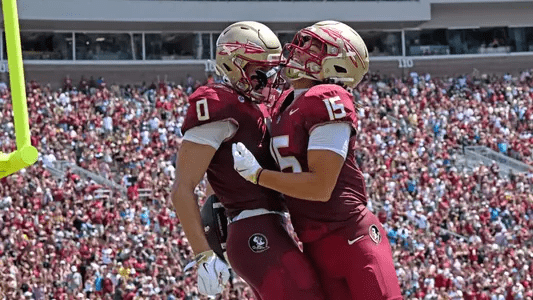
Beyond schemes and tactics, what I find most important about the Florida State Seminoles strategy 2026 is the focus on identity. The program is not just rebuilding its roster it’s redefining what it stands for.
This includes:
- Establishing a clear team culture
- Reinforcing accountability and discipline
- Creating a system players can and execute
In many ways, this cultural reset is just as important as any strategic adjustment. Without a strong identity, even the most talented teams struggle to sustain success.
Building for the Long Game
As I reflect on the Florida State Seminoles strategy 2026, I see a program that is embracing the realities of modern college football while staying grounded in fundamental principles.
This is not a quick fix. It’s a deliberate, methodical rebuild focused on:
- Stability over volatility
- Development over shortcuts
- Discipline over chaos
The results may not always be immediate, and there will likely be continued challenges along the way. But if this approach holds, Florida State has the potential to emerge with a stronger, more sustainable foundation.
In a sport increasingly defined by speed and spectacle, the Seminoles are betting on something different: control, consistency, and identity.
And in the long run, that might be exactly what brings them back to the top.