


USF Bulls football is entering the rare kind of season where the stadium story may be just as important as the scoreboard. The Bulls open Sept. 5 against FIU at Raymond James Stadium, but the deeper storyline is bigger than one in-state matchup: this is the final season before USF turns the page toward an on-campus football identity.
That gives 2026 a different kind of weight. The Bulls are not simply trying to win games under Brian Hartline. They are trying to make the next era feel real before the new stadium ever hosts a snap.
USF Bulls Football Has a Bigger Opening Than Most People Realize
Opening games usually get treated as tone-setters. For USF, the FIU opener is more than that. It is the first public test of whether the Bulls can turn a transitional season into something that feels urgent, emotional, and commercially meaningful.
USF has spent years playing home games in an NFL venue, which came with visibility, professional presentation, and Tampa familiarity. But college football is built on campus rhythm. Student walks, alumni habits, tailgate culture, and the feeling that the stadium belongs to the university all matter. That is why the final Raymond James season should not be dismissed as a scheduling note.
The Bulls’ official 2026 football schedule gives the year a clear frame: FIU to open, seven home games, and a final regular-season run in the building that has housed so much of the program’s history. For a team trying to build toward a new stadium era, that schedule becomes a runway.
The opportunity is obvious. USF can make 2026 feel like a launch season, not a waiting room.
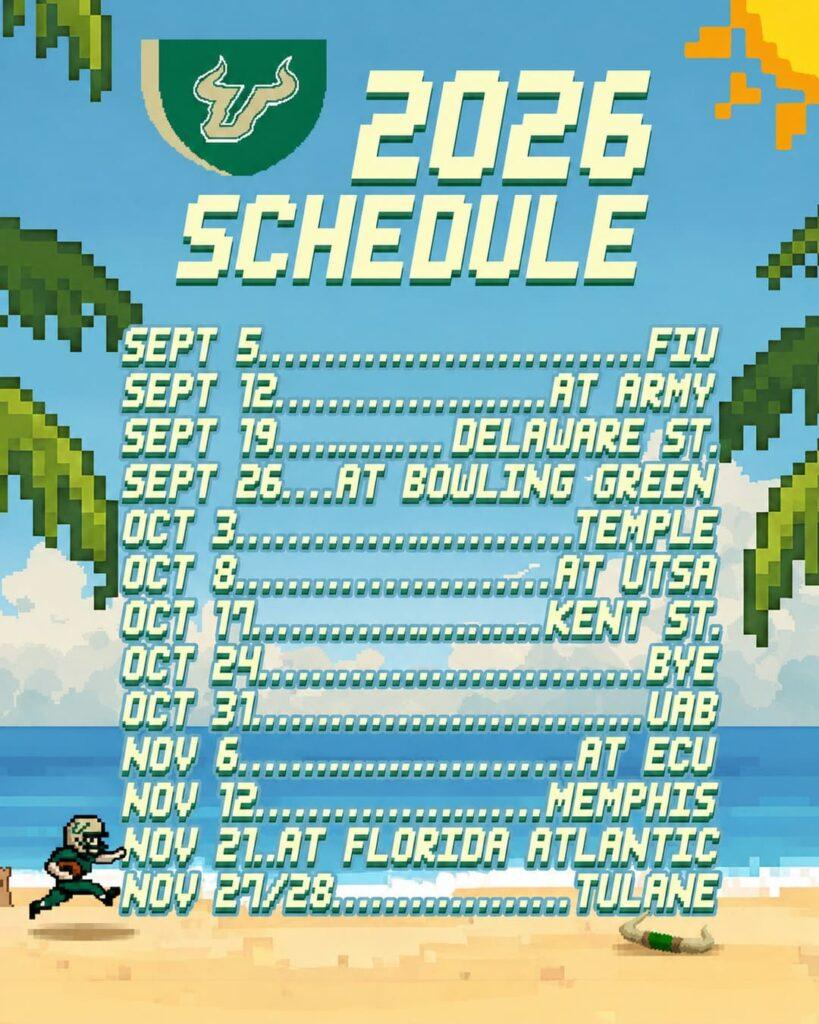
The FIU Opener Gives the Bulls a Clean In-State Hook
FIU is the right kind of opener for this particular year. It gives USF an in-state opponent, a regional storyline, and a game that should pull more interest than a generic nonconference matchup. For Florida college football readers, it also creates a useful early comparison point between programs trying to create relevance outside the state’s traditional power brands.
That matters because USF is not fighting only for wins. It is fighting for attention in one of the most crowded football markets in the country. Florida, Florida State, Miami, UCF, FAU, and FIU all occupy different lanes, but they compete for recruits, media oxygen, donor enthusiasm, and fan imagination.
A strong opener against FIU would not automatically define the season. But a flat opener would create the wrong mood immediately. The first game of a final-stadium season should feel like an event. If it does not, USF risks making the farewell year feel procedural instead of significant.
That is where Hartline’s first season becomes especially interesting. A new coach often gets time to sell belief. USF’s timing compresses that window. The coach, the schedule, and the stadium transition are all arriving at once.
Brian Hartline Has to Turn Curiosity Into Identity
Hartline brings name recognition and recruiting intrigue, but first-time head coaches are always judged by how quickly their ideas become visible. Fans do not need every answer in September. They do need to see what the program is trying to become.
That means USF has to show a football personality early. Is the team more explosive? More disciplined? More physical? Better organized in close-game moments? Those are the clues that tell fans whether a coaching change is producing more than new language.
Hartline also inherits a season with emotional stakes already built in. That can help him. The final Raymond James year gives him a natural message to sell: honor the old home, build momentum for the new one, and make 2026 feel like the bridge to something bigger.
But that message only works if the team gives it substance. New-era talk can become thin fast if the product lacks structure. The Bulls need visible football progress that fans can recognize even before the standings fully explain it.
Raymond James Gave USF Visibility, but the Campus Era Demands More
Raymond James Stadium gave USF a professional stage. The next era asks for something different: ownership. A campus stadium is not just a venue change. It is a culture change, especially for a program trying to tighten the relationship between students, alumni, donors, recruits, and game-day atmosphere.
The school’s on-campus stadium and football operations update makes the future feel more concrete, with USF moving toward a 35,000-seat stadium scheduled to open in 2027. That gives the 2026 season an unusual role. It is the last chapter of one home-field era and the marketing campaign for the next one.
Here is the cleanest comparison between what USF is leaving and what it is trying to build:
| Program Piece | Raymond James Era | On-Campus Stadium Era |
|---|---|---|
| Game-day identity | Professional venue with NFL scale | More direct campus connection |
| Student involvement | Requires more effort to centralize energy | Easier to build weekly student habits |
| Recruiting pitch | Tampa market and big-stadium feel | Facilities, campus life, and ownership |
| Fan emotion | Familiar but shared space | New home built around USF |
| 2026 pressure | Finish the old era with energy | Create belief before the move |
The table shows why the next two seasons are connected. USF cannot simply wait for the new stadium to solve identity. The Bulls need to build that identity now, while the final Raymond James season still has emotional value.
The Real Test Is Whether Fans Treat 2026 Like a Beginning
The most underrated part of this story is fan behavior. A stadium transition becomes powerful when fans act as if they are part of the construction, not just waiting to attend the grand opening.
USF needs Raymond James to feel different this fall. The atmosphere does not have to mimic an SEC home game, but it must feel intentional. Student turnout, alumni engagement, and local Tampa interest will say a lot about whether the program’s future has traction beyond renderings and press events.
That is why the FIU opener matters. It is the first chance to show whether people are buying into the transition. A strong crowd, sharp performance, and visible energy would create early momentum. A quiet opener would make the stadium story feel ahead of the football story.
For USF, the risk is empty facility optimism. Plenty of programs build or upgrade venues. The ones that actually change their trajectory use those projects to reinforce recruiting, fan habits, and competitive standards. A building can help create belief, but it cannot replace it.
The Signals That Will Tell Us If USF Is Really Moving
The most useful signs will arrive before the final record is clear. The first is home-field energy. If USF can make Raymond James feel lively in its farewell season, the new stadium opens with a stronger emotional base.
The second is Hartline’s sideline imprint. A team can be imperfect and still look well-coached. USF needs that version. Discipline, offensive rhythm, special-teams clarity, and late-game composure will matter because they reveal whether the new staff is installing something sturdy.
The third is whether the Bulls stay relevant beyond opening weekend. The final Raymond James season cannot be carried by one FIU headline. It needs weekly stakes, especially with seven home games giving fans repeated chances to participate in the transition.
That is the central opportunity for USF Bulls football. The program has a clear storyline, a fresh coach, an in-state opener, and a stadium future that gives 2026 built-in urgency. If the Bulls turn those pieces into real momentum, the final Raymond James season could become the year USF stopped waiting for its new era and started living inside it.