

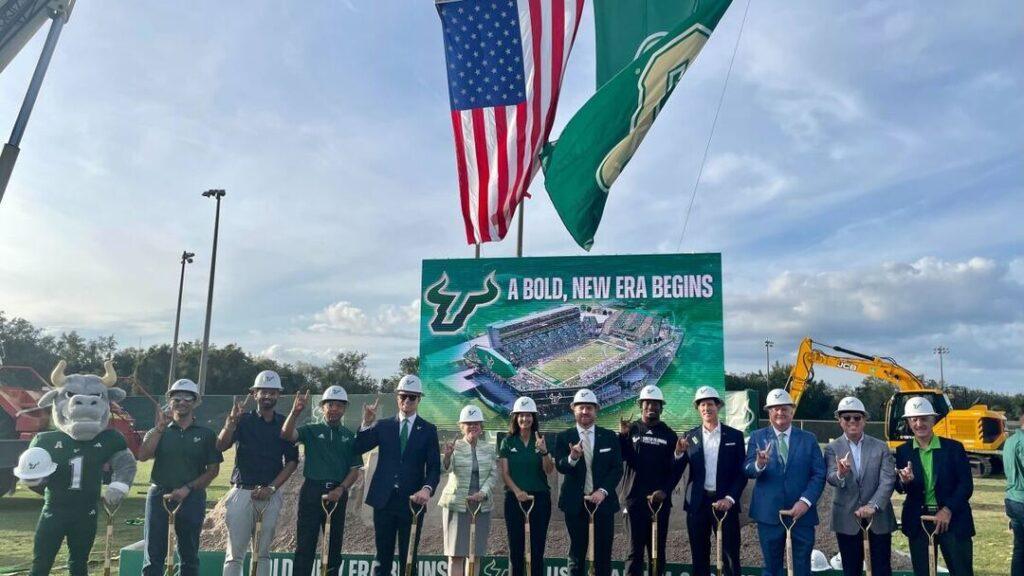
USF Bulls football is entering the rare kind of season that can change how a program is viewed before it changes conferences, rankings, or national expectations. The final year at Raymond James Stadium is not just a farewell tour; it is a pressure test for Brian Hartline, a fan base waiting for a true campus home, and a university trying to turn construction noise into football momentum.
That makes USF one of the more interesting non-Power Four stories in Florida. The Bulls are not simply selling tickets for another season. They are selling a bridge from what the program has been to what it believes it can become.
USF Bulls Football Has a Better Story Than Most People Realize
The easiest mistake is to treat USF as a mid-tier program with a stadium project. That misses the larger point. The Bulls are approaching 2026 with three things programs at this level rarely have at the same time: a new head coach with a major recruiting reputation, a visible facility transformation, and a final season in an NFL venue before moving into a campus-based identity.
That combination gives USF a sharper narrative than a typical American Conference preview. The Bulls are trying to prove they are not just building a stadium. They are building real program identity.
Brian Hartline’s arrival adds intrigue because his reputation has been tied to player development and recruiting reach. That does not automatically make him a successful head coach, and it would be careless to pretend it does. But it does change the temperature around the job. USF is no longer just asking whether it can compete in its league. It is asking whether the right coach, the right facilities, and the right Tampa recruiting pitch can push the program into a different tier.
For readers following the broader rebuild, the bigger picture around USF Bulls football development is not only about wins and losses. It is about whether the program can make its next phase feel believable before the new building opens.
The Final Raymond James Season Is More Than a Goodbye
Raymond James Stadium gave USF a professional venue and visibility in Tampa, but it also created distance between the football program and daily campus life. That has always been the trade-off. Playing in an NFL stadium can look impressive on television, yet it can also make a college program feel rented rather than rooted.
The 2026 season changes that framing. USF’s final season at Raymond James Stadium now has a natural emotional hook: one last run before the Bulls move into their own campus environment. The opener against FIU on Sept. 5 gives the schedule an in-state entry point, while the broader home slate gives fans multiple chances to participate in the sendoff.
The school’s 2026 USF football schedule shows why this season can be marketed as more than a transition year. The home calendar includes conference games, theme opportunities, and a late-season Tulane matchup that could carry extra weight if the Bulls remain relevant in the American Conference race.
That is the opportunity. The risk is that farewell seasons can become sentimental without becoming meaningful. USF needs attendance, atmosphere, and competitive football to align. A quiet final year at Raymond James would soften the stadium handoff. A loud one would make the move feel earned.
Brian Hartline Faces First-Year Pressure With a Recruiting Twist
Hartline’s first season matters because it will shape the emotional tone around the stadium opening. A coach can talk about culture, energy, and standards, but fans usually need visible proof before they buy in completely. That proof does not have to mean a perfect season. It does mean USF must look organized, aggressive, and credible.
The interesting part is that Hartline’s background gives him a useful advantage and a clear burden. His reputation as a recruiter should help USF sell the future, especially with a new stadium coming. But the same reputation also raises expectations. If the Bulls are pitching Tampa, facilities, development, and opportunity, the results must eventually show up in roster quality.
That creates first-year coaching pressure with a different flavor. This is not only about play-calling or game management. It is about whether Hartline can turn USF’s upcoming stadium era into a recruiting tool before the first game is ever played there.
For a program outside the sport’s biggest revenue conferences, perception matters. A strong 2026 season could make USF feel like a program moving at the right time. A flat one could create a gap between the ambition of the facilities and the reality on the field.
The Stadium Project Changes the Sales Pitch
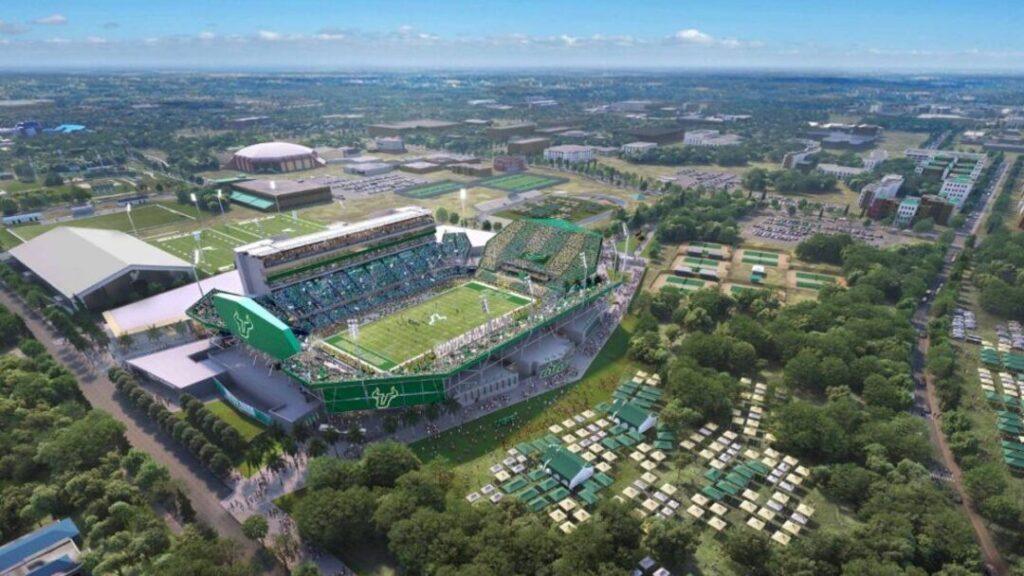
USF’s future on-campus stadium is the centerpiece of the current conversation, but the football operations component may be just as important. Facilities do not win games by themselves. They do, however, change how a program recruits, trains, hosts prospects, engages students, and presents itself to donors.
The latest USF stadium and football operations update makes the project feel less theoretical. Construction progress, student-section planning, premium areas, and athlete-focused spaces all point toward a program trying to create a full football ecosystem rather than simply replacing a venue.
Here is the cleanest way to understand what is changing:
| Program Area | Why It Matters In 2026 | What It Could Signal Next |
|---|---|---|
| Final Raymond James season | Creates urgency around attendance and fan engagement | Strong support could build momentum into 2027 |
| Brian Hartline’s first year | Establishes the first football impression of the new era | Early credibility could help recruiting and retention |
| On-campus stadium progress | Turns future promises into visible evidence | Facility momentum can sharpen the program’s identity |
| Student section planning | Brings campus energy closer to football Saturdays | Better student buy-in can reshape home-field atmosphere |
| Football operations investment | Supports development, training, and recruiting | USF can pitch infrastructure, not just opportunity |
The key takeaway is simple: USF is trying to remove excuses. Once the stadium and operations center are in place, the program’s pitch becomes more serious. That also means the evaluation becomes more serious.
Student Energy May Decide Whether the Move Truly Works
The most underrated part of USF’s stadium transition is not the seating capacity, the premium areas, or the architecture. It is whether students make the building feel alive.
A campus stadium only works if it becomes part of student routine. The best versions of these venues are not just places where football games happen. They are gathering points, identity markers, and emotional shortcuts between the university and its alumni base. For USF, that matters because the program has spent so much of its history trying to define what its football culture should feel like.
That is why the student section deserves attention. If USF can create measurable fan energy before the move, the stadium opens with momentum instead of hope. If the student response is soft, the new venue may still look impressive, but it will need time to develop its voice.
The 2026 season becomes a rehearsal. The Bulls need students and local fans to behave as if the new era has already started, not as if they are waiting for a ribbon-cutting.
The Real Test Comes Before the New Stadium Opens
The next signals are not complicated. Watch attendance. Watch the opener against FIU. Watch how Hartline’s team looks early, especially in terms of discipline, pace, and physical identity. Watch whether home games feel like events or simply dates on a schedule.
Recruiting will also matter, but the first layer is credibility. Prospects can be impressed by renderings and construction progress. They are more likely to believe in the project if the on-field product looks coherent and the fan base looks engaged.
That is where 2026 becomes more than a setup year. USF has to build campus buy-in before the campus stadium arrives. The strongest programs do not wait for a new venue to create belief. They use the year before the move to make the opening feel like the next step in a story fans already care about.
The Bulls do not need to become a national headline overnight. They do need to make the state of Florida pay closer attention. In a football market crowded by Florida, Florida State, Miami, UCF, and several ambitious Group of Five programs, USF has a rare chance to own a specific lane: the fast-rising Tampa program entering its own home.
That is why USF Bulls football matters right now. The final Raymond James season is not just the end of a stadium arrangement. It is the first public test of whether Brian Hartline, a new facility era, and a more serious campus identity can turn USF from an interesting project into a program with lasting pull.