

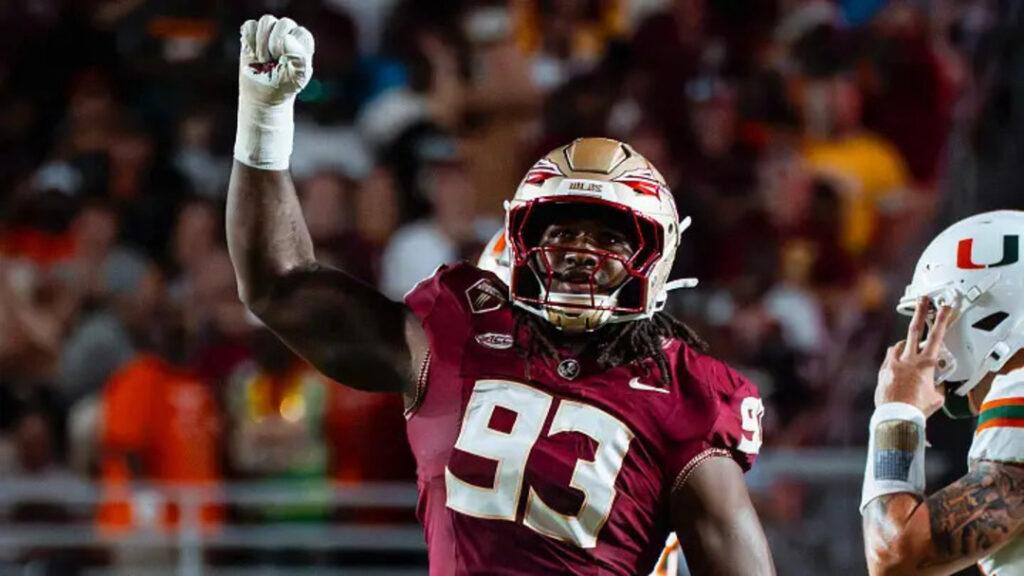
The Florida State defensive front may be the storyline that decides how seriously the Seminoles should be taken in 2026, even if quarterback talk keeps stealing the louder headlines. For a program already managing future-facing attention around Florida State’s quarterback room, Mandrell Desir’s rise gives FSU a different kind of pressure point: the chance to build a season around disruption, not just offensive projection.
That is why the Desir conversation matters now. Quarterback development will always shape the ceiling, but defensive-line development can define the floor and Florida State cannot afford another season where the front fails to tilt games.
Florida State Defensive Front Talk Is Becoming Harder to Ignore
The easiest way to preview Florida State is to start with the quarterback room, the play-calling questions, and the offensive identity. That is normal. Quarterbacks dominate offseason oxygen because they are easy to debate and even easier to blame.
But the more interesting question for FSU may be whether the defense can become disruptive enough to change the terms of the season. A productive defensive front does not merely collect sacks. It forces hurried throws, shortens third downs, protects the secondary, and gives an offense more possessions without asking the quarterback to be perfect.
That is where Mandrell Desir becomes more than a promising young name. His emergence gives Florida State a potential defensive anchor at a moment when the Seminoles need more than optimism. They need visible evidence that the roster has impact players who can change games without needing ideal circumstances around them.
Desir’s official player profile on the Florida State football roster already frames him as part of the program’s present, not just its future. The next step is harder: turning attention into weekly influence.
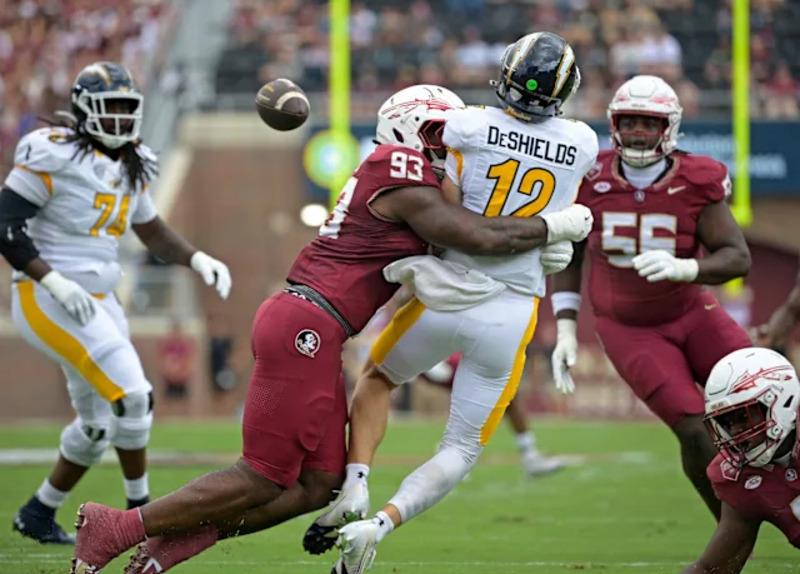
Mandrell Desir Gives FSU a Development Story With Real Stakes
Player-development stories can sound soft until they become the difference between winning close games and explaining them away. Desir’s value is not only that he has drawn attention nationally; it is that his development would address one of the most important truths in college football. Teams that affect the pocket without overcommitting bodies have more answers.
That is the defensive dream for Florida State. If Desir can become a consistent interior or edge-adjacent disruptor, FSU gains flexibility. The Seminoles can pressure without constantly gambling. They can rotate more confidently. They can force opposing offenses to account for a player instead of merely blocking a scheme.
A place in On3’s Top 100 college football players is not a guarantee of stardom, but it does show that Desir is no longer being treated as a local curiosity. He is being viewed as one of the young defensive names worth tracking nationally.
That creates real development pressure. Once a player becomes part of the offseason conversation, the evaluation changes. Fans stop asking whether he flashes. They start asking whether he controls stretches of games.
The Quarterback Obsession Can Hide the Bigger Problem
Quarterback uncertainty is dramatic. Defensive-line uncertainty is dangerous.
That distinction matters for Florida State because the quarterback position can dominate the narrative even when the defense is the cleaner path to stability. A young or unsettled offense can survive if the defense regularly creates negative plays. It becomes much harder if the offense is forced into track meets, long fields, or constant comeback situations.
The Seminoles do not need the defensive front to become legendary overnight. They need it to become reliable enough to change game flow. That means early-down disruption, cleaner run fits, more uncomfortable pockets, and fewer drives where opponents dictate tempo.
Here is the more useful way to compare the two biggest offseason conversations around FSU:
| Storyline | Why It Gets Attention | Why It Could Be Misread | What Would Matter Most |
|---|---|---|---|
| Quarterback room | It shapes the offense and dominates fan debate | It can make every other roster issue feel secondary | Decision-making, rhythm, and avoiding costly mistakes |
| Mandrell Desir’s growth | It gives FSU a possible defensive tone-setter | One standout player cannot fix the entire front alone | Consistent pressure, run discipline, and snap-to-snap impact |
| Defensive front depth | It affects every opponent’s offensive plan | Depth is harder to judge before real games | Rotation quality and late-game stamina |
| Secondary performance | It often gets blamed for explosive plays | Coverage can suffer when the pass rush is late | Better timing between rush and coverage |
| Team identity | It decides how FSU wins when the offense stalls | Identity talk can become empty without physical proof | A defense that creates field position and momentum |
The table points to the real issue: Florida State’s season will not be shaped by one position group in isolation. The quarterback room matters, but a stronger defensive front could make every other part of the roster look more settled.
Desir’s Value Is Bigger Than Sack Totals
The lazy way to judge a defensive lineman is to count sacks and move on. That misses the work that changes games before the stat sheet catches up.
A disruptive lineman can wreck timing without finishing the play. He can force a quarterback off his spot, turn a designed run into a bounce-out scramble, or make an offensive coordinator abandon slower-developing calls. Those moments do not always become highlight clips, but they change how opponents call games.
That is the version of Desir Florida State should want most. Not just a young defender who can flash once or twice, but a player who can force offenses to build protection plans around him. Once that happens, other defenders benefit. Blitzes become cleaner. Linebackers play faster. Defensive backs are asked to cover for less time.
This is where the Seminoles have an opportunity. If Desir becomes a weekly problem, FSU’s defense can begin to develop a tougher identity. That would matter in close games, road games, and matchups where the offense needs time to find rhythm.
The risk is that attention arrives faster than consistency. Young defensive linemen can look dominant in bursts and ordinary across longer stretches. The difference between a breakout name and a true foundation piece is repetition.
Florida State Needs More Than One Young Star
Desir can become a major piece, but Florida State cannot build a reliable defense around one player alone. The front needs complementary rushers, sturdy interior snaps, and enough rotation depth to avoid fading late.
That is where the broader evaluation begins. Can FSU create pressure from multiple alignments? Can the staff keep Desir fresh without losing disruption? Can the run defense hold up when opponents decide to test the interior rather than chase big plays through the air?
These questions matter because offensive coordinators adjust quickly. If Desir becomes the obvious problem, protection will slide. Chips will come. Screens, draws, quick throws, and misdirection will become part of the weekly counterpunch. A true defensive front has answers after the opponent identifies its best player.
That makes 2026 a test of both talent and structure. Desir may be the face of the defensive-line conversation, but the Seminoles need the group to become more than one promising sophomore. They need collective defensive growth.
The First Clues Will Show Up Before the Box Score
The best early signs will not be complicated. Watch whether Desir wins early in games, not just late when opponents are forced to throw. Watch whether Florida State gets opponents behind schedule. Watch whether the defense creates second-and-long and third-and-obvious situations without needing exotic pressure.
Also watch how opponents treat him. Extra attention is respect. Avoiding his side of the formation is respect. Shortening the passing game because the pocket feels unstable is respect. Those clues can say as much as raw production.
The Seminoles should also be judged by how the defense responds when the offense has a dry stretch. If FSU can still flip field position, steal a possession, or force a quick punt, the front is becoming a stabilizer. If the defense needs the offense to score constantly, then quarterback talk will remain the loudest issue because the team has no other safety net.
That is why the Florida State defensive front deserves more attention than it is getting. Quarterbacks may define the conversation, but Desir and the players around him could define the season’s texture. If FSU becomes disruptive up front, the Seminoles can build a more forgiving, physical, and sustainable identity in 2026. If that front stalls, every offensive question will feel bigger, every mistake will feel louder, and every close game will become harder to survive.