

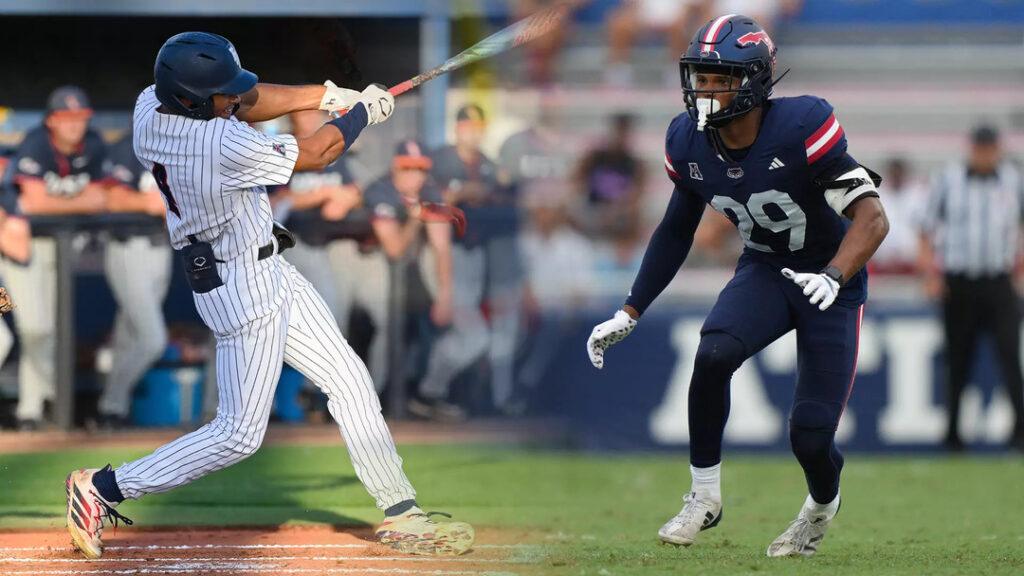
FAU Kyle Boylston is the kind of offseason story that cuts through the usual recruiting noise because it is not built on a depth-chart rumor or a transfer splash. It is about a two-sport athlete trying to make baseball matter now, football matter next, and both work inside one demanding Division I calendar.
That is why this matters for Florida Atlantic in 2026. Boylston is not just a curiosity; he is a test case in discipline, adaptation, and whether the Owls can turn a rare athletic profile into real roster value.
FAU Kyle Boylston Gives The Owls More Than A Novelty Story
The easiest way to frame FAU Kyle Boylston is as a two-sport athlete, but that undersells why the story works. Plenty of college athletes arrive with multi-sport backgrounds. Far fewer keep both sports alive once practices, travel, lifting, academics, and recovery start fighting for the same hours.
Boylston is balancing football and baseball at Florida Atlantic, and the timing makes the story sharper. FAU has noted that he will return to the gridiron in 2026 for his third football season and second year on the active roster, while also being part of the baseball team’s postseason push toward the American Conference Championship in Clearwater.
That overlap is the point. He is not casually wearing two jerseys for a media-friendly feature. He is moving between two competitive environments with different rhythms, different coaching demands, and different measures of value.
For FAU football, his return creates intrigue because Zach Kittley’s second season is already built around growth, continuity, and roster evaluation. Any player who can add speed, athleticism, and developmental flexibility becomes more interesting. Boylston gives the Owls a player whose athletic ceiling is still being shaped by two sports at once.
Why Two-Sport Football Still Carries Weight
Football staffs love multi-sport athletes for a simple reason: they often bring movement skills that one-sport specialization can dull. Baseball can sharpen hand-eye coordination, reaction time, rotational power, and patience. Football demands collision, burst, leverage, and instant decision-making. The overlap is not automatic, but it can create a more complete athlete.
That is where Boylston becomes compelling. His high school football background included time at wide receiver and defensive back, which already suggests a player comfortable operating in space. His senior production included seven touchdowns, 26 catches, 435 receiving yards, a 91-yard long reception, and 27 tackles. That is not a one-dimensional résumé.
At FAU, the question is how those traits translate after another baseball season and another football offseason. Can he become a factor on special teams? Can he push for a role at defensive back or receiver? Can the staff find a package that fits his speed without overloading his plate?
The answer does not have to arrive all at once. Development is rarely clean for two-sport players. The path is harder, but the payoff can be unusual because the player is not built through one narrow athletic lens.
The Time Management Story Is The Real Football Story
The phrase “time management” can sound soft until you think about what Boylston is actually juggling. Two sports means two sets of practices, two sets of film habits, two coaching staffs, two competitive calendars, and one academic schedule. That is not branding. That is pressure.
What makes this useful as a football story is that time management often predicts trust. Coaches need players who can handle responsibility without constant rescue. A player who can manage baseball and football at the same time is showing a kind of maturity that matters before the ball is snapped.
That does not mean the transition is easy. Baseball requires calm repetition. Football demands violent urgency. One sport lives through long series and controlled failure; the other can punish one missed assignment immediately. Boylston has to switch tempo, vocabulary, and body demands without losing focus.
There is also a recovery component. The modern athlete cannot simply grind forever and expect progress. Sleep, nutrition, injury prevention, and mental reset all matter. If Boylston can handle that without fading, it says something meaningful about his resilience.
For a program trying to build better habits, that kind of player can influence a locker room even before he becomes a Saturday headline.
What Boylston Brings Back To The Football Field
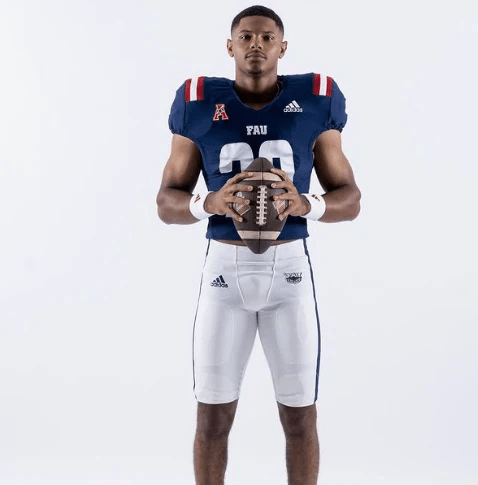
The most interesting part of Boylston’s football future is that his role does not have to be obvious today. He can still be evaluated as an athlete first and a specialist second. That gives FAU options, especially under a staff that should know more about the roster in Year 2.
| FAU Evaluation Area | Why Boylston Matters |
|---|---|
| Athletic profile | Baseball and football backgrounds suggest coordination, burst and spatial awareness |
| Position flexibility | High school experience at receiver and defensive back keeps multiple paths open |
| Special teams value | Athletic depth can help coverage, return units and situational packages |
| Development timeline | A second active football season should give coaches a clearer read |
| Program culture | Handling two sports can reinforce accountability and daily discipline |
The table matters because Boylston should not be judged only through a traditional starter-or-backup lens. Some players create value through role flexibility. Others create it through practice competition, special teams readiness, or emergency depth. Boylston may still become any of those things.
The roster profile also matters. Boylston’s FAU football profile lists him as a player who had the opportunity to play both football and baseball at Florida Atlantic after also considering Georgia Tech and Western Kentucky. That detail is useful because it shows this two-sport path was not accidental. It was part of the opportunity from the beginning.
For FAU, that kind of profile matters because the Owls are still searching for marginal gains that can become real Saturdays. A two-sport player does not need to become a star immediately to justify the experiment. He needs to make the roster more competitive, force cleaner practice habits, and give the staff one more athlete who can solve problems when the season tightens. That gives the storyline enough football substance to travel beyond a simple human-interest package in Boca Raton.
Why Baseball Makes The Football Angle Stronger
Some readers will see baseball as a distraction from football. I see it differently. If handled well, baseball can make Boylston more interesting for the football staff because it keeps him competing, reacting, and performing under pressure.
Baseball also teaches failure in a way football does not. A good baseball player has to live with outs, bad swings, tough counts, and long waits between moments. That can build patience. Football players sometimes need exactly that, especially defensive backs and receivers, where one bad rep can tempt a player into pressing.
The challenge is physical. Baseball movements and football movements are not identical. The offseason development plan has to respect both. Too much workload can create risk. Too little football-specific work can slow his progress when he returns to the field.
That is where FAU’s staff management matters. Boylston’s calendar needs structure, not guesswork. The football staff, baseball staff, performance staff, and athlete all have to stay aligned. Without that, the two-sport story becomes inefficient instead of valuable.
When it works, though, the reward is a player who brings competitive freshness into both environments.
FAU’s 2026 Roster Needs More Multipliers
Florida Atlantic enters 2026 needing more than familiar names. The Owls need players who can multiply roster possibilities. Boylston fits that category because he does not have to be boxed into one narrow offseason expectation.
Kittley’s program is already leaning into continuity, and that matters. A returning staff can better evaluate a player like Boylston because coaches have more shared context. They know how he practices, how he learns, how he handles workload, and where his physical traits might fit.
That makes this story different from a normal player feature. It sits inside a broader program conversation about whether FAU can turn familiarity into performance. The Owls have a cleaner Year 2 platform, and Boylston gives that platform another layer. For readers following that bigger arc, FAU’s continuity advantage helps frame why individual development stories matter more this season.
The Owls cannot become more competitive only through headline players. They need hidden contributors, special teams answers, developmental jumps, and better internal competition. Boylston may become part of that depth equation.
The Risk Is Splitting The Calendar Too Thin
The downside is obvious. Two-sport ambition can stretch a player thin. Every hour in baseball is an hour not spent in football meetings. Every football lift has to be balanced against baseball performance. Every minor injury becomes more complicated because it affects two programs.
That does not mean the plan is wrong. It means the margin is smaller. FAU has to protect his development with judgment.
The biggest risk is not that Boylston lacks athletic ability. The bigger risk is that neither sport gets enough uninterrupted time for him to maximize his next step. Football rewards repetition, especially for players trying to climb a depth chart. Missed reps can slow recognition, timing, and technique.
At the same time, the two-sport path is part of what makes him valuable. Strip that away too quickly and the program might lose the very edge that makes him different. The smart approach is not forcing a choice before the evidence demands it. The smart approach is building a clear plan and reviewing it honestly.
Why This Story Works For FAU Fans
FAU fans should care because this is the kind of player development story that often gets overlooked until it matters. Not every season turns on the obvious stars. Sometimes a program improves because the middle of the roster becomes tougher, faster, and more versatile.
Boylston represents that possibility. He is a reminder that roster building is not only recruiting rankings and transfer announcements. It is also the daily process of finding out which athletes can handle more than expected.
There is also a local identity piece. Florida produces multi-sport athletes everywhere, but specialization has made the true two-sport college player feel rarer. When a player at FAU tries to keep both paths alive, it gives the Owls a story with personality.
That matters for a program fighting for attention in a crowded state. Florida, Florida State, Miami, UCF, USF, FIU, and FAMU all create noise. FAU needs its own angles, its own athletes, and its own reasons for fans to look closer.
Boylston gives Boca Raton one of those reasons.
What Kittley And The Owls Should Do Next
The next step is clarity. FAU does not need to rush Boylston into a public role before he is ready, but the staff should have a clear internal plan for where he best fits when football becomes the priority again.
Special teams may be the cleanest early doorway. Athletic, competitive players with defensive and receiver backgrounds can often help there while still developing position skills. That path would let him contribute without demanding that he master a full offensive or defensive role immediately.
From there, the staff can decide whether his best football future is on offense, defense, or in a hybrid developmental lane. That decision should be based on practice evidence, not novelty.
The key is execution. FAU has to make the two-sport story functional. That means communication between staffs, realistic workload planning, and honest evaluation when football camp begins.
If Boylston turns into even a rotational contributor, the story gets bigger. If he becomes a special teams factor, it proves the calendar was worth managing. If he eventually pushes for offensive or defensive snaps, FAU suddenly has a player whose path becomes a model for other athletes.
The Bigger Meaning Of A Two-Sport Owl
The Boylston story works because it captures something college sports still needs: ambition that feels human. Not every athlete’s path should look identical. Not every roster story should be flattened into transfer math or recruiting stars.
A two-sport athlete brings curiosity back into the conversation. How much can one athlete handle? What traits transfer? How do coaches protect the body while feeding the competitive drive? What does a program gain when it lets an athlete be more than one thing?
Those are the questions that make FAU Kyle Boylston a better topic than a simple player note. His 2026 football return gives the Owls a player to watch, but his baseball work gives the story depth. If FAU handles the balance well, Boylston can become more than an interesting offseason headline. He can become proof that flexibility, patience and smart development still have a place in modern college football.