

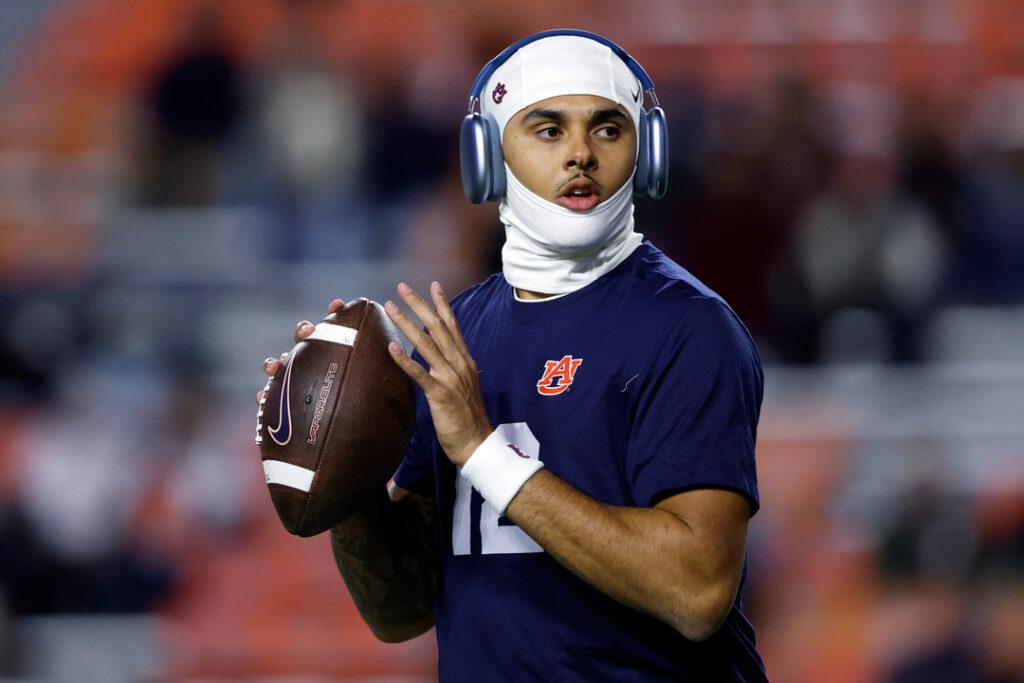
Florida State did not just name a starting quarterback. It chose a direction.
After a spring defined by uncertainty, competition, and evaluation, the Seminoles handed the 2026 offense to Ashton Daniels, a transfer quarterback whose experience, mobility, and production suggest something larger than a routine depth-chart update. I see this as one of the most consequential decisions of Florida State’s offseason because it reframes what the offense is supposed to become.
A Quarterback Decision That Changes the Conversation
Quarterback battles are often treated like annual rituals in college football, but this one carried unusual weight. Florida State spent the spring without a clear answer at the position, and that ambiguity mattered because the program is still trying to stabilize its trajectory and sharpen its identity. When a staff waits until late in camp to make a call, it usually means the competition was real, the margins were small, and the implications reached far beyond the practice field.
That is what makes Daniels’ emergence notable. This was not a ceremonial naming of the obvious favorite. It was the end point of a live evaluation process that stretched through spring and left coaches weighing not only who could execute the playbook, but who could best expand it.
Daniels arrives with a profile that instantly changes the geometry of the offense. He brings roughly 4,700 career passing yards and the kind of rushing ability that forces defenses to defend all 11 players. That combination matters more now than ever. Across college football, static passing games have become easier to crowd, disguise against, and disrupt. A quarterback who can turn a broken play into a first down, or punish man coverage by escaping a clean pocket, is no longer a luxury. He is often the difference between an offense that survives and one that stresses opponents.
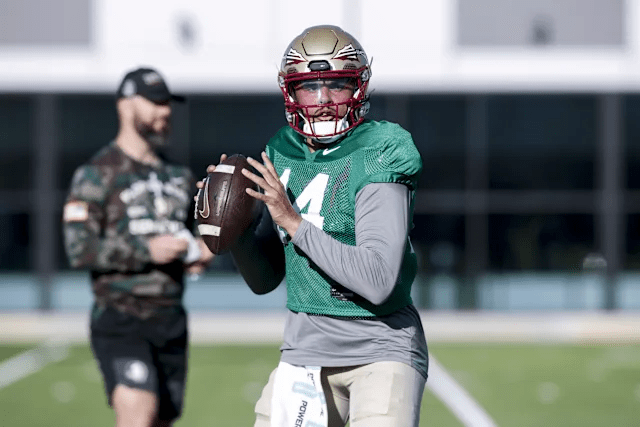
Why Ashton Daniels Fits This Moment
There is a reason mobile, experienced quarterbacks remain so valuable in the transfer era. They give coaching staffs flexibility. They allow a coordinator to call a wider game. And they can raise the floor of an offense before they ever raise its ceiling.
Daniels appears to check all three boxes.
He has played enough football to understand pace, pressure, and situational demands. That matters for a Florida State team that could not afford another season of indecision at its most important position. A quarterback with miles on the odometer is often better equipped to handle third-and-long, red-zone compression, disguised blitz packages, and the emotional management that comes with leading a major program. I do not think experience alone wins games, but in a season that may hinge on consistency, it can prevent losses.
His mobility is the second part of the equation, and perhaps the more interesting one. Florida State’s choice signals a move toward a more dynamic offensive structure, one that can use quarterback movement not merely as an emergency response but as a foundational threat. That opens the door to more designed movement, more read-based decisions, more stress on linebackers, and more hesitation in the secondary. The most important insight here is that Daniels does not just add rushing yards; he changes how defenses must align before the snap.
That is where this decision becomes strategic instead of simply personnel-driven.
What The Spring Battle Revealed
An open competition that extends through spring usually tells us two things. First, the staff was not fully convinced by any one option entering camp. Second, the offense itself may still be under construction. Both realities seem relevant here.
Florida State’s coaches were reportedly still sorting through the quarterback picture until very recently, which suggests the process was about more than arm talent or familiarity. In competitions like this, staffs often study a broader portfolio: who processes fastest, who commands the huddle, who protects the football, who creates under pressure, and who gives the offense the best answers when the first read disappears.
Daniels winning that contest says plenty. It says he was able to convince the staff that his experience translates. It says his movement ability was not merely attractive on paper but actionable within the system. And it says Florida State is willing to shape the offense around what he does best rather than forcing the quarterback into a narrower template.
That last point matters most. Too many programs talk about adaptability without actually practicing it. This decision suggests Florida State is prepared to lean into a version of offense that is faster, less predictable, and more quarterback-driven.
The Traits That Make Daniels Different
The clearest way to understand this move is to look at what Daniels brings versus what Florida State needed.
| Area | What Daniels Brings | Why It Matters For Florida State |
|---|---|---|
| Experience | Roughly 4,700 passing yards across multiple stops | Reduces volatility and helps steady the offense |
| Mobility | Strong rushing ability and play-extending movement | Creates stress on defenses and adds schematic flexibility |
| Adaptability | Exposure to different systems and environments | Makes transition easier in a changing offensive structure |
| Decision-Making Pressure | Veteran reps in meaningful situations | Important for a team seeking consistency at quarterback |
| Offensive Ceiling | Dual-threat capacity | Supports a more dynamic, modern identity |
This is not to say Daniels solves everything on his own. No quarterback does. Protection must hold up, the run game must remain credible, and receivers must convert opportunity into production. But quarterbacks with his profile can cover for flaws in ways pocket-bound passers often cannot.
That is why the decision feels less like a depth-chart note and more like an organizational statement.
Why This Decision Matters Right Now
Timing is everything in college football, and Florida State did not have the luxury of drifting into summer without clarity. The program needed a definitive answer at quarterback for practical reasons and psychological ones.
Here is why the announcement lands with force:
- It ends a spring-long uncertainty at the most important position on the field.
- It gives the coaching staff a firm identity to build around heading into summer and preseason camp.
- It signals an offensive shift toward tempo, movement, and quarterback-enabled stress.
- It gives teammates a clear leader around whom the offense can organize itself.
That clarity matters inside the locker room as much as it does outside it. Players respond differently when the position is settled. Receivers can calibrate timing. Offensive linemen can adjust to pocket movement and launch points. Coaches can install with conviction rather than hedging between competing skill sets. Everything gets cleaner once the quarterback question is answered.
A More Modern Offensive Identity
If Florida State follows the logic of this decision, the offense should look different in 2026. I would expect more movement in the launch point, more stress on the edge, and more situations in which Daniels’ legs are not incidental but central to the design. That does not mean the Seminoles abandon the passing game. It means the pass game can be layered off movement, conflict defenders can be manipulated more aggressively, and negative plays can be reduced through quarterback escape ability.
That is the promise of this move.
It also raises the standard for the staff. Once a team names a quarterback with this kind of profile, the play-calling has to reflect it. Conservatism would waste the advantage. Florida State now has a starter whose background and athletic traits invite a broader, more adaptive offense. The obligation is to use him that way.
For readers who want the official roster profile, Ashton Daniels Florida State offers the baseline snapshot of the quarterback Florida State is betting on.
The Pressure That Comes With The Job
Of course, a quarterback announcement in April is not a final verdict on what happens in the fall. It is the beginning of accountability. Daniels now carries the burden that comes with being the answer at Florida State. Every throw will be measured differently. Every scramble will be interpreted as either proof of his value or a reminder of what the offense lacks around him. That is part of the assignment.
Still, I think this is the right kind of pressure for Florida State to embrace. Programs trying to regain sharpness rarely benefit from ambiguity. They benefit from conviction, even when conviction carries risk. Daniels may not arrive with guarantees, but he arrives with traits that align with where college football is heading and with what Florida State appears to need right now.
This is why the quarterback decision matters beyond the headline: it tells us how Florida State wants to play, what problems it is trying to solve, and what kind of season it believes is still possible.
Conclusion
Florida State’s decision to name Ashton Daniels its 2026 starting quarterback is important because it closes the door on indecision and opens one on reinvention. After a spring of evaluation, the Seminoles chose experience, mobility, and flexibility at the position that defines everything else.
Right now, that matters because college football rewards teams that can evolve quickly and build around players who expand the playbook rather than limit it. Daniels gives Florida State that chance. Whether the season fulfills the promise will depend on execution, but the message from this decision is already clear: the Seminoles are not merely picking a quarterback. They are choosing a new offensive identity.