

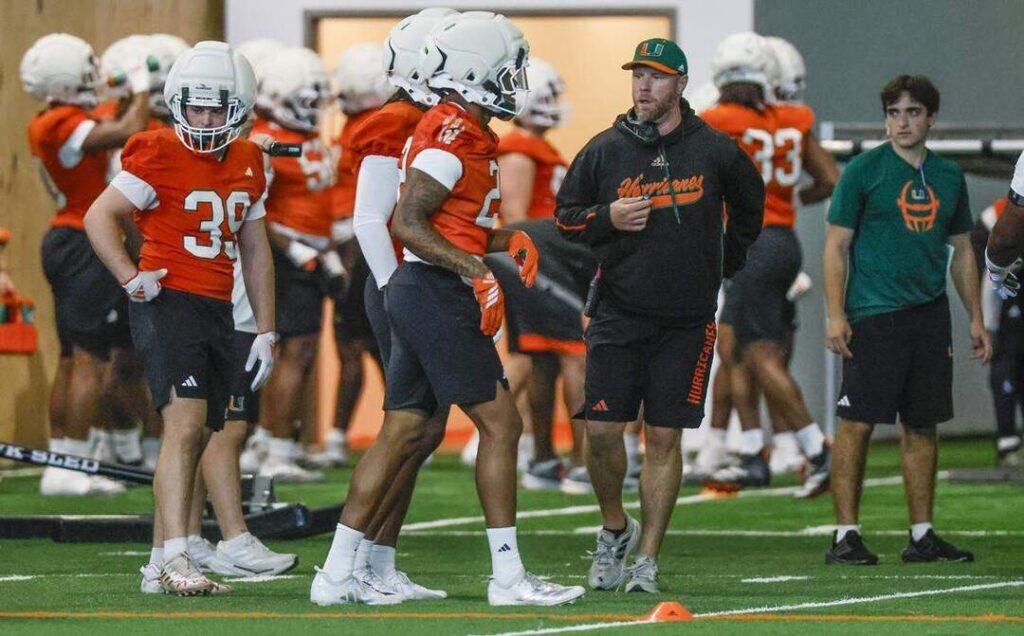
The most important story around Miami right now is not glamorous, but it is decisive. As spring unfolds in Coral Gables, the real stakes are being set on the offensive and defensive lines, where jobs are being won, identity is being forged and the 2026 season is starting to take shape.
I keep coming back to one central truth: Miami’s ceiling this fall will be determined less by flash and more by force. In Miami Hurricanes spring practice, the trenches have become the clearest measure of whether this program is ready to sustain championship-level football after significant departures and heightened expectations.
Why The Trenches Matter More Than Anything Else
Programs that contend year after year tend to share one trait: they are stable up front. Miami is now in that familiar spring position where talent is visible, but continuity has to be rebuilt. The Hurricanes are working through offensive line combinations, defensive front rotations and edge-rush pecking order all at once, which is why almost every meaningful spring evaluation seems to lead back to the same place.
That is not accidental. It reflects the structure of modern college football, where line play shapes everything else. A quarterback looks better behind a secure pocket. A running game becomes viable when the line can generate movement on standard downs. A secondary holds up longer when the pass rush gets home before routes fully develop. The entire sport still bends to the same old principle: control the line of scrimmage, and the rest of the game starts tilting in your favor.
For Miami, that principle feels especially urgent this spring because the program is not simply replacing snaps. It is replacing production, reliability and, just as importantly, presence. Departed veterans leave behind more than statistics. They leave behind communication habits, pre-snap confidence and the kind of internal authority that stabilizes a unit when a game turns chaotic.
Replacing Production Is Also About Replacing Identity
This is where spring practice becomes more revealing than any depth chart released in August. Coaches can find capable players. What is harder to find is a new core that gives a unit its personality.
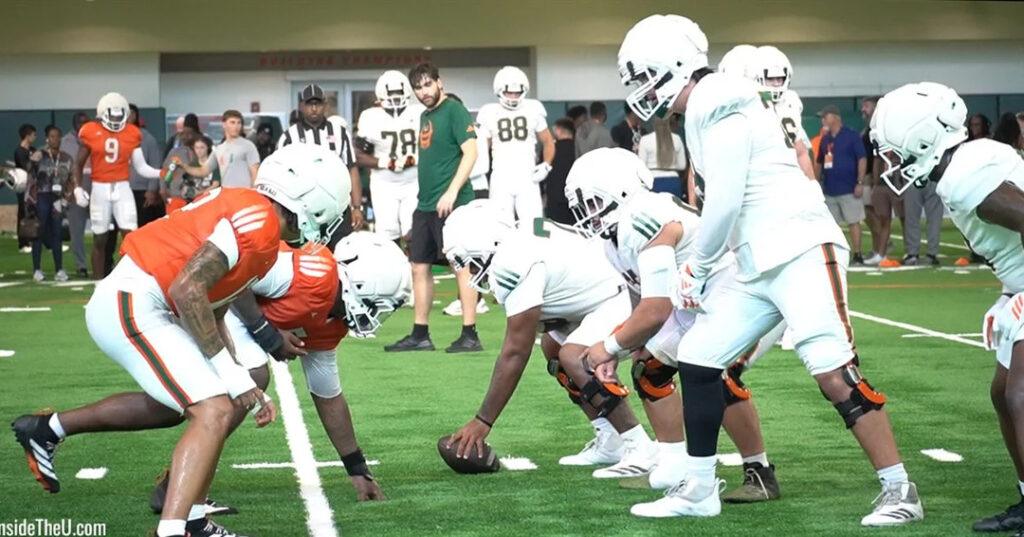
On the offensive line, the question is not only who starts. It is who sets the tone. Miami has to identify the blockers who can turn routine downs into manageable football and difficult downs into survivable ones. The best offensive lines do not simply avoid disaster; they impose order. They reduce negative plays, protect the structure of the offense and create the kind of rhythm that keeps a playbook open.
That search feels active right now. There is competition, movement and the expected experimentation that comes with a spring period designed to expose weaknesses before summer and sharpen strengths before camp. Coaches are watching for the obvious traits such as footwork, leverage and assignment discipline, but they are also watching for something more valuable: the linemen who make everyone around them calmer.
The same logic applies on defense, where Miami’s front is under a different kind of microscope. Defensive line play is judged more publicly because it produces the easiest highlight reel. Sacks, pressures and tackles for loss draw attention quickly. But what matters most over a long season is whether a front can dictate games even when the splash plays are not coming. Can it squeeze run lanes? Can it collapse pockets without needing constant schematic help? Can it create second-and-long often enough to let the rest of the defense hunt?
Those are the real spring questions, and Miami’s answers will define more than any one position battle.
The Search For The Next Impact Pass Rusher
No evaluation inside this spring feels more consequential than the hunt for the next edge threat who changes Saturdays. Miami has defensive talent, and that talent is drawing the kind of NFL-oriented conversation that always follows a program with high-end athletes on the front. That attention is useful, but it can also distort what coaches truly need to know in April.
Projection is not production. Traits are not yet takeovers.
I think the most important test for Miami’s edge group is consistency. Can the top rushers win with more than initial burst? Can they counter when tackles adjust? Can they finish plays instead of merely affecting them? College football rewards defenders who can end possessions, not just disrupt them. The next leader on Miami’s defensive front has to be more than intriguing. He has to become unavoidable.
That matters because pass rush is one of the few force multipliers left in the sport. In an era built around tempo, spread formations and quarterback-friendly rules, a true edge presence still changes everything. He speeds up decision-making, shrinks route concepts and lets a defense stay aggressive without constantly manufacturing pressure through blitzes.
Miami does not need theoretical promise here. It needs a player who can carry a Saturday.
Leadership Is The Hidden Spring Metric
Spring football often gets framed as an inventory check, but the deeper purpose is cultural. This is when coaches discover which players can own a room, correct a mistake without drama and keep a standard intact when fatigue rises.
That is why the search for line leaders feels as significant as the search for starters. Teams rarely advertise this part of roster development, yet it is often the distinction between being talented and being dependable. A line leader sees formations quickly, speaks clearly, resets teammates after a bad series and makes sure one mistake does not become three.
Miami’s challenge is that leadership on the line cannot be appointed. It has to emerge under strain. It shows up in repeated reps, not slogans. It appears in how players respond to coaching, how they absorb physical days and how they compete when a job is still uncertain.
In my view, that is the most fascinating part of this spring. The battle up front is not just about who is strongest or fastest. It is about who proves trustworthy enough to anchor a team with real expectations.
What This Means For The 2026 Season
The temptation in April is to treat line battles as background noise until the skill positions come into focus. That would be a mistake. For Miami, the trenches are the story because they will determine whether the rest of the roster can operate at its intended level.
If the offensive line settles quickly, the Hurricanes can play with balance and confidence. If the defensive front develops a true wave of pressure and identifies a clear edge leader, Miami can build a defense that controls games rather than merely reacts to them. And if both happen at once, the program moves from intriguing to legitimately dangerous.
That is why this matters right now. Spring practice is not simply revealing who might start in September; it is showing whether Miami can replace lost production with a tougher, clearer identity. In college football, that transition often decides whether a talented roster becomes a contender or a cautionary tale. For the Hurricanes, the answer is being written where it usually is: in the trenches.