

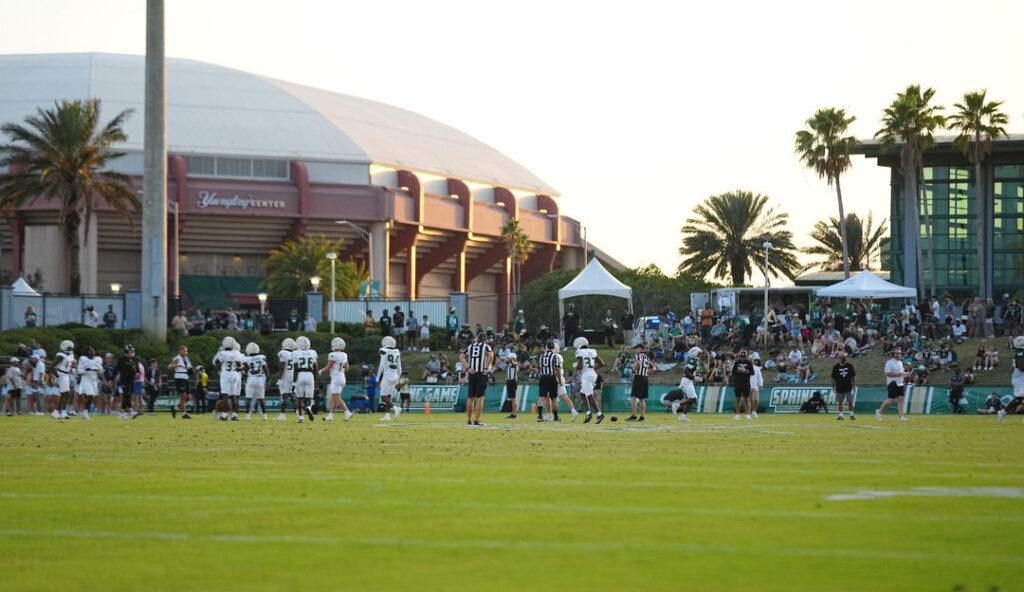
The timing of the USF Bulls spring game could not be more important. In mid-April, when optimism is cheap and answers are still scarce across college football, this kind of public scrimmage becomes something more revealing: a live stress test for a program trying to prove its rise is real.
I see this particular spring game as a meaningful checkpoint, not a ceremonial date on the calendar. For USF, the April 19 showcase at 3:30 p.m. at Corbett Stadium is less about pageantry than clarity. It is the clearest public look yet at how the Bulls are shaping their 2026 identity under Alex Golesh and whether last season’s momentum is turning into something sturdier.
Why This Spring Game Carries More Weight
Spring games are often treated as fan-service events, equal parts access and entertainment, but that framing misses the real value. When I look at USF entering this phase of the offseason, I see a team in the delicate middle ground between emergence and expectation. The Bulls are no longer merely trying to escape irrelevance. They are now confronting the more complicated task of validating progress.
That is why this spring game matters. The roster is not simply being introduced; it is being sorted. Players are not only chasing snaps but shaping how the staff will build the fall blueprint. Every personnel grouping, every rotation, and every situational rep offers a clue about what this coaching staff believes it has, and what it still needs to solve before the opener.
The public nature of the event adds pressure. Practice is one thing. Performing with fans in the stands, even in a spring setting, changes the texture. Tempo feels faster. Mistakes feel louder. Coaches get a different read on composure, command, and communication. For a team trying to sharpen its edge, that matters.
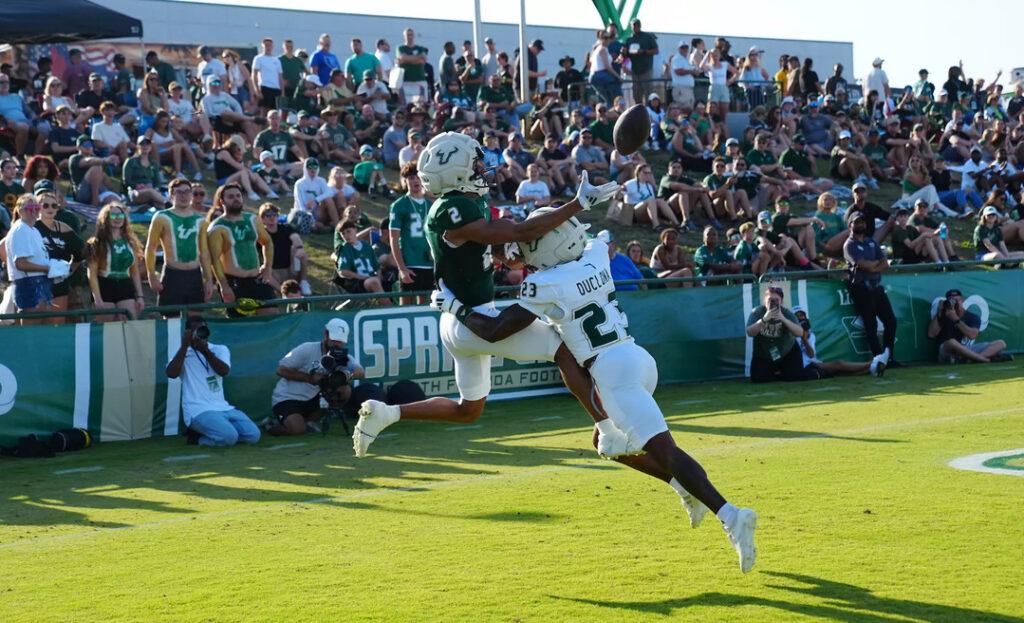
The Quarterback Question Will Shape The Narrative
No position draws more attention than quarterback, and that will be true again in Tampa. I expect much of the conversation around the spring game to be filtered through the lens of the quarterback room, not only because of the obvious importance of the position but because it influences everything else. The passing game, the pace of the offense, the confidence of the receivers, and even the defense’s daily development all look different depending on the quality of quarterback play.
What I will be watching is not just arm talent or highlight throws. Spring games can distort that. I am more interested in the invisible traits: timing before the snap, command at the line, efficiency on routine concepts, and how decisively the offense operates when the script becomes less comfortable. The quarterback who looks most in control, rather than merely most explosive, may be the player who leaves the strongest impression.
That evaluation extends beyond the starter. Depth at quarterback has become one of the quiet dividing lines between programs that maintain momentum and those that lose it in a single difficult month. USF needs stability there, but it also needs insurance.
Skill Positions Could Reveal The Team’s Ceiling
If the quarterback spot frames the story, the skill positions may determine how ambitious that story becomes. Golesh’s offense asks for pace, stress, and playmakers who can turn functional gains into disruptive ones. That is why the spring game should offer a revealing look at the wide receivers and running backs, especially those trying to separate themselves in a deeper and more competitive room.
I will be looking for burst, yes, but also role clarity. Which receivers appear trusted on possession downs? Which backs can stay on the field in multiple situations? Which players look capable of creating explosive plays without sacrificing assignment discipline? Those answers tend to matter more than raw spring stat lines.
Here is where the spring game can help simplify the picture:
- It can identify who looks ready for featured offensive roles.
- It can show whether younger players are pushing veterans for meaningful snaps.
- It can reveal how comfortably transfers are assimilating into the system.
- It can offer an early sense of whether the offense has become more versatile, not just faster.
If USF leaves the day with clearer answers at those spots, the event will have done real work.
Defense Must Show More Than Energy
Offensive fireworks usually dominate spring-game reaction, but I think the more important evaluation may come on defense. It is easy for defenses to look aggressive in short bursts. It is much harder to look structurally sound, assignment-clean, and consistently physical over the course of a controlled scrimmage.
That is the standard USF should be chasing. I will be paying attention to tackling angles, substitution patterns, and how well the defense handles pace. A spring game cannot fully simulate the stress of a real game week, but it can expose communication cracks and depth concerns. If the second level looks organized and the front holds up against tempo, that would count as a meaningful win.
This is especially important for a program trying to move from interesting to reliable. Improvement on defense is rarely measured by a single splash play. It is measured by fewer busts, better leverage, and a unit that looks connected. Those are the signs I would consider most encouraging coming out of Corbett Stadium.
What The Afternoon Needs To Clarify
The spring game is not the final word on the roster, but it can narrow the questions. At this stage of the calendar, that has real value.
| Key Area | What Needs To Be Proven On April 19 | Why It Matters |
|---|---|---|
| Quarterback | Command, efficiency, decision-making | Sets the tone for the entire offense |
| Skill Positions | Separation, explosiveness, role definition | Determines offensive ceiling |
| Defensive Rotation | Communication, tackling, gap discipline | Signals whether progress is sustainable |
| Transfers And Young Players | Readiness for real snaps | Shapes roster depth entering summer |
| Overall Tempo | Clean operation without chaos | Reflects coaching control and maturity |
That table captures the essential tension around this event. USF does not need perfection. It needs evidence of coherence. The roster should look more organized than experimental, more purposeful than provisional.
Why It Matters Right Now
What happens on April 19 will not decide the season, but it will influence how the season is understood before it begins. In a sport that increasingly rewards continuity, development, and roster adaptability, spring is no longer a background phase. It is where programs either sharpen their identity or reveal how unfinished they still are.
That is why I see the USF spring game as more than a fan event and more than a football tradition. It is a public measure of trajectory. The Bulls have reached the point where curiosity is giving way to scrutiny, and that is a sign of progress in itself. Now they need to show that the program’s growth is substantial enough to withstand expectation.
If USF looks decisive, deep, and structurally cleaner on April 19, the conversation around this team will change. Not because spring games are definitive, but because they can confirm when a program is building with conviction. Right now, that is exactly what matters most.