

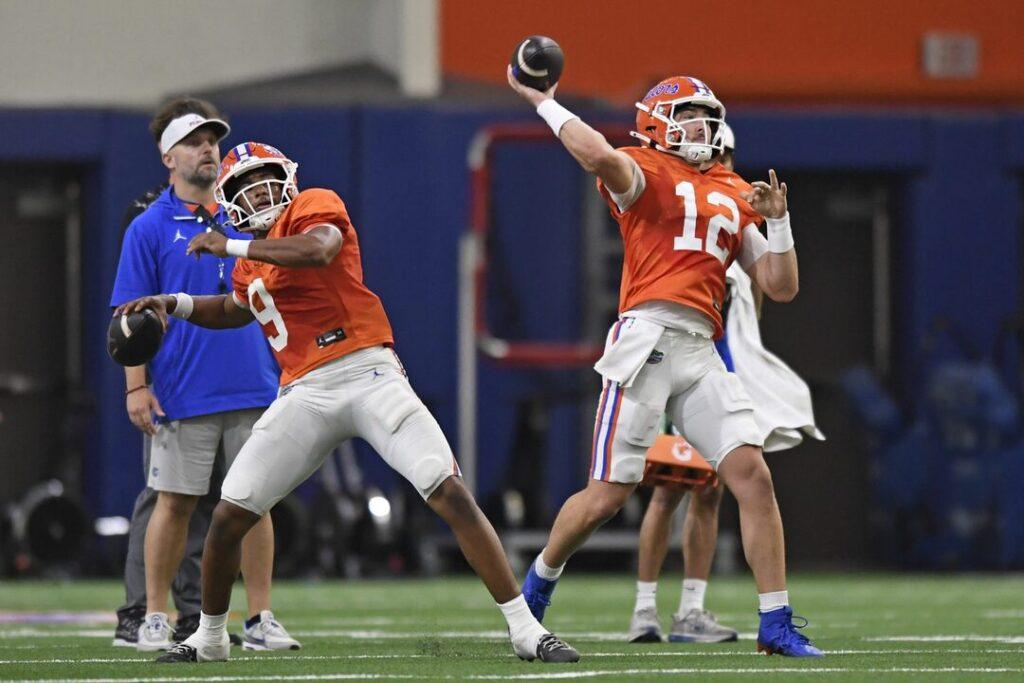
The modern college football battlefield is no longer won by the biggest roster alone. It is won by the team that can think faster, move faster, adjust faster, and force opponents into uncomfortable decisions before the snap and after it.
That is why the Florida Gators football strategy matters right now. In a league defined by speed, depth, analytics, transfer movement, and week-to-week tactical adaptation, Florida’s clearest path forward is not a nostalgic return to slow, power-first football. It is the construction of a fast, flexible, decision-heavy team designed for the current era of SEC competition.
Florida Gators Football Strategy Starts With Speed
When I look at Florida’s football identity, the first principle is obvious: speed must become the foundation, not the accent. In the SEC, nearly every roster has size. Nearly every opponent can recruit linemen, edge rushers, and skill players who look impressive walking off the bus. The separation comes from how quickly those athletes process, react, and create stress.
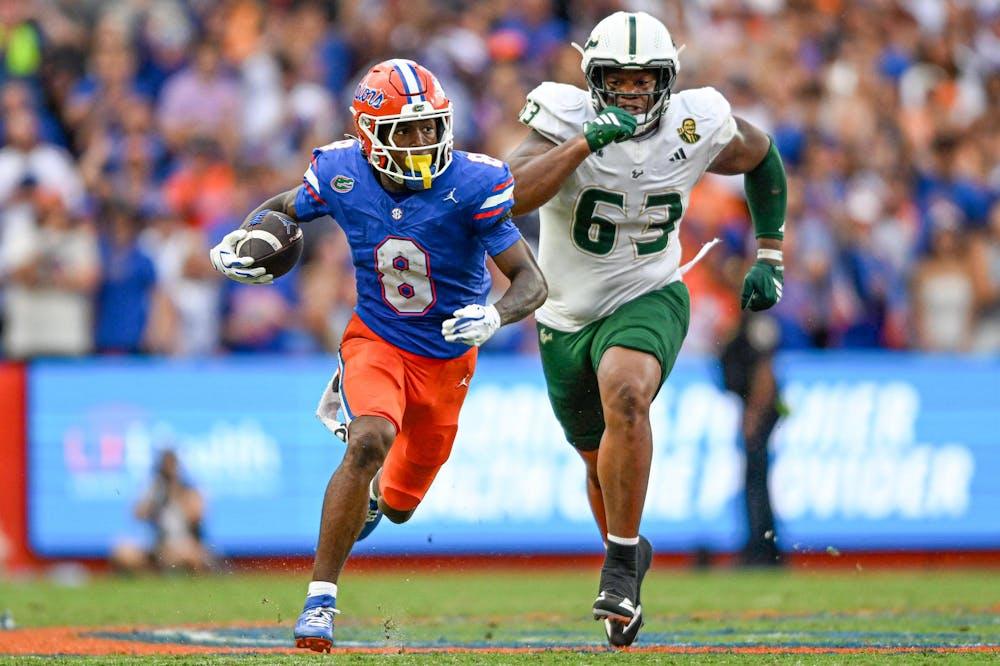
For Florida, speed is not simply about running 40-yard dashes. It is about operational tempo. It is receivers forcing defensive backs to defend the entire width of the field. It is running backs hitting creases before linebackers can fit their gaps. It is defensive pursuit that turns six-yard gains into two-yard gains and contested throws into turnovers.
The best version of this approach makes the opponent feel rushed. Defenses must declare intentions earlier. Linebackers must widen toward the perimeter. Safeties must choose between supporting the run and protecting vertical space. That is where Florida can create leverage before the ball is even snapped.
A fast team does not merely play quickly. It makes the opponent play uncertainly.
Why Slow Power Football Is No Longer Enough
There is still a place for physical football. No serious program can survive without the ability to win short-yardage situations, protect the quarterback, and control the line of scrimmage. But slow power football as a primary identity has become too limiting, especially for a program trying to compete nationally.
The issue is predictability. A team that leans too heavily on traditional power concepts allows elite defenses to condense the field, rotate safeties aggressively, and win with numbers at the point of attack. Against SEC defensive fronts, that can turn into a weekly grind where every first down feels expensive.
Florida’s more intelligent path is not to abandon physicality but to modernize it. Power can be expressed through tempo. It can show up in perimeter blocking, yards after contact, quarterback run threats, and red-zone efficiency. A spread formation does not have to mean a soft offense. In the right structure, spacing can actually make physical players more dangerous because defenders are forced to tackle in space rather than in a crowded box.
That is the strategic pivot. Florida should not be trying to outmuscle every opponent in a phone booth. It should be forcing opponents to defend grass, speed, and conflict.
The Value Of A Flexible Offensive Structure
Flexibility is the heart of the modern Florida model. A rigid offense is easy to study. A flexible offense can carry the same personnel group onto the field and present multiple problems from one snap to the next.
That matters because defensive substitutions are harder when the offense can shift shape without changing players. A tight end can line up attached to the formation, flex into the slot, or motion across the line. A running back can become a receiving threat. A wide receiver can be used on screens, vertical routes, jet motion, or perimeter run action.
The point is not complexity for its own sake. The point is making the defense communicate, hesitate, and reveal itself. When Florida uses spacing well, the quarterback gets clearer information. When motion is used with purpose, coverage intentions become easier to identify. When the run game and pass game are married correctly, linebackers are placed in conflict rather than allowed to play downhill without consequence.
This is why the Florida Gators football strategy should be understood as a system of pressure. It is not only about explosive plays. It is about repeatedly asking the defense questions it cannot answer comfortably.
Smart Quarterback Play Is The Central Engine
No modern strategy works without quarterback intelligence. Arm strength matters. Mobility matters. Leadership matters. But the most important trait in this kind of offense is decision speed.
A decision-heavy team puts the quarterback at the center of the operation. He must understand pre-snap leverage, identify pressure indicators, recognize coverage rotation, and make post-snap choices with discipline. In run-pass option concepts, the quarterback is not just executing a play call. He is solving a defensive equation in real time.
That changes the meaning of quarterback development. The goal is not simply to produce a passer who can throw deep or complete rhythm routes. The goal is to produce a player who can manage conflict. If a linebacker crashes, the ball goes behind him. If a safety rotates down, the quarterback knows where the vacated space should appear. If the defense disguises pressure, the ball must come out before the rush can define the play.
This is where Florida’s ceiling can rise. A smart quarterback in a flexible system becomes a force multiplier. He makes receivers better by delivering on time. He makes the offensive line better by reducing hesitation and sacks. He makes the run game better by punishing overcommitment.
The strongest offenses do not ask the quarterback to be a superhero every snap. They give him answers and teach him how to choose the right one.
Spacing As A Competitive Advantage
Spacing is often misunderstood as a cosmetic feature of spread football. In reality, spacing is a mathematical weapon. It determines how many defenders can be near the ball, how difficult tackles become, and how much room an offense has to punish mistakes.
Florida’s offensive strategy should use spacing to isolate matchups. A slot receiver against a linebacker is an advantage. A running back against a safety in space can be an advantage. A mobile quarterback against a light box can become a structural problem for the defense.
The key is sequencing. Screens make defenders widen. Inside runs punish overextension. Play-action attacks hesitation. Vertical routes punish safeties who get too aggressive. When these pieces connect, the offense becomes more than a collection of plays. It becomes a rhythm of manipulation.
That is how a team becomes difficult to defend without relying on one superstar. The ball can move to the best matchup rather than the most famous player. A different receiver can become the answer depending on coverage. The running game can change shape depending on defensive alignment. The quarterback becomes the distributor of stress.
This is a more sustainable model than building an offense around one dominant player and hoping he stays healthy for an entire season.
Why Not Depending On One Star Matters
College football is volatile. Injuries happen. Transfers reshape depth charts. Young players develop unevenly. Opponents spend all week designing plans to erase a team’s most obvious weapon. That is why overdependence on one star is dangerous.
Florida’s better model is distributed production. The offense should be designed so that several players can become primary options depending on the matchup. The defense should be constructed so pressure can come from multiple levels. Special teams should contribute field position rather than merely avoid disaster.
A team built around one star can look spectacular when conditions are perfect. A team built around systems, speed, and decision-making travels better. It can win when the passing game is imperfect. It can survive when a key player is limited. It can adjust when an opponent takes away Plan A.
That distinction matters in the SEC, where the schedule rarely allows a program to hide weaknesses for long. Depth and flexibility are not luxuries. They are survival traits.
Defensive Speed Must Match The Offensive Vision
A fast, flexible team cannot exist only on offense. Florida’s defense must follow the same philosophical direction: speed, multiplicity, and decisive reaction.
The modern defense faces offenses that use tempo, motion, option principles, and spacing to create hesitation. The answer is not simply more size. The answer is defenders who can run, tackle in space, communicate quickly, and disguise pressure without losing structural integrity.
Florida’s defensive approach should prioritize disruption. That means edge speed that compresses the pocket, linebackers who can fit the run and carry routes, and defensive backs who can play with enough versatility to survive against spread formations. The best defenses do not merely prevent yardage. They create negative plays, force rushed throws, and change field position.
The challenge is balance. Aggression without discipline becomes vulnerability. Blitzing without coverage cohesion creates explosive plays for the opponent. But when speed is paired with clear rules and strong communication, the defense can dictate rather than react.
That is the defensive mirror of the offensive strategy: force the opponent to process faster than it wants to.
Recruiting And Development Implications
The Florida Gators football strategy also has major roster-building implications. If the program wants to be fast, flexible, and decision-heavy, it must recruit and develop players who fit that vision.
At wide receiver, that means more than raw speed. Florida needs players who understand spacing, route leverage, and post-catch angles. At running back, versatility matters: pass protection, receiving ability, and vision in zone concepts. On the offensive line, movement skills become increasingly important because screens, outside zone, and tempo require linemen who can operate beyond traditional downhill blocks.
Defensively, hybrid athletes become especially valuable. The linebacker-safety body type has become one of the defining pieces of modern football. These players help defend spread formations without sacrificing run support. Edge defenders must be explosive but disciplined. Corners must handle isolation snaps because aggressive defensive structures often leave them exposed.
This is where program identity becomes practical. A clear strategy makes evaluation sharper. It tells coaches what traits matter most. It tells recruits how they will be used. It gives player development a coherent direction.
Without that clarity, a roster becomes a collection of talent. With it, talent becomes a system.
The SEC Context Raises The Stakes
Florida does not operate in a vacuum. The SEC is unforgiving because it combines elite athleticism with tactical sophistication and weekly pressure. A strategy that works against lesser competition can be exposed quickly when opponents have equal or better talent.
That is why the Gators need more than energy and slogans. They need repeatable advantages. Speed gives them a baseline. Flexibility gives them adaptability. Smart quarterback play gives them efficiency. Defensive disruption gives them volatility in their favor.
The margin between good and elite in this league is often found in hidden areas: third-down answers, red-zone play design, protection adjustments, tackling consistency, turnover creation, and late-game decision-making. A decision-heavy team is built for those margins because it practices football as a sequence of choices rather than a contest of brute force alone.
Florida’s opportunity is to become harder to predict. Not gimmicky. Not reckless. Harder to predict because it can win in multiple ways.
What Success Should Look Like
The clearest sign that this strategy is working will not be one highlight play or one high-scoring game. It will be consistency.
A successful Florida team built on this model should create more manageable third downs. It should reduce wasted possessions. It should produce explosive plays without needing low-percentage throws. It should make the quarterback look prepared rather than overwhelmed. It should allow the defense to play faster because the offense is sustaining drives and controlling field position.
The program’s public-facing identity can be followed through the official Florida Gators football strategy hub, but the real evidence will appear on Saturdays: alignment, tempo, execution, and adaptability.
In simple terms, Florida should look like a team with answers. When opponents load the box, the ball goes outside. When defenses sit back, the run game becomes efficient. When pressure comes, the quarterback knows where to go. When the offense stalls, the defense has enough speed to flip momentum.
That is what modern complementary football looks like.
The Bigger Takeaway For Florida’s Future
The Florida Gators are at their best when they combine athletic confidence with tactical clarity. The program’s future should not be defined by slow power football or dependence on a single star. The smarter path is a roster and system built around speed, spacing, flexibility, and quarterback-driven decision-making.
That is why the Florida Gators football strategy matters now. College football is moving toward teams that can adapt instantly, create matchup stress, and survive roster volatility without losing identity. Florida has the recruiting geography, brand power, and competitive platform to build that kind of team.
The opportunity is clear. If the Gators commit fully to becoming fast, flexible, and decision-heavy, they will not merely be modernizing their playbook. They will be building the kind of football infrastructure required to contend in the sport’s most demanding environment.