

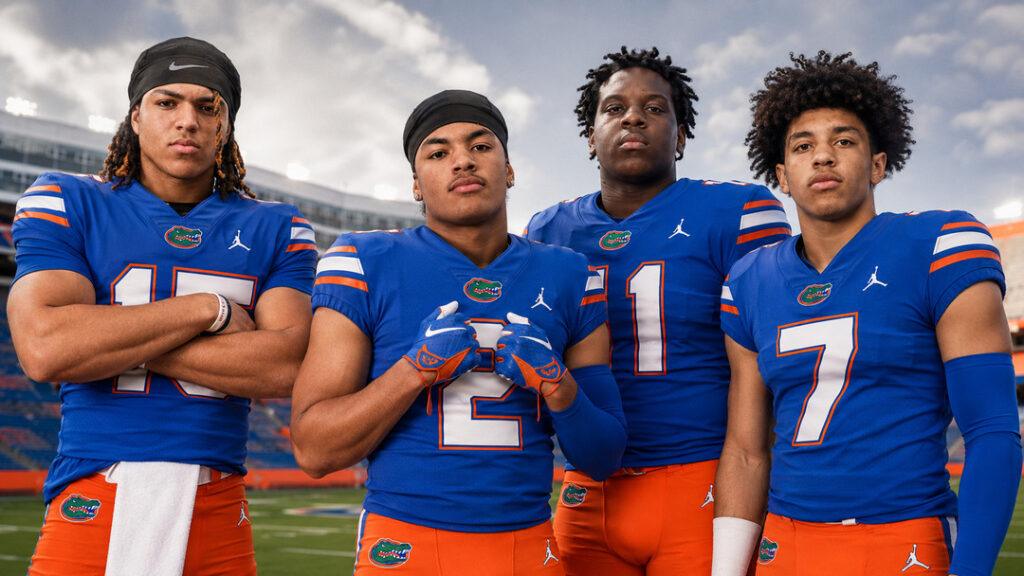
The Florida 2027 recruiting class is suddenly one of the most interesting early stories in Gainesville because it gives Jon Sumrall something more valuable than offseason noise: a measurable recruiting pulse before his first regular season at Florida. The Gators are not simply collecting commitments; they are trying to rebuild trust, restore momentum, and show blue-chip prospects that the new staff has a real plan.
That is why this surge matters now. Florida landed four 2027 commitments in the first week of May, turning a transitional moment into a statement about direction, roster balance, and the kind of program Sumrall is trying to construct.
Florida 2027 Recruiting Class Is Suddenly Heating Up
The latest Florida 2027 recruiting class push gives the Gators a headline that feels bigger than a normal spring recruiting update. Elijah Hutcheson, Kailib Dillard, Stive-Bentley Keumajou Yondui, and Andrew Beard gave Florida four May additions across different parts of the roster, which is exactly what makes the run useful.
This was not one splash commitment carrying an otherwise thin story. Florida added an offensive tackle, a safety, a defensive lineman, and a running back. That kind of spread gives the class shape. It also tells us Sumrall’s staff is trying to build a roster with structure rather than chasing whatever name produces the loudest social-media reaction.
That distinction matters in the SEC. Talent is not enough if the class lacks depth in the right places. A roster can look impressive on paper and still crack if the line play is soft, the defensive backfield is thin, or the staff misses on developmental bodies. Florida’s early work suggests a more complete recruiting strategy.
The timing also helps. A new staff needs early evidence that its message is landing. Sumrall has not yet had the advantage of a fall statement win, so recruiting traction has to come from relationships, staff energy, development pitches, NIL clarity, and belief in the next version of Florida football. This May run gives that pitch more credibility.
The bigger point is that Florida is acting before desperation takes over. That matters in a recruiting calendar where hesitation can become cost and where rival staffs are always looking for signs of weak alignment inside a rebuilding program.
Why Sumrall Needed This Fast Start
Florida is not a patient rebuild job in the ordinary sense. The program has tradition, resources, fan intensity, SEC pressure, and a recruiting footprint that should never feel passive. A new coach in Gainesville needs to show progress before the first kickoff because silence creates risk.
That is why Sumrall’s fast recruiting start matters. It gives Florida a public answer to a private question many recruits ask during a coaching change: is this program stable enough to trust? Every commitment helps answer that. Every addition gives the staff more authority in the next conversation.
The pitch is different when a class already has movement. Coaches can stop selling only imagination and start selling a group. Prospects can see who else is joining. Families can evaluate whether the plan has substance. Rival staffs lose some of the easy negative recruiting that comes with uncertainty.
There is still a long way to go, but Florida needed an early sign of confidence. Sumrall’s staff produced one before the summer visit period could define the cycle.
That early timing changes the staff’s posture. Instead of recruiting from a place of apology, Florida can recruit from strength. Instead of asking prospects to overlook transition, the Gators can show a class already forming with purpose.
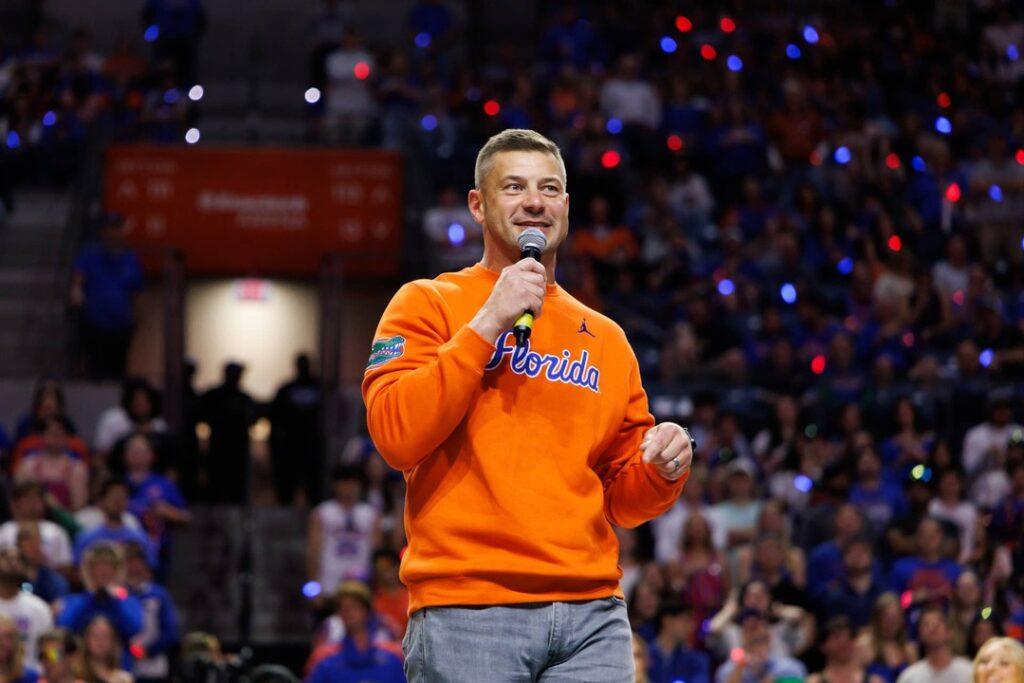
What The Four May Commitments Really Say
The four-player May burst works because each commitment fits a different part of the roster-building puzzle.
Hutcheson gives Florida another offensive line piece, and that should not be overlooked. SEC programs are usually exposed first at the line of scrimmage. If the offensive front cannot hold up, the quarterback gets rushed, the run game loses rhythm, and every play caller becomes limited. Adding another tackle prospect gives Florida a developmental priority at a position where depth is rarely optional.
Dillard adds secondary value. Modern safeties have to cover, tackle, communicate, rotate, and survive against motion-heavy offenses. A player with two-way high school production brings versatility, and that is exactly the kind of trait defensive staffs keep chasing.
Keumajou Yondui gives Florida a defensive front addition from Coral Gables, keeping a South Florida thread inside the class. That matters because Florida’s recruiting model should always include serious in-state presence. National recruiting is necessary, but Florida cannot afford to look disconnected from its own high school talent base.
Beard may be the most clickable name of the group because of his production profile and Georgia ties. A running back from Bogart, Georgia, choosing Florida over major regional competition gives the Gators a useful offensive signal and a recruiting win in territory every SEC staff values.
| Commitment | Position | Why It Matters |
|---|---|---|
| Elijah Hutcheson | Offensive tackle | Adds long-term trench depth |
| Kailib Dillard | Safety | Gives Florida a flexible secondary piece |
| Stive-Bentley Keumajou Yondui | Defensive line | Strengthens the defensive front and in-state footprint |
| Andrew Beard | Running back | Adds offensive production and Georgia recruiting value |
Together, the group does not just raise the commitment count. It gives the class a sturdier foundation and helps define the staff’s early blueprint.
The Offensive Line Push Could Define The Class
The most important part of Florida’s early 2027 movement may be the offensive line emphasis. Fans often gravitate toward quarterbacks, receivers, and running backs, but SEC rebuilds usually become real only when the trenches improve.
Hutcheson joins a class that already had significant offensive line attention, and that should encourage Florida fans. Offensive line development takes time. Bodies have to be reshaped. Technique has to be drilled. Communication has to become automatic. A program that waits until the depth chart is desperate has already lost control.
This is where Florida’s staff deserves credit for discipline. It is easier to sell excitement through skill players, but offensive line recruiting is where a staff shows whether it understands the cost of winning in the SEC. The Gators need backs to run through contact, quarterbacks to play on schedule, and coordinators to call games without fear of constant pressure. None of that happens without line play.
If Florida keeps stacking linemen and develops them properly, the payoff may arrive later. That is fine. The best recruiting classes are not built only for immediate applause. They are built for future stability.
That kind of patience is difficult in Gainesville, but it is necessary. A real offensive line plan gives the whole roster more margin, especially when a new staff is trying to rebuild offensive identity.
Andrew Beard Gives Florida A More Dynamic Offensive Hook
Beard gives the class a different kind of spark. Running backs still matter when they can do more than take handoffs, and Florida’s offense needs future pieces who can create stress without making the scheme predictable.
The modern back has to run with power, catch the ball, protect in passing situations, and stay dangerous enough to influence defensive spacing. Beard’s production gives Florida a player with legitimate offensive appeal, while his recruitment out of Georgia gives the commitment extra weight.
That geography matters. Florida will always be judged partly by how well it recruits the Sunshine State, but Georgia is too important to ignore. The state is close, loaded with talent, and heavily contested by programs Florida must beat to become nationally relevant again. Winning a player from that footprint helps the staff’s leverage.
Beard also gives the class personality. Every good recruiting group needs players who can become part of its public identity. If he becomes a vocal recruiter, his value can stretch beyond his own position room and create more energy around the class.
Defensive Recruiting Gives The Surge More Substance
A recruiting surge built only around offense would be easier to question. Florida’s defensive additions make the story more convincing because they show the staff is not building a lopsided class.
Dillard’s commitment helps the secondary, where athleticism and communication are both essential. Safeties are asked to diagnose quickly, tackle in space, and handle coverage stress that older defensive structures did not always demand. That position now requires serious judgment.
Keumajou Yondui brings a different kind of profile along the defensive line. Interior and front-seven development is rarely instant, but those bodies are valuable when a staff has time to work. Florida needs defensive linemen who can grow into SEC snaps, absorb contact, and keep the defense from depending only on edge pressure.
The real value is resilience. A defense with more body types, more developmental options, and more competition has a better chance to withstand injuries, transfers, and matchup problems. Florida is not finished defensively, but this early movement gives the staff more optionality.
Rankings Are Nice, But The Shape Of The Class Matters More
Recruiting rankings create attention, and Florida is already getting plenty of it. The broader Florida Gators recruiting surge shows why the 2027 cycle has become a real early talking point around Sumrall’s first-year operation.
Still, the class shape is more important than the ranking snapshot. A class can rank well and still miss core roster needs. Florida’s early 2027 group looks more promising because it touches quarterback, offensive line, receiver, defensive back, defensive line, and running back needs. That spread creates clarity.
It also fits the larger state-wide arms race. Miami, Florida State, UCF, USF, and other Florida programs are all trying to build identity in a more aggressive roster era, which makes broader Florida football recruiting context useful when judging how loud this Gators run really is.
The next job is retention. Commitments in May still have to survive official visits, fall Saturdays, rival pressure, NIL conversations, and changing depth charts. Florida has made a strong start, but accountability begins after the announcement.
That is why the staff’s follow-through matters. The Gators need relationship consistency, clean role communication, and enough roster transparency to keep prospects comfortable when other programs inevitably push back.
The SEC Message Is Becoming Clearer
Florida does not need to pretend it has solved the rebuild. It does need to look serious again in SEC recruiting conversations. That is the value of this run.
The conference is unforgiving because every rival with ambition is recruiting year-round. Georgia, Alabama, LSU, Tennessee, Auburn, Texas, Oklahoma, and Texas A&M all understand that roster construction never stops. Florida cannot drift in that environment and expect tradition to save it.
Sumrall’s early recruiting movement gives the Gators a stronger position. It tells prospects that Florida is not waiting around. It gives committed players a reason to recruit peers. It lets the staff sell a class that already has momentum, not just a concept.
The in-state piece remains crucial too. Florida has to recruit nationally, but it cannot lose its connection to the high school ecosystem around Gainesville, Jacksonville, Tampa, Orlando, South Florida, and the Panhandle. A successful Gators roster usually has a strong Florida core plus selective national additions. That blend creates scale.
If Sumrall can keep that balance, the 2027 class becomes more than a hot week. It becomes a model for how the staff wants to build. It also gives Florida more credibility in battles where reputation alone no longer creates enough separation.
The Risk Is Believing May Solves December
The danger is getting too comfortable too early. Recruiting cycles are emotional, unstable, and full of reversals. A commitment is important, but it is not the finish line.
Florida still has to hold the class. That means constant communication, honest role discussions, strong official visits, and steady relationships with families and high school coaches. It also means avoiding the trap of overpromising. Short-term excitement can create long-term problems if the staff sells a future it cannot support.
The Gators also have to keep evaluating. A hot start can tempt a program into protecting its early board too tightly. The better approach is aggressive but flexible. Keep recruiting committed players, keep searching for upgrades, and keep asking whether the class still matches the roster’s real needs.
That is where execution becomes the difference. Florida has gained attention. Now it has to turn attention into a signed class, then turn the signed class into players who actually develop.
The staff should also expect counterpunches. A class with early buzz invites pressure, and Florida’s ability to withstand that pressure will reveal whether this surge is built on emotion or real structure.
What Florida Fans Should Watch Next
The next phase should be straightforward. Watch who visits Gainesville. Watch which committed players become active recruiters. Watch whether Florida adds more defensive front help. Watch how strongly the staff pushes for elite in-state prospects. Those clues will say more than any single ranking update.
Also watch how rivals respond. A rising Florida class will not go unchallenged. Georgia, Miami, Florida State, Clemson, Tennessee, and other major programs will keep pressing around the edges. That is not a problem. It is confirmation that Florida has players worth fighting for.
The encouraging part is that Sumrall now has something real to defend. The class has structure, early star power, positional variety, and enough traction to make the rest of the cycle feel meaningful.
That is why the Florida 2027 recruiting class matters now. It is early enough to remain uncertain, but strong enough to change the conversation in Gainesville. If Sumrall keeps stacking the right players, holding the core together, and turning early belief into signed talent, this surge may become the first major proof that Florida’s new era has real direction.