


Florida Gators secondary depth is back in focus because roster building does not stop when spring practice ends. The late addition of JUCO cornerback Javier Jones gives Florida another defensive back before fall camp, and while this is not the kind of move that instantly changes national expectations, it does tell us something important about how the Gators are still shaping the back end of their roster.
The easy reaction is to treat a junior college corner as a depth note and move on. I would not do that. At this point of the offseason, every addition has a purpose, especially in the secondary, where one injury, one position switch, or one freshman learning curve can change the entire rotation.
Why Florida Gators Secondary Depth Matters Now
Cornerback depth is one of those roster areas that tends to look fine until it suddenly does not. A team can feel comfortable in May, then get into September and realize it needs another reliable body on special teams, another matchup option outside, or another defensive back who can survive practice reps without the staff overextending its starters.
That is why the Jones addition is more interesting than a typical late-cycle transaction. Florida is not simply collecting names. It is trying to create late-cycle roster insurance before the grind of camp begins.
Jones comes from Independence Community College, and his Independence Community College profile gives the basic frame of the player: a defensive back from Phoenix with junior college experience and a pathway to arrive with a different kind of readiness than a true freshman. That does not guarantee a major role, but it changes the conversation. A JUCO defensive back is usually being added because the staff wants someone who has already handled college-level tempo, travel, contact, and week-to-week preparation.
For Florida, that matters. The Gators are trying to tighten the margins in a league where defensive depth is not optional. SEC teams do not just need starters who can run. They need second- and third-wave defensive backs who can play on special teams, handle emergency snaps, and compete hard enough in practice to raise the floor of the room.
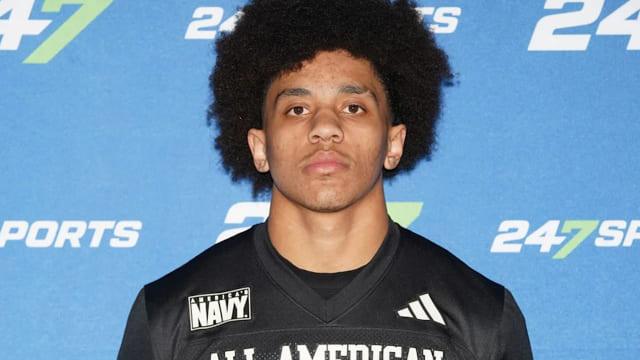
What Javier Jones Adds To The Room
Jones is not arriving as a headline transfer or a five-star prospect expected to become the face of the defense. His value is different. He gives Florida another cornerback body with experience, size, and immediate practice utility before the roster gets tested in camp.
The latest Florida Gators secondary depth update frames Jones as a post-spring addition who played at Independence Community College before joining the 2026 roster. That timing matters. Post-spring additions are often about filling gaps that become clearer after coaches evaluate the roster in live practice, meetings, and position-group competition.
Here is the clean way to view the move:
| Area | What It Means For Florida |
|---|---|
| Position | Adds another defensive back to the cornerback room |
| Timing | Arrives after spring evaluation and before fall camp |
| Background | Brings junior college experience instead of a high school-only profile |
| Short-Term Value | Can compete for depth, special teams, and practice reps |
| Long-Term Question | Must prove he can handle SEC speed and consistency |
That final line is the key. The SEC does not care about roster math on paper. A player has to show he can tackle in space, stay disciplined with leverage, avoid panic at the catch point, and respond when receivers attack him vertically. Jones will have to earn that trust.
Still, there is a reason this kind of move makes sense. In modern college football, developmental competition matters because the gap between “backup” and “needed contributor” can close fast.
The Bigger Roster-Building Message
I see this less as a single-player story and more as a roster-building signal. Florida is still hunting for useful pieces, and that is exactly what serious programs do. The transfer portal, junior college route, late evaluations, and high school recruiting are all part of the same personnel ecosystem now.
A program that waits until it has an obvious problem is usually too late. A program that adds before the problem fully appears gives itself more options. That is why Jones fits the broader pattern of how staffs try to protect themselves against uncertainty.
The move also sits naturally alongside Florida’s broader recruiting momentum, because long-term class building and short-term roster patching are no longer separate conversations. The best programs manage both at the same time. They recruit the future, but they also keep addressing the current roster before small weaknesses become season-shaping issues.
That is especially true in the secondary. Defensive back rooms are under constant stress because modern offenses spread the field, force nickel and dime looks, and attack depth players when starters rotate out. A corner who may not be projected as a starter in May can still become valuable by October.
Why This Is Not Just A Depth Note
The phrase “depth piece” can sound dismissive, but it should not. In college football, depth is not filler. Depth is how teams survive bad injury luck, special teams wear, matchup problems, and the weekly physical toll of conference play.
That is why not every addition is identical. Some players are added because they raise the ceiling. Others are added because they stabilize the floor. Jones looks more like the second category for now, and there is nothing wrong with that. A stable floor is valuable when a program is trying to become more consistent.
Florida’s defensive staff will likely want to learn quickly where Jones fits. Is he strictly an outside corner? Can he help on coverage units? Does he have enough physicality to support the run? Can he challenge receivers at the line without drawing flags? Those answers will determine whether he becomes a real rotation candidate or simply strengthens the room from the bottom up.
Either outcome has value, but the upside comes if he proves ready faster than expected.
The Risk Florida Still Has To Manage
There is also a practical warning here. Late additions can help, but they are not magic fixes. Jones still has to transition into Florida’s terminology, conditioning expectations, meeting-room standards, and defensive structure. Junior college experience can shorten the learning curve, but it does not erase it.
That is the trade-off with a move like this. Florida gains another experienced body, but the staff still has to determine whether his game translates when the speed, route detail, and quarterback accuracy all increase. The difference between being athletic enough and being trustworthy enough can be significant.
That makes fall camp the real evaluation point. Jones does not have to become a star for this addition to make sense. He has to show he can compete, absorb coaching, and give the staff confidence that he will not be overwhelmed if called upon.
If he does that, Florida gets fall-camp leverage. The coaches can rotate more comfortably, push competition harder, and avoid rushing younger defensive backs into roles before they are ready.
What Florida Fans Should Watch Next
The next question is not whether Jones becomes an instant starter. The better question is whether Florida’s defensive back rotation looks more settled by the end of camp because of players like him.
Watch how the staff talks about him. Watch whether he appears in special teams discussions. Watch whether he gets mentioned as a corner only or as a defensive back with some flexibility. Watch whether younger players are being protected, challenged, or passed in the pecking order.
Those details will say more than the initial commitment itself.
For now, the move should be viewed as a smart, low-risk roster play. It gives Florida another option at a premium position, adds competition before camp, and shows the Gators are still working the edges of the roster instead of assuming the spring depth chart is final.
That is the bigger signal here. Florida Gators secondary depth remains a live storyline because the program is still adjusting, still evaluating, and still trying to build a defensive back room sturdy enough for the season ahead. Jones may or may not become a major name, but his arrival reflects the kind of roster management that can matter once the games begin.