


The Florida State Seminoles utilized the month of June 2026 to systematically reshape the long-term mathematical baseline of their defensive front seven. The public focus often gravitates to high-profile quarterback commitments and wide receiver acquisitions, but sharp football analysts track the specific capital investments made at the second level of a collegiate defense. Newly promoted linebackers coach Ernie Sims initiated a highly calculated recruiting run, securing three critical commitments for the #Tribe27 class over a concentrated 15-day window.
Jernard Albright, Olrick Johnson III, and CJ Ohuabunwa represent more than just standard high school prospects. They operate as future structural pillars for Florida State’s overall defensive market valuation. The modern collegiate football environment requires defensive coordinators to field linebackers capable of operating in high-stress, open-field scenarios against fast-paced spread concepts. A program that fails to secure elite tackling volume and disruption metrics at the linebacker position will consistently surrender late-game point spread covers resulting from an inability to force negative plays on early downs.
By addressing this personnel requirement aggressively early in the summer window, the Florida State athletic department effectively stabilizes its multi-year roster depth chart. This proactive acquisition strategy insulates the program from the desperate, high-cost bidding wars that frequently dictate the December transfer portal market. Securing commitments now allows the coaching staff to allocate future resources to other positional deficits, maximizing the overall efficiency of the athletic budget.
The Statistical Profile of Disruption

Evaluating high school linebackers requires filtering raw athletic potential through the lens of verified production metrics. The Florida State scouting department heavily prioritized prospects who demonstrated an overwhelming ability to stop forward momentum and generate immediate backfield pressure. These specific data points correlate directly to collegiate success. High-volume tacklers transition to the speed of the Atlantic Coast Conference at a much higher success rate than pure speed rushers who lack foundational block-shedding mechanics.
The mid-June commitment of CJ Ohuabunwa from Greater Atlanta Christian School highlights this strict data-driven approach. Operating as a highly active pursuit defender, Ohuabunwa recorded 117 total tackles during his junior campaign. This level of sheer volume indicates elite play diagnosis and the structural capacity to pursue ball carriers from sideline to sideline. When a defensive unit can rely on a singular player to consistently execute open-field tackles, it allows the defensive coordinator to reduce the number of high-risk blitz packages dialed up on third-and-medium situations, protecting the secondary from man-to-man exposure.
Olrick Johnson III brings an entirely different but equally valuable mathematical component to the defensive structure. Committing out of Harrison High School in Kennesaw, Georgia, Johnson registered 100 total tackles alongside 14.5 tackles for loss and 12.5 sacks. This elite pressure rate forces opposing offensive systems into off-schedule down-and-distance scenarios. Tracking advanced defensive efficiency consistently proves that forcing second-and-long or third-and-long scenarios drastically reduces an offense’s expected points added (EPA) per drive.
| #Tribe27 Linebacker | High School Program | Junior Year Total Tackles | Backfield Disruption Metrics |
| CJ Ohuabunwa | Greater Atlanta Christian (GA) | 117 | 3 TFLs, 2 Sacks |
| Olrick Johnson III | Harrison High School (GA) | 100 | 14.5 TFLs, 12.5 Sacks |
| Jernard Albright | Effingham County (GA) | Scheme Utility Focus | High-Impact Coverage Radius |
The combination of Ohuabunwa’s tackling volume and Johnson’s backfield disruption creates a highly complementary unit. Projected into Florida State’s multi-year defensive blueprint, these statistical profiles suggest a defensive floor capable of suppressing modern passing attacks through sheer athletic discipline and strict gap integrity.
Countering SEC Market Poaching Tactics
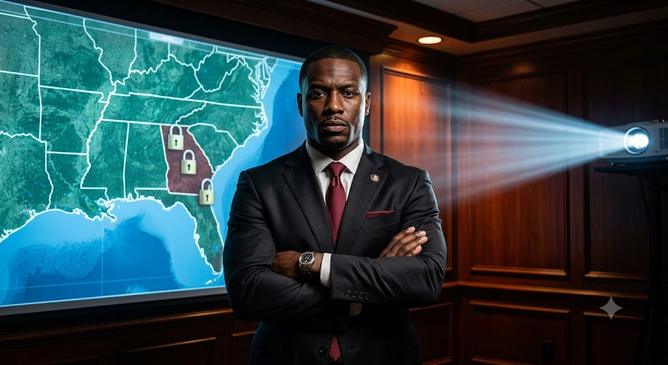
The process of talent acquisition in the current iteration of college football extends far beyond securing a simple verbal agreement. Defensive prospects demonstrating the statistical output of Johnson and Ohuabunwa instantly attract aggressive poaching attempts from competing regional powerhouses. The ability of the Florida State coaching staff to hold off late pushes from the Southeastern Conference serves as a strong indicator of the program’s overall market strength and internal operational alignment.
Shortly after Olrick Johnson III announced his pledge on June 11, the LSU Tigers and head coach Lane Kiffin initiated a heavy pursuit, extending a scholarship offer and applying significant pressure to secure a summer visit. LSU operates as a highly capitalized defensive market, frequently leveraging its regional proximity and resource allocation to flip committed prospects late in the cycle. By analyzing recent national roster acquisition rankings, analysts can trace how SEC programs systematically target ACC defensive commits to fill their own positional gaps after other staffs have completed the primary evaluation work.
Florida State successfully neutralized this threat, prompting Johnson to lock down his recruitment completely and reject external advances. This retention victory carries massive financial and structural implications. Losing a statistically elite linebacker prospect forces a program to pivot to secondary targets who often present lower analytical grades and reduced long-term athletic upside. By maintaining a firm grip on the #Tribe27 linebacker class, Ernie Sims protected the institutional investment made during the relationship-building phases of the recruiting cycle.
This level of retention proves that the internal messaging and developmental track record at Florida State resonate strongly enough to withstand aggressive external market forces. For professional odds compilers evaluating the long-term stability of the program, these recruiting victories act as hard data points confirming the program’s competitive viability against upper-tier regional competition.
Coaching Return on Investment
The decision to elevate Ernie Sims to a primary position coaching role required an immediate return on investment on the recruiting trail. Internal staff promotions in high-stakes college football face heavy scrutiny from the analytical community. Sims delivered a precise and highly effective response by flipping four-star linebacker Jernard Albright away from the South Carolina Gamecocks on June 7, sparking the impressive two-week run of defensive commitments.
Albright’s flip from an SEC East program established immediate credibility for Sims in the living rooms of elite defensive prospects across the state of Georgia. The strategic value of recruiting heavily in Georgia dictates the ceiling of most southeastern programs. The state produces a disproportionately high percentage of NFL-grade defensive talent compared to the national average. By securing three high-level commitments from a contiguous recruiting footprint, the coaching staff maximizes their travel efficiency and solidifies a pipeline utilized heavily in future cycles.
These acquisitions provide the defensive coaching staff with the raw athletic materials needed to construct complex, multi-layered coverage schemes. A defense possessing linebackers capable of dropping deep into coverage while simultaneously presenting a credible run-stopping threat severely limits the pre-snap reads available to opposing quarterbacks. This structural ambiguity forces opposing offenses to operate at a slower tempo, inherently limiting their overall possession count and scoring opportunities. You can study these schematic advantages by reviewing historical ACC defensive trends to see how elite linebacker play correlates directly with conference championship appearances.
Analyzing the Spread Impact of Defensive Depth

From a sports betting perspective, defensive depth at the second level acts as a critical variable when projecting late-season performance. As the grueling physical reality of a 12-game regular season takes its toll on a roster, programs lacking adequate depth at the linebacker position frequently experience massive statistical drop-offs in November. This fatigue leads to poor tackling angles, blown zone coverage assignments, and a complete inability to maintain gap integrity against run-heavy offensive schemes.
The aggressive June recruiting strategy executed by Florida State aims to eliminate this vulnerability. By stacking highly productive prospects in consecutive recruiting classes, the program builds a protective buffer against injury attrition. Offshore syndicates and professional bettors heavily weight this type of organizational depth when formulating early-season win totals and conference championship probabilities. A team that can rotate fresh linebackers into the game during the fourth quarter holds a distinct mathematical advantage over an opponent relying on exhausted starters.
A defense fortified by players like Albright, Johnson, and Ohuabunwa will demand immediate respect from the betting market. When creating mathematical models to predict game outcomes, analysts factor in a defense’s ability to limit explosive plays resulting in gains of 20 or more yards. High-IQ, volume-tackling linebackers serve as the primary deterrent against these game-altering moments, ensuring that short completions do not turn into massive breakaway touchdowns.
Tracking these acquisitions through offshore market spread models reveals the true value of the #Tribe27 class. Florida State is not simply compiling a list of verbal commitments. The administration is strategically acquiring the exact defensive assets required to manipulate future point spreads and maintain a dominant structural advantage in the Atlantic Coast Conference. The mathematical foundation established in June 2026 will directly dictate the financial and competitive reality of the program for years to come.