

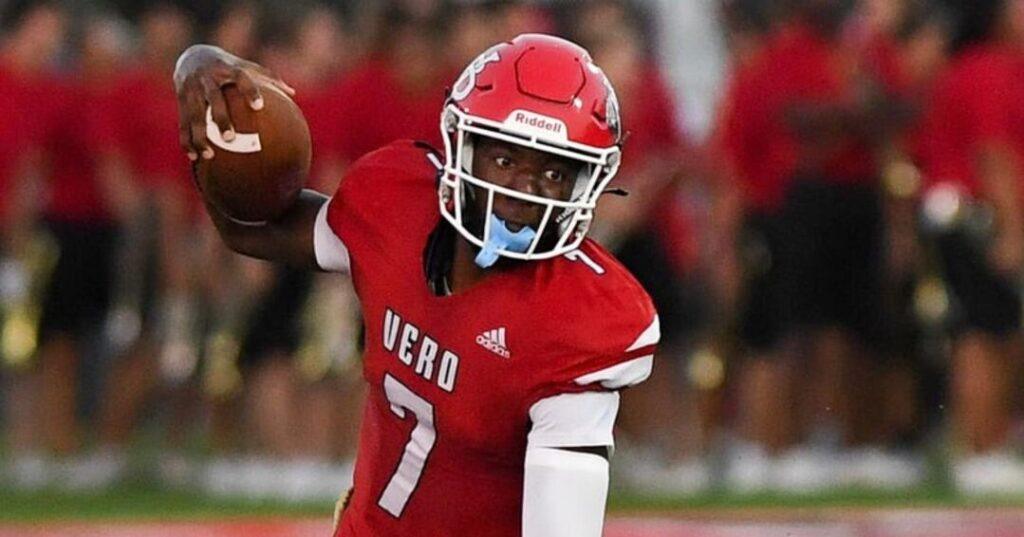
A top FSU quarterback target choosing a college home is never just another recruiting update, especially when Florida State is trying to sharpen its offensive direction before the next roster cycle takes shape with real urgency. Wonderful “Champ” Monds IV turned a late-spring announcement into a real test of how the Seminoles are perceived by elite quarterbacks, and the answer deserves more than a quick shrug.
Why The FSU Quarterback Target Story Matters
Quarterback recruiting carries a different kind of pressure because the position becomes the emotional center of a class before most fans know the full board. When a passer with national options puts Florida State among his finalists, the program gets a chance to prove its pitch still travels. When that player chooses elsewhere, the staff gets information it cannot ignore.
Monds, a four-star quarterback from Vero Beach, Florida, had Florida State, Notre Dame, and Ohio State in the final group before making his decision. That finalist list matters. It tells us this was not a soft regional pursuit or a courtesy mention. It was a national recruitment involving three brands with different strengths, different quarterback histories, and different selling points.
Florida State’s presence in the final group was a meaningful signal. The Seminoles had access, familiarity, and a football argument. They had a chance to keep a prominent Florida passer inside the state. But recruiting is measured by more than proximity to the finish line. The final step is where credibility gets tested.
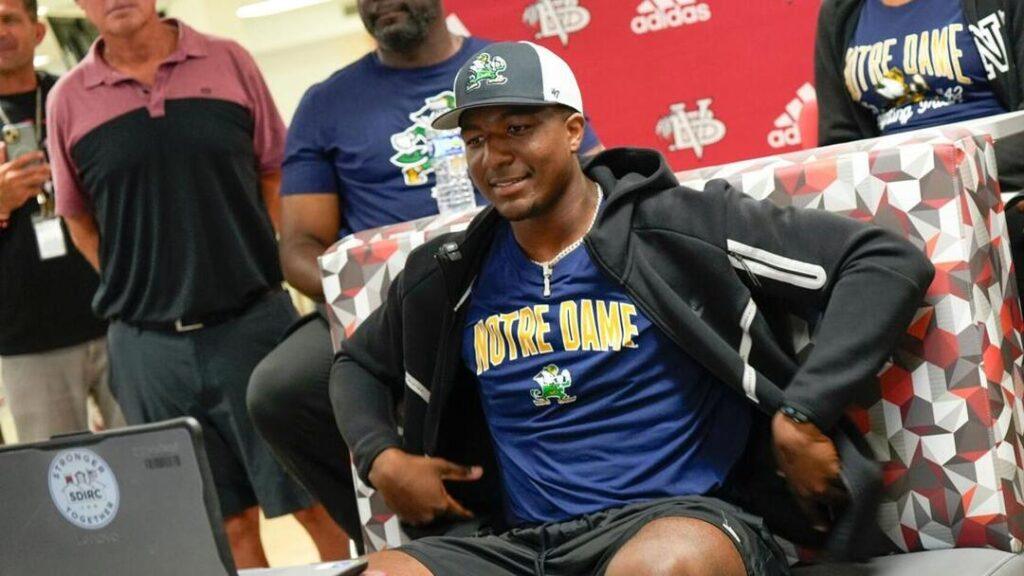
The FSU quarterback target conversation changed once Monds made his choice. His commitment to Notre Dame moved the story from anticipation to interpretation. For Florida State, the issue is not whether one miss ruins a class. It does not. The issue is whether the staff can respond with clarity before the quarterback board tightens.
Quarterback Recruiting Runs On Timing
The quarterback position does not recruit like other spots. Programs can sign multiple receivers, build depth, rotate defensive linemen, and rebuild linebacker depth through several pathways. Quarterback is different. One commitment can set the tone for an entire class, influence skill-position targets, and become a peer recruiter long before signing day.
That is why timing creates leverage. When a top quarterback waits, every finalist has to manage hope and contingency at the same time. When he chooses another school, the losing programs must manage contingency and pivot without making the next target feel like a consolation prize. That is harder than it sounds.
Florida State still has time in the 2027 cycle, but time is not unlimited. Quarterbacks often make decisions early because they want to recruit their own class and secure a developmental path. Wide receivers and tight ends want to know who might be throwing them the ball. Offensive coaches want a passer who can help frame the class. Fans want evidence of a plan.
The Seminoles need discipline here. The proper response is not panic. It is a sharper board, warmer backup relationships, and a specific explanation of why the next priority fits the program. That is how organized staffs absorb a miss without letting the market define them as reactive.
What Monds Represented For Florida State
Monds represented more than a ranking. He was a Florida prospect with national attention, a quarterback with enough profile to shape a recruiting class, and a player whose final list put Florida State directly against two heavyweight programs. Landing him would have been a useful proof point for Mike Norvell’s staff.
The symbolism would have mattered. Beating Notre Dame and Ohio State for an in-state quarterback would have strengthened Florida State’s message to offensive recruits. It would have suggested the Seminoles could convert relationships into commitments at the sport’s most important position. It also would have given the 2027 class a visible early centerpiece.
Losing him does not erase the work that got Florida State into the final group. It does, however, expose the gap between access and closure. That gap is the heart of modern recruiting. Coaches can build real relationships and still lose. They can make a strong football case and still fall short. The margin is often thin.
The key question is whether Florida State learns the right lesson. The lesson should not be that every Florida quarterback must stay home. That is unrealistic. The lesson is that quarterback recruits need a complete case: development, fit, stability, exposure, NIL structure, and a believable route to the field. The more complete the case, the stronger the trust.
The Decision In Context
| Element | Why It Matters For Florida State | What To Watch Next |
|---|---|---|
| In-state quarterback | FSU had a chance to keep a national passer from Florida | Whether the staff prioritizes another local option |
| Finalists | Notre Dame and Ohio State made it a national fight | How FSU competes against elite recruiting brands |
| Notre Dame commitment | FSU reached the final stage but did not close | How quickly the Seminoles pivot |
| 2027 timing | Quarterbacks often shape a class early | Whether FSU finds a new class leader |
| Offensive identity | QB choices reflect belief in development | Whether the pitch becomes more specific |
The table shows why this story has a longer shelf life than a typical spring recruiting note. The decision matters because quarterback recruiting compresses the calendar and magnifies perception.
Notre Dame’s Win Raises The Standard
Notre Dame’s win should not be treated as a shock. The Irish can sell national visibility, academic prestige, institutional stability, and a quarterback pathway that resonates with many families. That combination has real value, especially for a prospect whose recruitment already carried national attention.
Florida State has its own advantages, but they must be presented with precision. The Seminoles can sell offensive creativity, ACC opportunity, Florida roots, and a program with a recognizable national brand. Yet those selling points need to feel concrete. A recruit does not choose a logo. He chooses a plan.
The broader quarterback target decision should push Florida State to review its process, not retreat from ambition. Was the developmental pitch specific enough? Did the staff communicate depth-chart reality clearly? Did the visit structure create enough separation? Did the family leave with full confidence in the offensive plan?
Those are not public answers, but they are essential internal questions. Every major recruiting loss should produce better evaluation. The programs that improve after a miss are the ones that treat disappointment as usable information.
What Florida State Must Avoid
The first mistake would be emotional overcorrection. A staff can lose a quarterback, rush toward the next name, and make the board look improvised. Elite recruits sense that quickly. They know when they are the priority and when they are being repositioned after someone else chose another school.
Florida State needs urgency without desperation. The next quarterback target must feel selected, not settled for. That requires direct communication, genuine relationship-building, and a clear explanation of how the player fits the offense.
The second mistake would be vague public posture. Coaches do not need to reveal the board, but the program’s actions should show direction. If the next few weeks feel scattered, rivals will use the Monds decision as evidence that Florida State missed its preferred option and is searching for a fallback. Recruiting perception can harden quickly.
The third mistake would be chasing ranking over fit. Quarterback recruiting rewards traits, but it punishes shallow evaluation. Florida State needs a passer who matches the offense, processes the game, accepts development, and has the personality to help recruit peers. A strong class leader does not have to be the loudest name in May.
The Florida Recruiting Map Is Unforgiving
The Monds recruitment also says something about the state itself. Florida produces enough talent to supply several major programs, but the top prospects rarely feel confined by geography. National brands recruit the state aggressively, and quarterbacks are often more willing than any other position to choose the setting that best fits their development.
That reality creates a constant challenge for Florida State. The Seminoles cannot assume local ties will outweigh Notre Dame’s national pitch, Ohio State’s quarterback reputation, or another program’s NIL and development structure. The in-state advantage still matters, but it has to be reinforced by organization.
This is where the state’s broader football hierarchy becomes relevant. Miami, Florida, UCF, USF, FAU, and FAMU are all fighting their own recruiting and identity battles, while Florida State is expected to compete nationally. The wider Florida college football power rankings help frame why a single quarterback recruitment can feel larger than one commitment.
A Florida quarterback leaving the state does not automatically indict the local programs. It does remind them that prestige must be earned in every cycle. The state is rich with talent, but it is also open territory. Programs that recruit it casually pay a cost.
Offensive Identity Has To Be More Than A Promise
Quarterback recruits want to know exactly what they are joining. Generic language about development is not enough. The best prospects want to understand how the offense teaches reads, builds protections, creates explosive plays, manages pressure, and adapts to a quarterback’s strengths.
Florida State’s offensive pitch has to carry specificity. What does a young quarterback control at the line of scrimmage? How are mistakes handled? How does the staff prepare a passer physically and mentally? How does the system balance freedom with structure? These details separate a polished pitch from a hopeful one.
Monds’ interest suggests Florida State had enough appeal to stay in the race. That is not nothing. The final decision suggests Notre Dame offered a total package that better matched his priorities. Florida State should read that carefully. The Seminoles need to make the next quarterback feel not only wanted, but understood.
This is where Norvell’s offensive identity can still be a strength. Florida State can sell creativity, movement, tempo, and quarterback-friendly structure. But the staff has to connect those ideas to a recruit’s personal trajectory. The message must move from “you can succeed here” to “here is how you will be developed here.” That distinction creates confidence.
Why Fans Should Care Without Panicking
Florida State fans are right to care. Quarterback recruiting is not background noise. It affects offensive recruiting, transfer planning, staff perception, and long-term roster confidence. When a top target chooses elsewhere, it deserves scrutiny.
Panic, though, would be premature. Recruiting cycles shift with fluidity. Players rise during senior seasons. Boards change. Commitments are tested. Transfer movement alters depth charts. A single May decision does not lock Florida State out of a strong 2027 quarterback outcome.
The more useful response is patience with standards. Fans should watch how quickly the staff identifies its next priority. They should watch whether the next quarterback target fits the offense or merely fills the headline gap. They should watch whether skill-position recruits stay engaged while the quarterback board resets.
A miss becomes damaging only if it becomes a pattern. Florida State has enough brand power and enough offensive appeal to recover. The next few moves will show whether the staff has resilience or whether the Monds decision lingers longer than it should.
What The Seminoles Need Next
Florida State’s next step is clear: recruit the next quarterback priority with conviction. That does not mean chasing the most famous available passer just to satisfy public anxiety. It means finding the right blend of talent, fit, leadership, and developmental appetite.
The staff should maintain multiple tracks. One track is the high school board. Another is long-term portal flexibility. Another is internal development. Modern roster construction rewards adaptation, and quarterback planning should never depend on a single outcome.
The next quarterback must also fit the class socially. A good quarterback commit can become a recruiter, text-chain organizer, official-visit magnet, and tone-setter. That kind of player brings ownership. Florida State needs someone who wants that responsibility.
The staff also has to protect its broader offensive class. Receivers and backs may not wait forever for quarterback clarity, but they will stay engaged if the program communicates with conviction. The worst thing Florida State can do is appear uncertain about its own plan.
This is a moment for execution. Not loud messaging. Not public defensiveness. Execution. Evaluate, prioritize, communicate, and close.
The Real Meaning Of The Monds Decision
The lasting meaning of the Monds recruitment is not that Florida State lost one quarterback to Notre Dame. It is that the Seminoles were close enough to compete for a national target but still need to improve the final stage of the pitch. That is a manageable problem if the staff treats it honestly.
The best programs turn recruiting losses into sharper processes. They study why a family chose another path. They tighten messaging. They strengthen relationships earlier. They build contingency plans before the public knows they need them. That is how recruiting departments create consistency.
Florida State’s opportunity remains intact, but the margin for passivity is gone. The 2027 quarterback board needs attention, the offensive pitch needs precision, and the next target needs to feel central to the plan. The Monds decision did not close a door on the Seminoles. It opened a clearer view of what must happen next.
That is why the FSU quarterback target story matters now. It reveals how competitive, fragile, and fast-moving quarterback recruiting has become, especially in a state where national powers never stop hunting. Florida State can still build the class it wants, but the next move must show purpose, because at quarterback, timing is strategy.