

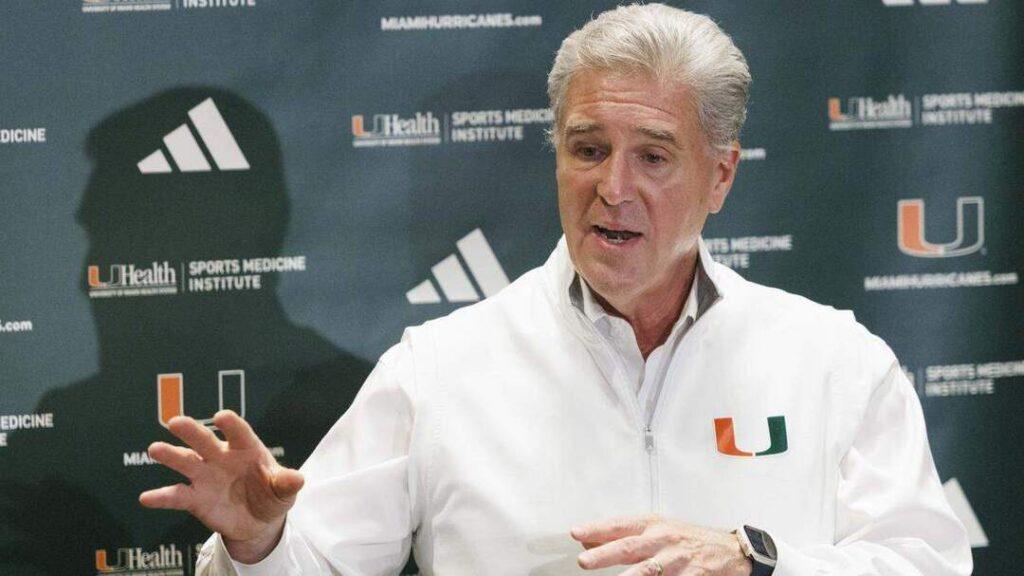
Dan Radakovich retirement is not just an administrative headline for the University of Miami; it is a football story with long-term consequences. Athletic directors do not call third-and-six, but they shape the conditions that determine whether a program has enough money, structure, vision, and institutional patience to win those moments consistently.
Why Dan Radakovich Retirement Matters To Miami Football
When an athletic director exits, fans often sort the news into a category separate from the field. Coaches coach. Players play. Administrators handle budgets, contracts, donor relationships, conference politics, facilities, and the uncomfortable meetings that rarely make highlight reels. That separation is understandable, but it is too clean.
At a major football program, the athletic director is not a background figure. He is part architect, part negotiator, part risk manager, and part institutional translator. He sits between the ambition of the fan base and the caution of university leadership. He knows when a football coach needs support, when a department needs restraint, when donors need access, and when public confidence needs a clearer message. That makes the role central to strategy, even when the work happens away from the sideline.
The timing of Radakovich’s departure is what makes this especially relevant. Miami football has spent years trying to convert resources, recruiting geography, brand power, and nostalgia into something more durable than intermittent excitement. Mario Cristobal’s program is still being judged by whether it can move from promise to proof. The athletic director who helped oversee that phase is now leaving, and Miami has to preserve continuity without losing urgency.
That is easier to say than execute. Leadership transitions invite speculation. They also expose how much of a department’s direction was tied to one person’s relationships, instincts, and internal credibility. If Miami handles this well, the change can become a signal of institutional maturity. If it handles it poorly, the football program could feel the drag before the public fully understands where the friction began.
Athletic Directors Shape Football Without Wearing Headsets
The modern college athletic director has become more consequential because college sports has become more complicated. Football remains the engine, but the engine now runs through media money, NIL collectives, roster retention, facilities arms races, donor coordination, legal uncertainty, and conference positioning. A coach can recruit and develop, but he cannot personally control every system around the roster.
That is where athletic leadership matters. An athletic director sets the tone for how aggressively a school invests, how quickly it adapts, and how coherently it aligns different stakeholders. At Miami, that means understanding a unique market. South Florida offers elite talent, national visibility, and deep cultural energy. It also brings competition for attention, professional sports pressure, and a fan base that can move quickly from belief to frustration.
The football program needs an athletic department that can operate with clarity. It needs NIL planning that feels organized rather than improvised. It needs facilities decisions that match the standard Miami claims to be chasing. It needs donor communication that turns passion into sustainable support. It needs leadership that can tell the difference between necessary patience and comfortable drift.
That is why the Dan Radakovich retirement lands as more than a personnel change. It creates a moment of evaluation. What parts of Miami’s current athletic strategy are strong enough to survive a handoff? What parts need a new voice? What parts still depend too heavily on reputation instead of repeatable execution?
I do not view the athletic director role as a magic lever. No administrator can guarantee wins. But the wrong leadership structure can quietly raise the degree of difficulty for everyone else. A coach who lacks aligned support spends too much time managing noise. A program without a clear financial plan falls behind competitors. A department without disciplined messaging lets speculation fill the vacuum. Those are not abstract problems. They become football problems.
The Miami Job Requires A Specific Kind Of Operator
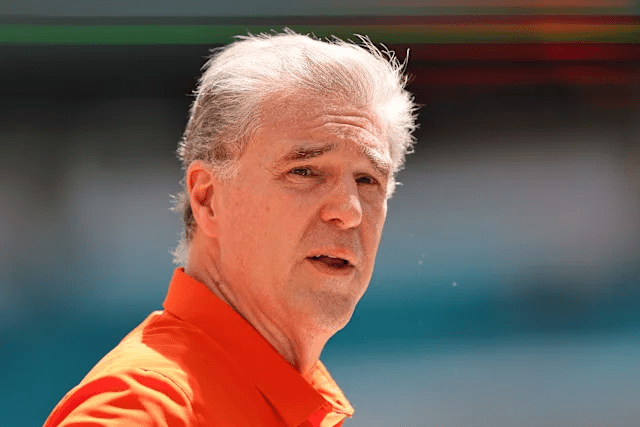
Miami is not a standard college athletics job. That is both the appeal and the complication. The school has national football history, a powerful brand, and proximity to one of the richest recruiting regions in the country. It also operates with constraints and expectations that do not always match neatly.
The next athletic director must understand that Miami football sells possibility, but it survives on execution. The program cannot live permanently on what it used to be. It has to prove that its infrastructure can support what it wants to become. That requires a leader who can work with university executives, donors, coaches, athletes, agents, corporate partners, media stakeholders, and fans without letting any single group dominate the mission.
This is where I think the hire becomes revealing. Miami does not simply need a fundraiser, though fundraising will matter enormously. It does not simply need a former athlete or a media-savvy executive, though credibility and visibility matter. It needs someone who can integrate football ambition with university discipline.
That word, discipline, matters. The NIL era rewards aggressive programs, but it punishes chaotic ones. Money helps. Organization helps more. A department can spend heavily and still lose ground if the spending is fragmented, reactive, or detached from roster strategy. Miami’s next athletic director must understand that the football program’s competitive position depends on a coordinated ecosystem.
The right leader should also understand the emotional texture of Miami. This fan base has a long memory. It also has a low tolerance for institutional excuses. People around the Hurricanes do not want to hear that the market is complicated or that college football has changed. They want Miami to adapt faster than the programs it is chasing. That creates pressure, but pressure is not always bad. In the right hands, it sharpens priorities.
NIL Direction May Be The Biggest Football Variable
The next phase of Miami football will be shaped heavily by NIL. That is not a controversial claim anymore. Every major program has to operate in an environment where roster construction, retention, recruiting, brand management, and player representation are interconnected. Miami’s location and brand should be advantages, but only if the athletic department helps channel them with precision.
NIL is often discussed as if it were simply a money contest. That view is incomplete. Money matters, of course. But athletes and their representatives also evaluate trust, communication, platform, development, fit, and long-term visibility. A messy NIL operation can make a wealthy program look unstable. A disciplined operation can make a program feel more professional than its competitors.
The athletic director’s role is indirect but important. He does not negotiate every deal, and he cannot reduce the entire model to a single number. But he can influence alignment among collectives, donors, coaches, compliance staff, and university leadership. He can shape expectations. He can push the department toward a structure that reduces confusion and protects the coach from unnecessary distractions.
That matters for Cristobal. Recruiting is one of his strengths, but recruiting in this environment requires institutional backup. The staff can identify talent and build relationships. The athletic department must help ensure the broader pitch feels credible. If a prospect senses confusion around opportunity, development, or support, Miami’s brand alone may not be enough.
There is also a retention issue. The transfer portal means keeping the right players is as important as signing them. Depth is fragile. Momentum can disappear quickly. A strong athletic director helps create the conditions where good players believe staying is sensible. That requires trust, not just enthusiasm.
Fundraising And Facilities Are Still Part Of The Football Conversation
College football has not moved beyond facilities. It has simply added NIL, analytics, nutrition, roster management, and player experience to the investment portfolio. The result is not less spending pressure. It is more.
Miami’s facilities conversation has always carried a particular edge because the program’s identity is bigger than its campus footprint. The Hurricanes have national expectations, but they do not operate like every large state-school football machine. That makes capital planning and donor engagement more important. Every investment has to be justified, sequenced, and sold.
Radakovich’s successor will inherit a department that must keep football competitive while supporting the broader athletic program. That is a delicate balance. Football drives attention and revenue, but the athletic director cannot behave as if every other sport is ornamental. The best departments create a sense of shared purpose, even when football receives the largest spotlight.
Still, football will define the hire in the public imagination. That is unavoidable. The next athletic director will be judged by whether the Hurricanes feel more serious, more organized, and more capable of competing with the programs that have turned institutional investment into playoff-level performance.
This is why fundraising is not just about raising money. It is about creating confidence. Donors give more willingly when they believe the department has a plan. They stay engaged when communication is direct. They become strategic partners when leadership can explain not only what Miami needs, but why it needs it now.
The wrong approach can create fatigue. Fans and donors can sense when they are being asked to fund ambition without being shown a coherent roadmap. The right approach creates confidence because each ask fits into a larger direction.
The Successor Must Protect Cristobal Without Shielding Him
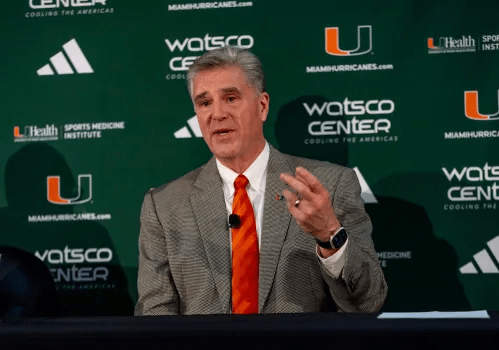
One of the most delicate responsibilities for the next athletic director will be managing the relationship with Mario Cristobal. The football coach is the most visible leader in the department, but he should not have to carry the entire institutional message alone. At the same time, no athletic director should become a public shield that excuses underperformance indefinitely.
That balance requires judgment. Cristobal needs support in recruiting resources, NIL alignment, scheduling strategy, staff infrastructure, facilities, and messaging. He also needs standards. The athletic director’s job is not to hover over the playbook. It is to make sure the football program’s ambitions are matched by process and results.
Miami’s 2026 football conversation already has a breakthrough tone around it, and the leadership transition will inevitably become part of that narrative. For readers tracking the competitive stakes, the broader context around Miami’s 2026 breakthrough conversation helps explain why administrative stability matters at this particular moment.
The next athletic director should not arrive looking to make noise for its own sake. Miami does not need symbolic disruption. It needs practical momentum. That includes clear communication with Cristobal about expectations, resource needs, staff stability, roster management, and what the university considers meaningful progress.
That last phrase matters. Meaningful progress cannot be defined only by preseason optimism, recruiting rankings, or isolated big wins. It has to show up in roster depth, week-to-week consistency, player development, physical identity, and the ability to avoid the avoidable losses that have too often complicated Miami’s return-to-prominence story.
A strong athletic director can help frame those expectations internally before they become public flashpoints. That is not spin. It is governance.
The Risk Is Drift During A Critical Window
The most obvious risk after an athletic director’s retirement is not instant collapse. Good programs do not fall apart overnight because one executive leaves. The subtler risk is drift.
Drift happens when decisions slow down. It happens when donors wait to see who is in charge. It happens when coaches wonder whether commitments will be honored. It happens when staff members start thinking about organizational politics instead of competitive improvement. It happens when the public message becomes vague because nobody wants to speak too firmly before the successor arrives.
That is what Miami must avoid. Football programs operate on calendars that do not pause for executive searches. Recruiting boards move. Transfer decisions arrive. NIL conversations continue. Facility timelines remain. Staff planning does not wait politely for a new signature on the office door.
If the transition is brief, clear, and well-managed, the risk can be contained. If it feels uncertain, rival programs will use it. That is simply how recruiting works. Any hint of instability becomes material for negative recruiting. Miami knows this because every serious program does it.
The opportunity is that a transition can also create fresh energy. A new athletic director can bring sharper donor strategy, stronger business relationships, and a modern view of college athletics. The key is making sure new energy does not become unnecessary turbulence. Miami needs momentum, not theater.
Radakovich’s exit gives the university a chance to clarify what it wants from athletics over the next decade. Is Miami trying to be a nationally aggressive football operation with integrated NIL, bold fundraising, and a relentless player-development model? Or is it content to be a recognizable brand that periodically rises when circumstances align? The next hire will answer that more clearly than any slogan.
Radakovich Leaves A Complicated But Valuable Platform
Radakovich’s tenure should not be reduced to one football result or one administrative announcement. He arrived with a national profile and a long record in college athletics. His Miami chapter included a department trying to modernize, compete, and manage the same economic turbulence affecting everyone else in major college sports.
The official retirement language emphasizes growth and success, including academic performance and broad athletic achievement. That matters because athletic departments should not be evaluated only by football impatience. Yet Miami football remains the public barometer. Fair or not, the Hurricanes shape the outside perception of the entire department.
That creates an interesting inheritance. The next athletic director is not walking into a blank slate. The brand remains strong. The football program has recruiting reach. The market is attractive. The university has national visibility. Those are real advantages.
But advantages do not execute themselves. Miami has learned that repeatedly. Talent geography does not guarantee roster superiority. Brand nostalgia does not guarantee Saturday discipline. Donor potential does not guarantee coordinated investment. A strong successor will treat Miami’s advantages as raw material, not finished product.
That distinction is important. Miami does not need someone who is impressed by the job. It needs someone who understands the work. The next athletic director must be comfortable making decisions that are not immediately popular but are strategically sound. He or she must also know when a department has to move quickly because hesitation is its own cost.
The best leaders in this role tend to combine ambition with emotional steadiness. They know how to sell a vision without becoming captive to hype. They understand football culture without letting football consume institutional judgment. They can speak to a booster in the morning, a coach at lunch, a university president in the afternoon, and a compliance officer before sunset without changing the core message.
What Miami Fans Should Watch Next
The next several weeks should tell us a lot. The first thing to watch is how quickly Miami defines the succession process. Speed alone is not the goal. A rushed hire can be costly. But prolonged ambiguity would not help anyone. The university needs a process that looks serious, confidential where necessary, and decisive when the moment arrives.
The second thing to watch is the profile of the successor. A traditional college administrator would signal one kind of priority. A professional sports executive would signal another. A fundraising-heavy candidate would suggest a particular emphasis. A leader with deep NIL and media instincts might point Miami toward a more commercially aggressive model. None of those paths is automatically right or wrong. The question is fit.
The third thing to watch is Cristobal’s public posture. If the football program continues communicating with confidence, that will suggest internal alignment. If the language becomes guarded, vague, or unusually defensive, that may indicate uncertainty behind the scenes. Coaches rarely say everything, but they often reveal enough.
The fourth thing to watch is donor response. Big transitions become easier when major stakeholders believe they are being consulted and respected. They become harder when influential voices feel surprised or disconnected. Miami’s athletic ambitions require partnership. The new athletic director has to manage relationships without letting the loudest voices become the strategy.
Fans should also keep perspective. Administrative changes are important, but they are not destiny. The football season will still depend on quarterback play, line play, health, staff decisions, defensive improvement, and whether Miami can handle pressure in games it is supposed to win. The athletic director influences the environment. The team still has to perform.
That is the right balance. Treat the retirement as significant without pretending it explains everything.
The Real Meaning Of The Transition
The deeper story is not simply that Dan Radakovich is leaving. The deeper story is that Miami has reached a point where football ambition, athletic department structure, NIL complexity, and institutional leadership are all connected. That is the reality of major college sports now. The schools that understand that connection gain an edge. The schools that treat each part as separate eventually feel the consequences.
Miami has enough strengths to make this transition work. It has brand power, recruiting access, a passionate fan base, and a football coach built for talent acquisition. It also has enough history of uneven follow-through to make the next hire genuinely important. The Hurricanes cannot afford administrative drift while trying to turn optimism into results.
The next athletic director will not define Miami football alone. But that person will help determine whether the program has the alignment needed to compete at the level it talks about. That means better NIL structure, smarter fundraising, continued facilities attention, clear support for Cristobal, and a standard of accountability that does not bend with weekly emotion.
Dan Radakovich retirement matters now because Miami is entering a fragile and valuable window. The football program has reasons to believe, but belief has to be converted into systems, investment, and results. If the university chooses well, the transition can become a platform for the next stage of Hurricanes football; if it chooses poorly, the cost may show up later in recruiting rooms, donor meetings, and fourth-quarter margins.