

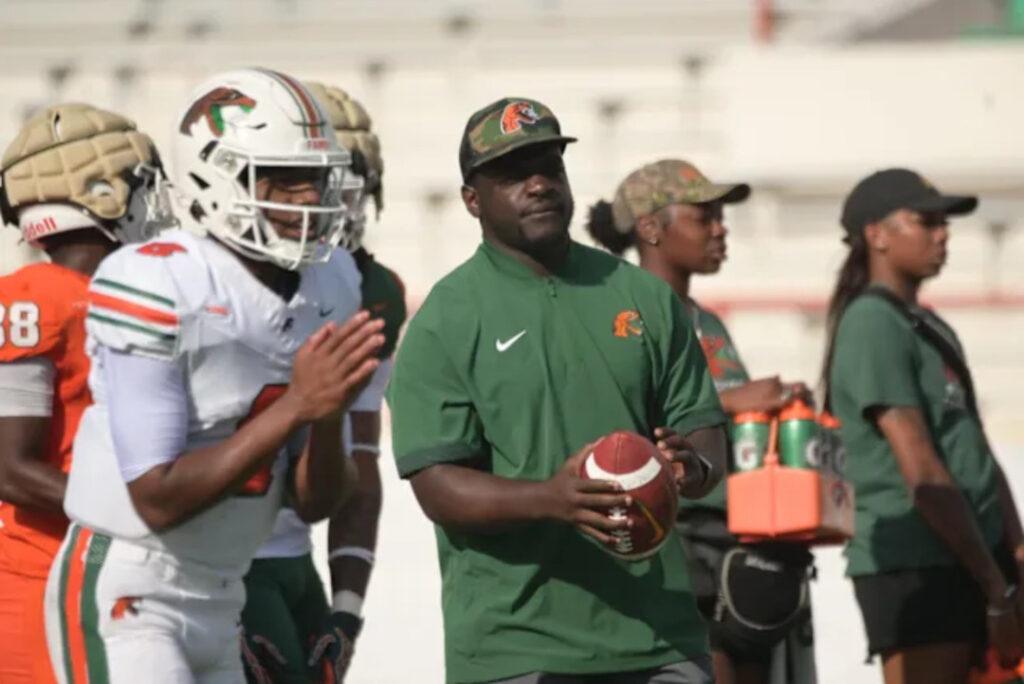
FAMU offensive line depth is not a small spring-football footnote; it is the kind of roster issue that can quietly decide whether a new coaching era begins with stability or strain. For Quinn Gray Sr., the concern is immediate, practical, and revealing: before Florida A&M can talk convincingly about identity, tempo, toughness, or a 2026 reset, it has to answer whether it has enough bodies up front to function the way serious football programs must.
Why FAMU Offensive Line Depth Matters Right Now
The newest conversation around Florida A&M football is not centered on a quarterback competition, a flashy transfer, or a schedule reveal. It is centered on the offensive line, which is exactly where meaningful program evaluations often begin. Skill talent can decorate a roster, but line depth determines whether an offense has a stable floor. Without it, every other ambition becomes conditional.
I see the issue as more than a numbers problem. It is a structural test for a new staff taking over a program that needs clarity. Spring camp exposed a concern that many teams try to minimize publicly: there were not enough available offensive linemen to feel comfortable about the demands ahead. The public detail that FAMU listed nine offensive linemen during spring, with fewer participating in the spring game, gives the topic real weight. This is not abstract roster chatter. It is an operational warning.
The timing also matters. Quinn Gray Sr. is entering his first season as Florida A&M’s head coach, and first seasons are unusually revealing. They expose inherited gaps, test administrative alignment, and force a staff to decide what must be fixed immediately versus what can be developed over time. Offensive line depth belongs in the first category because it touches every snap, every protection call, every short-yardage decision, and every attempt to protect the football.
The larger context makes the conversation sharper. Florida A&M is not merely transitioning to a new coach. The program is also navigating a season affected by Academic Progress Rate penalties, including postseason ineligibility. That means 2026 cannot be measured only by trophies or championship access. It has to be measured by discipline, development, and whether the staff can build something durable under pressure.
The Offensive Line Is Where A Rebuild Becomes Real
There is a reason coaches talk about winning in the trenches even when the phrase feels worn out. Offensive line play is the least glamorous part of a football team until it becomes the most obvious weakness on the field. When protection breaks down, quarterbacks rush reads. When run blocking lacks cohesion, play-callers abandon balance. When injuries arrive, thin rooms turn into weekly emergencies.
That is why FAMU offensive line depth has quickly become the most practical story around the Rattlers. A thin offensive line room changes the way a staff can practice. It limits full-contact work. It complicates rotations. It can also slow evaluation because coaches may not get enough live, representative reps to separate players who are ready from players who are merely available.
For a new staff, that is a difficult place to start. Gray and his assistants have to install language, expectations, technique standards, and accountability systems. They also need enough linemen to create competition. Competition is not a motivational poster; it is a roster mechanism. Players improve when reps are earned, not simply distributed because there are no alternatives.
A shortage up front can distort that process. If a player knows the team needs him just to complete a practice period, the staff has less leverage. If a starter is overworked because the second unit is too thin, the injury risk rises. If young linemen are rushed before their strength, footwork, and recognition are ready, the cost may appear on game day.
The best offensive lines are not built by accident. They require patience, cohesion, and a shared technical vocabulary. Linemen must understand not only their own assignment but also how their movement affects the guard beside them, the back behind them, and the quarterback’s timing. That takes repetition. Repetition requires numbers.
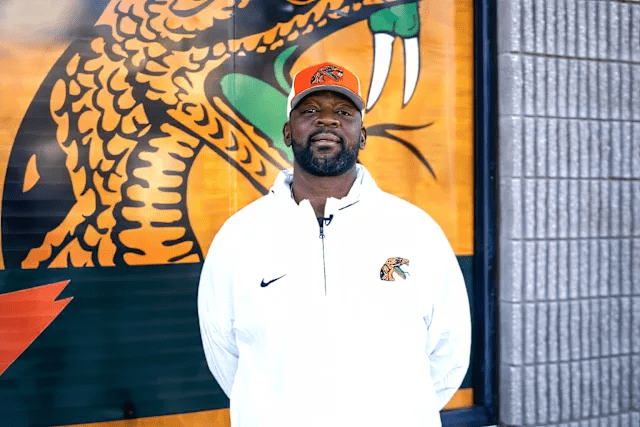
Quinn Gray’s First Roster Test Is About More Than Recruiting
The instinctive response to a depth issue is simple: go find more players. That is part of the answer, but it is not the whole answer. The more serious question is what kind of players FAMU can add, how quickly they can contribute, and whether the staff can avoid panic additions that solve today’s optics while creating tomorrow’s limitations.
Roster construction in college football has become more fluid, but offensive line remains one of the hardest areas to repair quickly. Experienced linemen with playable size, strength, and technique are valuable everywhere. They are not usually sitting around without interest. Even when a staff finds one, the transition is not automatic. Offensive line play demands trust, communication, and scheme comfort. A lineman can be talented and still need time before he is ready to anchor a college offense.
That is the trade-off Gray’s staff must manage. FAMU needs more bodies, but not just any bodies. It needs linemen who can practice, absorb coaching, survive the physical requirements of the season, and fit the program’s academic and cultural expectations. In a normal year, that would be a meaningful challenge. In a year shaped by postseason restrictions and program reset, it becomes a measure of judgment.
This is where leadership shows up. A coach’s first roster decisions often reveal whether he is chasing headlines or building infrastructure. The smartest staffs know when to pursue immediate help and when to protect long-term standards. A thin offensive line room can tempt desperation. It can also force a program to become more precise.
The Rattlers need to evaluate returning players honestly. Who can play winning snaps? Who needs another year in the weight room? Who can swing between tackle and guard? Who can handle center responsibilities if injuries force movement? Versatility matters because depth is not simply the number of names on a roster. It is the number of players a staff can trust in multiple situations.
The APR Backdrop Raises The Stakes
FAMU’s offensive line issue cannot be separated entirely from the broader program environment. The Rattlers are preparing for a season in which postseason competition is off the table because of APR penalties. That changes the psychology of the year. It also changes the way outsiders will judge progress.
The program’s own public messaging around its 2026 football schedule frames a season with recognizable opponents, rivalry stakes, and opportunities for visibility. But the postseason ban means the staff has to sell a different kind of mission. The players have to believe the work matters even when one obvious reward is unavailable. That requires trust.
Offensive line depth becomes part of that message. A team under restriction still needs to look organized. It still needs to protect its quarterback. It still needs to compete on the road, respond after losses, and carry itself like a program with standards. If the line is thin and the offense becomes unstable, the season can start to feel defined by constraints rather than construction.
That is the risk. The opportunity is that a difficult year can become a clarifying one. Without postseason framing, the staff can focus on habits that matter beyond one season: class attendance, strength development, nutrition, film study, communication, and practice intensity. Those are not decorative details. They are the foundation of accountability.
I do not view the APR issue as separate from roster building. Academic stability and football depth both reflect systems. When a program is healthy, it does not live snap to snap or semester to semester. It has processes that catch problems early. It has standards that survive turnover. Gray’s job is not only to win games. It is to restore confidence in the machinery behind the games.
What Thin Line Depth Does To An Offense
When offensive line depth is limited, the effects spread quickly. The quarterback is the first obvious concern, but the deeper impact is strategic. Play-callers become more conservative when protection is unreliable. They may lean on quick throws not because that is the preferred identity but because longer-developing concepts are too risky. They may reduce pulling schemes if guards cannot move cleanly. They may avoid certain run designs if the line lacks continuity.
That creates predictability. Predictability creates defensive comfort. Once opponents sense a team cannot protect certain concepts, the playbook shrinks. A smaller playbook does not automatically mean a bad offense, but it raises the burden on execution. FAMU cannot afford to give opponents that kind of leverage.
Depth also affects physical identity. Coaches often want to run the ball late, close games, and impose tempo. That sounds good in August. By October, it depends on whether the line has enough healthy, conditioned bodies to sustain contact. If the same few linemen play too many snaps, fatigue changes technique. Pad level rises. Feet slow down. Holding penalties appear. Missed assignments multiply.
The issue is especially important for a team trying to reset its culture. Offensive linemen often set the daily tone because their work is repetitive, demanding, and rarely celebrated. A strong room can stabilize a locker room. A thin room can become a constant source of anxiety. That is why the concern deserves more attention than a typical offseason note.
There is also a developmental cost. Younger linemen need reps, but those reps must be managed. Too many too soon can damage confidence. Too few can slow growth. The staff has to create a plan that gives emerging players meaningful work without exposing them before they are ready. That balance requires precision.
The Transfer Portal Is Helpful, But Not Magical
Modern roster management gives programs more tools than they had a decade ago. The transfer portal can help a team address depth quickly, and FAMU should reasonably explore every available option that fits the program. But the portal is not a cure-all, especially along the offensive line.
Linemen are different from plug-and-play perimeter athletes. A receiver can learn a package and contribute situationally. A defensive back can enter a rotation if he understands coverage rules. An offensive lineman has to operate inside a five-man unit where one mistake can ruin the play. The fit has to be technical, mental, and physical.
That means FAMU’s search should be selective. The staff should value players with college practice habits, positional flexibility, and enough maturity to enter a complicated year without requiring excessive emotional management. A lineman who can play guard and tackle might be more valuable than a slightly more talented player locked into one role. A center-capable player could be even more important because center depth protects the entire operation.
The portal also tests a staff’s evaluation speed. Coaches must assess film, health, academic status, personality, and realistic expectations quickly. That is not easy, and mistakes can linger. Adding numbers without adding readiness would not solve the central issue. The goal is not to make the roster sheet look fuller. The goal is to improve the offense’s functional resilience.
High school recruiting remains part of the answer, but not necessarily for immediate relief. Young linemen often need time. FAMU can recruit future starters now, yet the 2026 concern is immediate. The best outcome is probably a blend: add a few experienced bodies who can compete quickly, continue developing returning players, and use the season to identify which young linemen belong in the long-term plan.
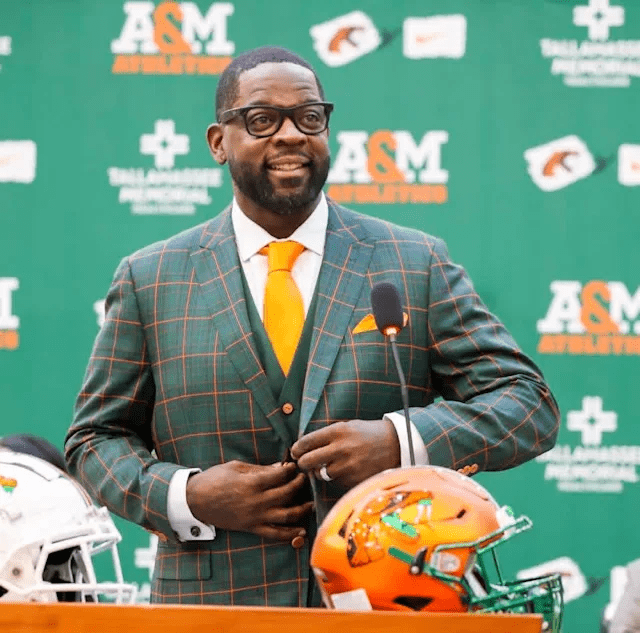
Why The Schedule Makes Depth Even More Important
FAMU’s 2026 schedule carries enough profile to make offensive line stability essential. The Rattlers open with Albany State, which adds an obvious layer because of Gray’s recent history there. They also face South Carolina State in the Orange Blossom Classic and travel to Miami early in the season. Those games bring attention, emotion, and physical demands.
Early-season line problems can become magnified in that setting. A new staff does not get much runway before the schedule starts asking real questions. The Albany State opener will be framed through familiarity. The Orange Blossom Classic brings stage pressure. Miami presents a talent and depth challenge that can expose weaknesses quickly. Even if FAMU’s internal goals are broader than single-game results, the line has to be functional immediately.
That is what makes spring depth concerns so important. Spring is supposed to be the laboratory. Coaches want to experiment, cross-train, and test combinations. If the room is too thin, the experiment becomes constrained. By fall camp, decisions need to sharpen. There is less room for theory and more demand for execution.
Fans often focus on marquee matchups, but coaches know the season is shaped by attrition. The first five games reveal what a team can do. The final five reveal what a team can survive. Offensive line depth is survival infrastructure. It is the difference between adjusting after injuries and reinventing the offense because the roster cannot support the original plan.
For readers who follow the broader state football ecosystem, FAMU’s situation also fits into a larger Florida conversation about transitions, expectations, and program identity. A single offseason headline in Tallahassee can feel very different when placed beside a broader Florida football perspective that shows how quickly narratives form around familiar names, new roles, and institutional momentum.
The Fan Conversation Should Be Serious, Not Reactionary
FAMU fans have every right to be concerned. Offensive line depth is a real issue, and it would be naive to treat it as routine housekeeping. But concern should not become fatalism. Spring rosters are incomplete by nature. New staffs inherit uneven rooms. Players develop between April and August. Additions can still change the picture.
The better fan conversation is not “Is the season already in trouble?” It is “What would responsible progress look like from here?” That question produces a more useful standard.
Responsible progress would mean adding linemen who can compete, not merely fill space. It would mean identifying a dependable first unit early enough for chemistry to form. It would mean developing at least two or three reserve options who can play without the offense collapsing. It would mean protecting the quarterback through scheme, tempo, and smart play design while the line matures.
It would also mean avoiding public overpromising. A first-year coach dealing with roster limitations and postseason restrictions does not need slogans. He needs visible execution. Fans will tolerate a rebuilding year more readily if they see organization, toughness, and improvement. They will not tolerate confusion disguised as optimism.
Gray’s credibility will be shaped by how plainly the program handles these issues. There is strength in acknowledging what has to improve. Coaches do not need to reveal every internal concern, but they do need to project command. When a staff identifies a problem and acts with urgency, players notice. So do recruits. So do supporters.
That matters because FAMU football carries emotional weight beyond one roster. The program’s identity is tied to tradition, community, and pride. A thin offensive line may sound technical, but the response to it says something larger about whether the Rattlers are becoming more stable.
What Success Could Look Like In 2026
Because postseason play is unavailable, FAMU’s 2026 success has to be judged through a broader lens. That does not mean wins are irrelevant. They still matter. Competitive performance always matters. But the most important indicators may be less obvious than the final record.
First, the offensive line must become more reliable by the second half of the season. Early inconsistency would not be shocking. A complete lack of progress would be more troubling. If the Rattlers can protect better, run with more confidence, and reduce negative plays as the year develops, that would be a meaningful sign.
Second, the staff needs to establish a pipeline. At least some young linemen should emerge as credible future contributors. The worst outcome would be surviving 2026 with short-term fixes and entering 2027 with the same uncertainty. This season should build answers, not delay them.
Third, the program needs to connect football performance with academic and cultural repair. The APR penalties make that unavoidable. The players must see that standards are not separate categories. Classwork, practice habits, film preparation, and game-day reliability all belong to the same culture. That kind of integration creates confidence.
Fourth, FAMU should preserve its recruiting pitch. A postseason ban can be used against a program, but a staff with a coherent plan can still recruit. The pitch is simple if the work supports it: come help rebuild a proud HBCU program, compete early, and be part of a reset that will be judged by more than immediate headlines.
That message has to be earned. Recruits and transfers can hear empty language from anywhere. What separates a serious program is evidence. Does the staff develop players? Does the team look organized? Do players improve physically? Do position rooms have purpose? Does the program project authority even under restriction?
The Bigger Lesson For FAMU Football
The offensive line depth issue is compelling because it strips the conversation down to fundamentals. FAMU does not need to solve every question by the end of spring. It does need to show that it understands which questions matter most.
Football rebuilds often get packaged around charisma. A new coach arrives, energy rises, and everyone talks about culture. Culture is real, but it becomes meaningful only when it appears in decisions. How does the staff allocate reps? How does it handle thin rooms? How does it recruit under pressure? How does it protect players from being overextended? How does it respond when the roster reveals uncomfortable truths?
Those answers define the early Gray era more than any introductory press conference. The Rattlers need more offensive linemen, yes. They also need a system that prevents offensive line depth from becoming a recurring emergency. That requires improved evaluation, player retention, strength development, academic support, and roster forecasting. It is not one fix. It is a model.
I would not treat the current concern as a sign that the new era is already compromised. I would treat it as the first honest diagnostic. Every coach inherits something. The public usually sees the motivational language first and the roster reality later. In this case, the roster reality arrived quickly. That may ultimately help FAMU if it forces urgency early enough to matter.
The danger is pretending depth can be patched casually. The opportunity is using the issue to establish standards. A serious response would tell players that no room is exempt from competition. It would tell recruits that development is available. It would tell fans that the staff is not selling fantasy. That kind of honesty creates credibility.
What Readers Should Watch Next
The next phase is straightforward: watch the offensive line room. Not just the names that arrive, but the roles they are expected to play. A transfer addition matters differently if he is projected as a starter, a swing tackle, a reserve guard, or a developmental piece. The details will reveal the staff’s confidence level.
Watch fall camp language carefully. Coaches often signal more than they intend when discussing rotations. If Gray and his staff begin naming multiple linemen they trust, that is a positive sign. If the same few names dominate every update, the concern may remain. If young players are praised for physical growth and assignment consistency, the development plan may be working.
Watch the early play-calling, too. Quick passing, moving pockets, tight end help, and simplified protections can all be intelligent responses to line uncertainty. Those choices should not automatically be read as weakness. Good coaches adapt. The issue is whether adaptation looks proactive or desperate.
The first month of the season will probably tell us whether FAMU has stabilized the position enough to compete with structure. The Rattlers do not need a dominant offensive line overnight. They need a playable one, a improving one, and a deeper one than they had in spring. That distinction matters.
FAMU offensive line depth matters now because it is not merely about five players or a spring-game participation count. It is about whether Florida A&M can build a credible first season under Quinn Gray Sr. while carrying the weight of roster transition, academic penalties, and public expectation. The risk is that thin trenches limit the offense before the new era has room to breathe; the opportunity is that addressing the issue directly could become the first visible proof that the Rattlers are rebuilding with purpose.