

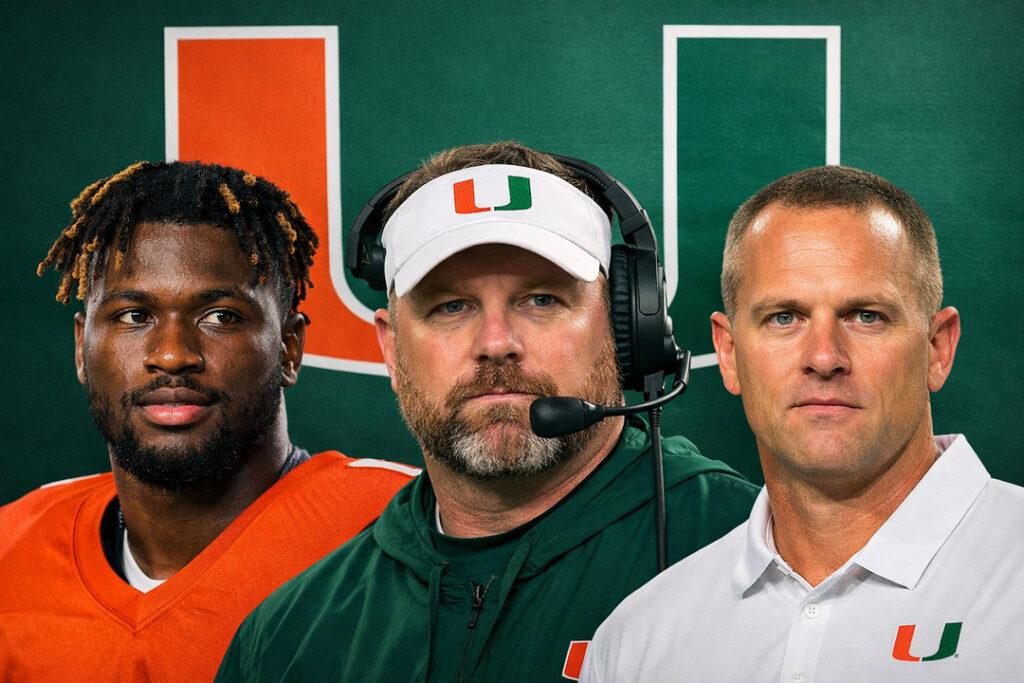
The timing could hardly be better for Miami. As spring practice gives way to a spring game that now feels more like a public referendum on national relevance, the program enters 2026 with the kind of momentum that can change not just a season, but the entire conversation around a brand-name contender.
I see a team that is no longer selling potential alone. Miami is selling proof of concept, and that is what makes this moment different. After pushing all the way to the College Football Playoff title game, the Hurricanes have followed their breakthrough with the two things elite programs need most: a fresh jolt of talent at quarterback and uncommon continuity on the coaching staff.
Why Miami Feels Different This Spring
Programs often talk about building on success, but the truth is that success can just as easily destabilize a roster as strengthen it. A deep postseason run raises expectations, creates transfer pressure, and puts assistants on every shortlist in the sport. Miami has, at least for now, resisted that churn.
That matters. In modern college football, roster construction is fluid, and coaching continuity is often fragile. Miami appears to have secured both at the same time. The addition of quarterback Geor rather, Mensah has become the defining personnel story of the offseason, and the reported extensions for offensive coordinator Shannon Dawson and defensive coordinator Corey Hetherman give the program something even more valuable than excitement: structure.
That combination is why the Hurricanes have become one of the most discussed teams in the country this spring. They are not merely coming off a big year. They are positioned to prove it was the beginning of something durable.
The Quarterback Addition Changes The Ceiling
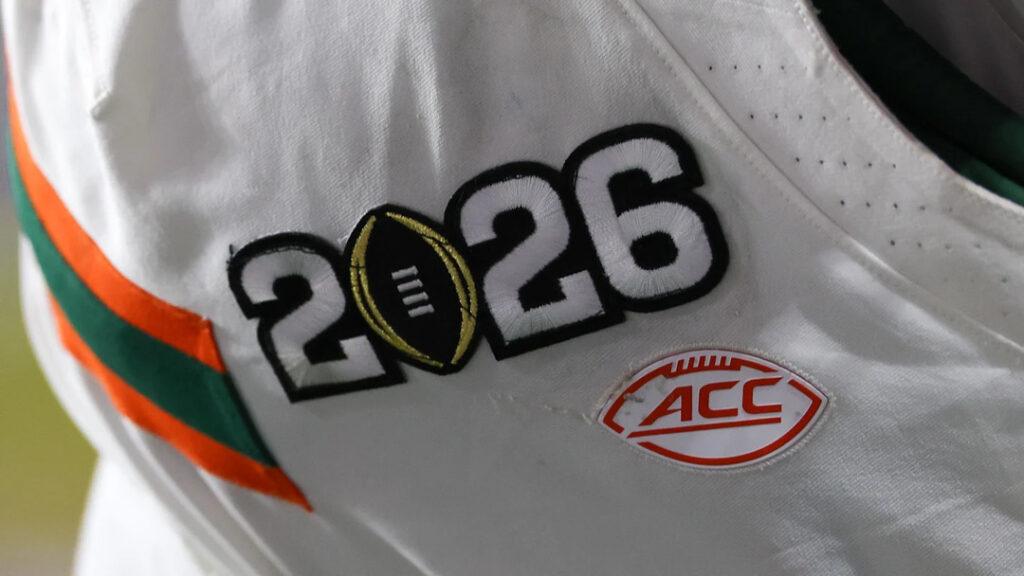
Every contender needs a face, and every offense needs a catalyst. For Miami, the late-cycle addition of Mensah shifts the entire conversation about what 2026 can look like.
Quarterback moves always draw outsized attention, but this one lands differently because of the context. Miami is not trying to climb from mediocrity into relevance. It is trying to turn national respect into championship pressure. That requires more than competency under center. It requires star power, scheme fit, and the ability to win games when the margin for error disappears.
Mensah arrives with the kind of profile that naturally invites major expectations. He has been discussed as a quarterback capable of becoming the centerpiece of Dawson’s offense, and that is the key detail. This is not simply about arm talent or recruiting buzz. It is about whether Miami has found the next player who can elevate an already dangerous system into one of the most feared units in the country.
If that happens, the effect extends beyond the stat sheet. It changes how opponents defend Miami, how the offensive line is evaluated, how skill players are deployed, and how realistic playoff talk becomes in September rather than November.
Continuity Is Miami’s Quiet Advantage
The louder storyline is the quarterback. The more important long-term storyline may be the staff.
For years, the sport has conditioned fans to expect instability the moment a team breaks through. Coordinators leave. Philosophies change. Development resets. Momentum becomes memory. Miami appears to have avoided that trap at a crucial point in its rise.
Keeping Dawson and Hetherman in place gives Miami continuity on both sides of the ball at the precise moment continuity matters most. The offense can evolve without starting over. The defense can build on its identity rather than reintroduce it. Players return to familiar language, familiar expectations, and familiar structures. That is not glamorous, but it is often what separates teams that stay in the national tier from teams that briefly visit it.
Here is how Miami’s spring picture looks entering the weekend:
| Area | Why It Matters Entering 2026 |
|---|---|
| Quarterback | Mensah gives Miami fresh upside and possible star-level production |
| Offense | Dawson’s return preserves scheme continuity and developmental rhythm |
| Defense | Hetherman staying in place supports stability after a breakthrough season |
| Program Trajectory | A CFP title-game run raised the baseline from hopeful to demanding |
| Spring Game | The public’s first real look at how this version of Miami is taking shape |
This is where Miami’s case becomes persuasive. Plenty of teams have talent. Plenty of teams have ambition. Fewer have the chance to pair elite expectations with minimal internal disruption.
What The Spring Game Really Represents
The spring game scheduled for April 18 at 10:15 a.m. is not just a ceremonial close to spring practice. For Miami, it functions as an early stress test for perception.
I do not mean that the final score will matter in any meaningful way. It will not. Spring games are unreliable as predictive tools, and smart observers know better than to overreact to a handful of scripted drives or explosive plays against mixed personnel groups. But they do matter as snapshots. They reveal tempo, confidence, physical development, depth, and how comfortable a team looks carrying expectations.
That is especially true for a team like Miami, which now operates under a very different standard. The Hurricanes are no longer chasing attention. They are managing it.
The spring game will likely sharpen a few central questions:
- How comfortable does Mensah look commanding the offense?
- How much of last season’s edge and confidence carries into this roster?
- Does Miami look like a team protecting momentum, or expanding it?
Those are fair questions because Miami now has a fair claim to national significance. The days when spring in Coral Gables could be treated as a speculative exercise are over.
The National Conversation Is No Longer Hypothetical
This is the real shift, and it is why Miami Hurricanes football has become such a compelling spring subject. The national conversation surrounding Miami is no longer based on brand nostalgia or recruiting flash. It is based on the harder standard of recent achievement combined with credible next-step planning.
That distinction matters. College football is crowded with offseason optimism, much of it disposable. Miami’s optimism carries more weight because it is anchored in what the program just accomplished and what it managed to preserve afterward. Reaching the CFP title game changed the external view of the program. Following that run with a potentially dynamic quarterback addition and staff continuity has strengthened the internal case that the breakthrough was not a one-year spike.
There is still real work ahead, of course. The offensive line must hold up. The quarterback transition must be smooth. The defense must maintain its discipline under heightened scrutiny. Contenders do not emerge from narrative alone. They are built through repetition, depth, and resilience once the games become less forgiving.
Still, Miami has earned the right to be evaluated as more than a storyline. It is now a measuring-stick team, not simply a talking-point team.
Why This Matters Right Now
Spring football is often sold as a preview, but for Miami it feels more like a declaration. The Hurricanes have entered that rare space where expectation is no longer flattering; it is mandatory. That is a sign of health in any program, and it is a sign of real ambition in one that has spent years trying to reclaim its place among the sport’s defining powers.
What matters right now is not just that Miami has momentum. It is that the program has given that momentum shape. A playoff-caliber recent past, a quarterback who could transform the offense, and coordinators positioned to keep the structure intact have created something every contender wants and few truly have: a spring that feels connected to a championship path.
That is why Miami matters today. The Hurricanes are not trying to convince the country they belong. They are trying to show they are ready to stay.