

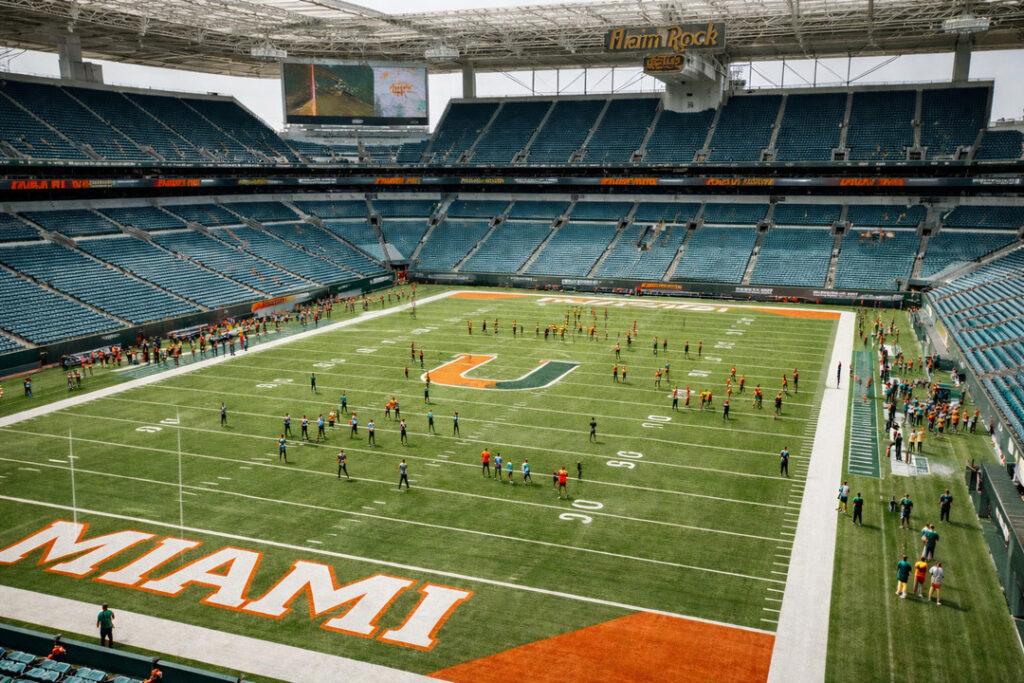
The timing matters. In early April, every spring report in college football is part evaluation and part projection, but at Miami, the latest practice update feels more consequential because it points to what Mario Cristobal wants this program to become next, not just what it has been.
I see this stage of the calendar as the moment when rhetoric starts giving way to identity. That is why the current Miami Hurricanes spring practice conversation carries real weight in Coral Gables: the emphasis is no longer on winter optimism, but on whether the details of development are beginning to match the ambition of the head coach.
Why Spring Work Matters More At Miami
Spring football is often treated as a holding period between recruiting headlines and the start of preseason camp. At a place like Miami, that is too shallow a reading. The program lives under a brighter spotlight than most, and every practice window is judged against the backdrop of expectation, legacy and urgency. Cristobal did not come home merely to stabilize the Hurricanes. He came to harden them.
That is why the latest focus on defensive-line work stands out. When a spring update centers on the line of scrimmage rather than flash positions, I take it as a sign of institutional priorities. Miami is not trying to win April with noise. It is trying to win the fall with force.
For any staff, spring is where culture becomes visible in the smallest ways: how coaches teach, how players respond to repetition, how competition is framed, and which position groups command the most attention. At Miami, the current emphasis suggests a program intent on becoming more imposing where games are usually decided.
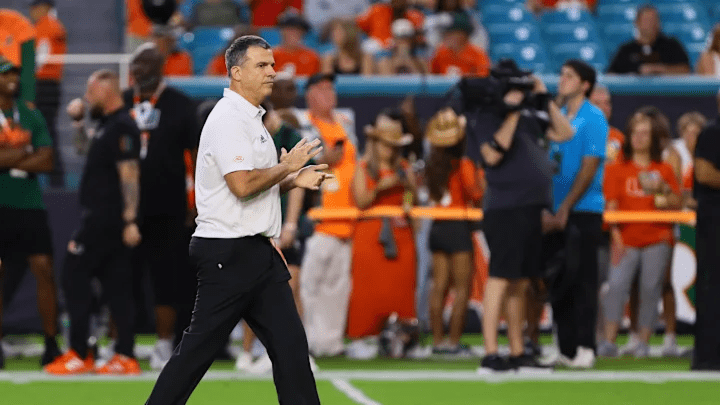
Mario Cristobal’s Blueprint Is Showing
Cristobal has always coached with a builder’s mentality. He values physical standards, practice discipline and the kind of trench consistency that can travel in any weather and against any opponent. That philosophy is not especially glamorous in the social-media era, but it remains one of the most reliable ways to raise a team’s floor while also expanding its ceiling.
What interests me most about Miami right now is that the tone of spring feels aligned with that blueprint. The head coach remains the central figure, not simply because of his title, but because the program still reflects his temperament. The attention on defensive-line development reinforces the idea that Miami is trying to become less dependent on momentum swings and more capable of controlling games snap after snap.
That distinction matters. Plenty of teams can look fast in spring. Far fewer look structurally sound. Miami’s challenge under Cristobal has never been about assembling attention. It has been about assembling dependability. A practice cycle that keeps returning to line play is a clue that the coaching staff understands exactly where sustainable progress begins.
The Defensive Line Is More Than A Position Group
When I look at the defensive line in spring, I am not just looking at sacks, penetration or individual upside. I am looking at how a coaching staff wants to shape the entire personality of its defense. A strong line changes everything behind it. It protects linebackers, clarifies reads in the secondary and gives a coordinator more freedom to call aggressive pressure packages without gambling on every down.
That is why the recent emphasis in Coral Gables deserves attention beyond the position room itself. If Miami’s defensive front is developing the way Cristobal wants, the ripple effect could be significant. A defense that wins early at the point of attack forces offenses into discomfort. It creates longer third downs, shrinks the margin for quarterbacks and changes the emotional temperature of a game.
In modern college football, where spacing and tempo can stress even talented defenses, the answer is often not just athleticism but disruption. Miami appears to be investing heavily in that principle this spring. To me, that is one of the clearest signs that the staff is thinking about the season in practical rather than promotional terms.
Coral Gables Feels Like A Program In The Middle Of Its Real Work
There is a difference between a team that is performing confidence and one that is building it. Spring camp in Coral Gables appears to belong to the second category. That is usually a healthier place for a contender to be in April.
I do not think the most important takeaway is any single quote, observation or practice-day headline. The more revealing point is that Miami’s progress is being framed through the lens of continued work. That is a useful signal in a sport where hype arrives early and often. Programs that make meaningful jumps tend to spend the spring resisting the temptation to declare themselves finished products.
Miami is not there to entertain a narrative. It is there to refine one. Cristobal’s ongoing challenge is to push the Hurricanes past intermittent promise and into repeatable performance. Progress in camp only matters if it tightens the connection between coaching intent and on-field execution. Right now, the language surrounding the team suggests that connection is at least moving in the right direction.
What This Could Mean For The 2026 Outlook
I am always careful not to overstate spring football. Pads and practice reports can illuminate a team, but they cannot certify it. Still, some themes are worth taking seriously, and Miami’s current pattern is one of them.
If the Hurricanes emerge from spring with a sturdier defensive front and a clearer sense of physical identity, they will be better positioned to handle the weekly demands that separate talented teams from durable ones. That matters in an era when schedules are unforgiving and margin for error is thin. Teams that hold up best over time usually have answers in the trenches before they have answers everywhere else.
For Miami, that could translate into more than statistical improvement. It could reshape how opponents prepare and how the Hurricanes respond when games become chaotic. A team that trusts its defensive front plays differently. It carries less anxiety, rotates more effectively and stays viable even when the offense is not operating at peak efficiency.
That is the bigger story I see developing in Coral Gables. The latest spring update is not just a routine checkpoint. It is a window into a coaching staff that appears determined to build from the most consequential part of the field outward.
Why This Matters Right Now
Miami does not need another spring of vague promise. It needs evidence that Mario Cristobal’s program is becoming sturdier, sharper and more difficult to move. The current focus on defensive-line development and steady spring progress suggests that the Hurricanes are at least chasing the right priorities.
That is why this moment matters now. In April, identity is still being written, and at Miami, the early draft points toward a team trying to become harder, more disciplined and more reliable where it counts most. If that trend holds, the story in Coral Gables will be bigger than a practice report. It will be about a program finally beginning to look like the version its head coach has been trying to build.