

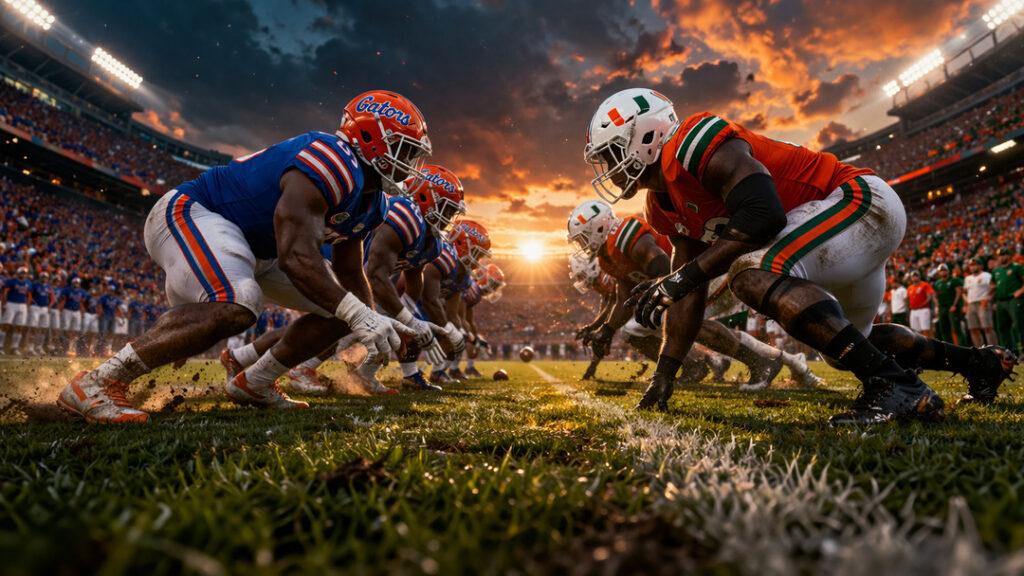
From my perspective, few matchups in college football capture the intensity and evolution of the modern game quite like Florida Gators vs Miami Hurricanes football. This isn’t just a rivalry it’s a collision of philosophies, where tempo meets speed and offensive innovation is tested against defensive aggression.
Heading into the 2026 season, both programs are leaning heavily into what they do best. Florida is embracing a fast-paced, spread offense designed to stretch defenses to their limits, while Miami is doubling down on its identity relentless speed and defensive pressure.
What makes this matchup compelling is how clearly defined these identities are. There’s very little mystery here. Each team knows exactly what the other wants to do, which means execution not surprise will ultimately decide the outcome.
Florida’s Offensive Identity: Tempo, Space, and Vertical Pressure
Watching Florida’s offense develop, I see a unit that is fully committed to tempo and spacing. The Gators are not just trying to move the ball they’re trying to control the rhythm of the game.
Their approach is built on stretching the field both horizontally and vertically. By spreading defenses wide, Florida creates opportunities for explosive plays downfield. This is where their quarterback becomes the centerpiece, orchestrating quick reads and attacking mismatches.
In the context of Florida Gators vs Miami Hurricanes football, this strategy is particularly significant. Miami’s defense thrives on speed, but Florida’s tempo can neutralize that advantage by forcing defenders into reactive positions.
The real question, in my view, is whether Florida can consistently execute under pressure. Against a defense as fast as Miami’s, even small mistakes can quickly turn into turnovers.
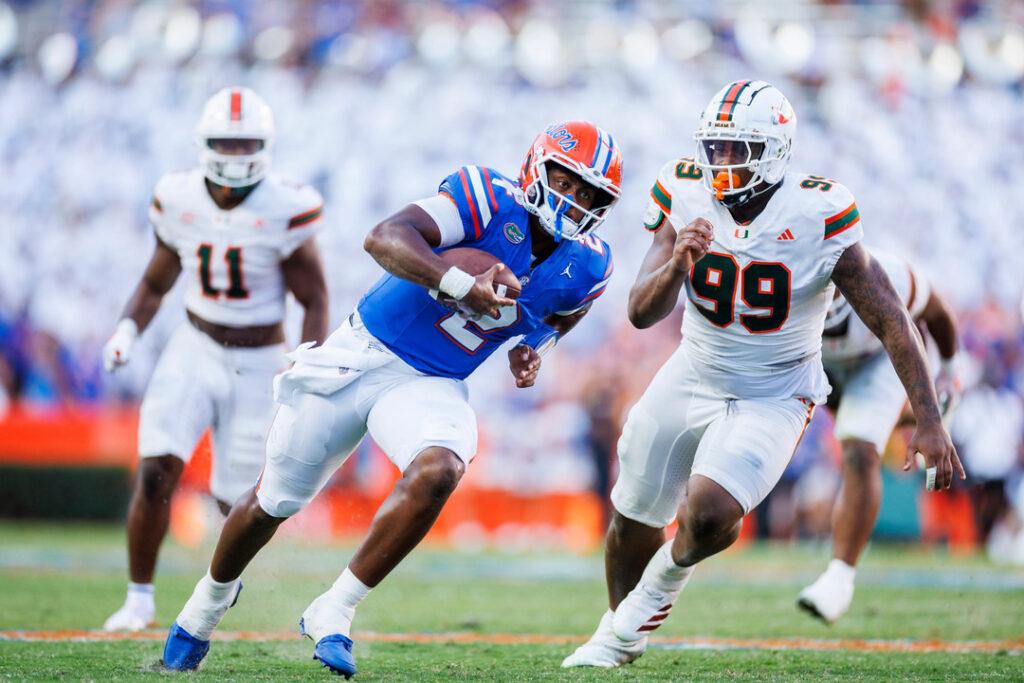
Miami’s Defensive Blueprint: Speed, Pressure, and Disruption
On the other side of the ball, Miami brings a defensive identity that is just as clear and just as dangerous. The Hurricanes are built around speed at every level, from their linebackers to their secondary.
What stands out to me is how aggressively Miami plays. This is not a defense that sits back and reacts. Instead, it looks to dictate the pace, applying pressure and forcing offenses into uncomfortable situations.
In a matchup like Florida Gators vs Miami Hurricanes football, this becomes a critical factor. Miami’s defensive backs are particularly important, as they will be tasked with handling Florida’s vertical passing game in one-on-one coverage.
If Miami can disrupt Florida’s timing whether through pass rush or tight coverage it can shift the entire dynamic of the game. But that approach comes with risk. Aggressive defenses can be exposed if they fail to execute perfectly.
The Tactical Battle: Tempo vs Control
What fascinates me most about this matchup is the battle for tempo. Florida wants to speed the game up, forcing Miami to defend in space and on short rest. Miami, meanwhile, wants to slow things down just enough to maintain control while still applying pressure.
This creates a strategic tug-of-war that will likely define the outcome of custom sports betting platform development.
Florida’s advantage lies in its quarterback play and offensive tempo. If the Gators can establish rhythm early, they can put Miami’s defense on its heels and create scoring opportunities.
Miami’s edge comes from its team speed and defensive pressure. By closing space quickly and forcing turnovers, the Hurricanes can disrupt Florida’s flow and capitalize on mistakes.
From my perspective, this is where games are won and lost not just in talent, but in which team imposes its style first.
Key Players and Matchup Dynamics
While strategy sets the stage, individual performances often determine the final result. In Florida Gators vs Miami Hurricanes football, the spotlight naturally falls on the quarterback and the defensive secondary.
Florida’s quarterback must make quick, accurate decisions under pressure. Any hesitation could allow Miami’s defense to close in and create turnovers.
At the same time, Miami’s defensive backs must hold their ground in one-on-one situations. Florida’s offense is designed to exploit even the smallest mismatch, turning routine plays into explosive gains.
This dynamic creates a high-risk, high-reward environment for both teams. Every snap carries the potential for a big play or a costly mistake.
What the Data and Trends Suggest
Looking at broader trends in college football, it’s clear that offensive efficiency and tempo have become increasingly important. According to the NCAA, modern offenses are generating more yards and points than ever before, emphasizing speed and spacing.
This context adds another layer to the matchup. Florida’s approach aligns with the direction the sport is heading, while Miami’s defense represents the counterbalance an attempt to reclaim control through speed and disruption.
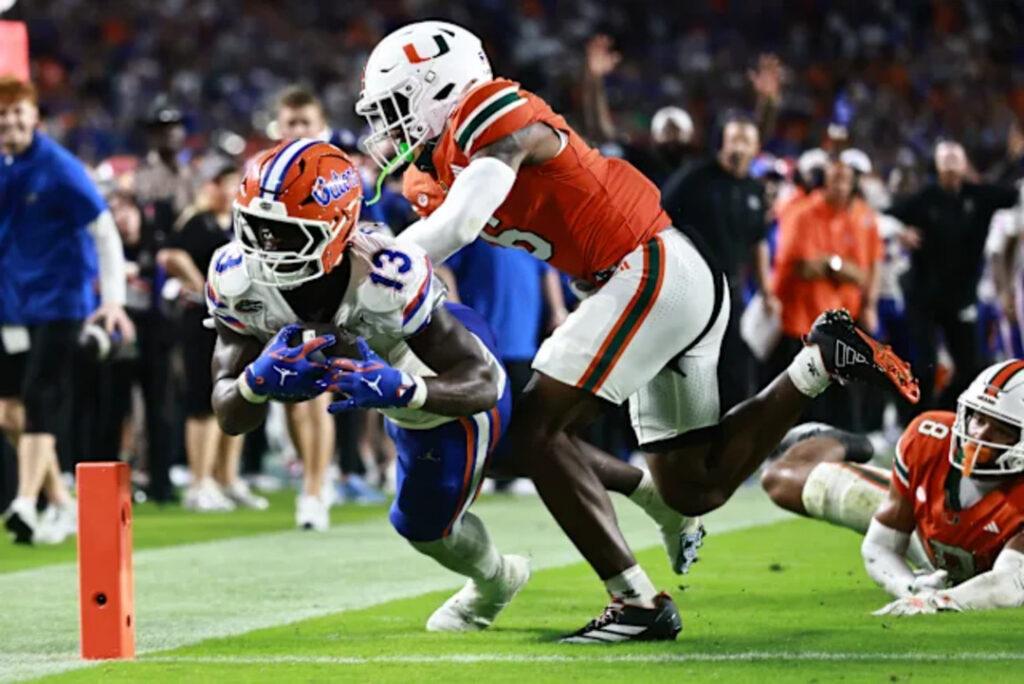
The Deciding Factor: Shootout or Defensive Control?
As I break down this matchup, one question keeps coming back: What kind of game will this become?
If the game turns into a shootout, Florida has the advantage. Their offensive system is built to thrive in high-scoring environments, where tempo and explosiveness can overwhelm opponents.
If Miami can control the pace and force turnovers, the advantage shifts. Their defense is designed to capitalize on mistakes, turning defensive stops into scoring opportunities.
In many ways, this is the defining storyline of Florida Gators vs Miami Hurricanes football a game that could swing dramatically depending on which team executes its strategy more effectively.
A Clash That Defines Modern College Football
In the end, what makes this matchup so compelling is how it reflects the evolution of college football itself. It’s a game defined by speed, strategy, and the constant push-and-pull between offense and defense.
From my perspective, Florida Gators vs Miami Hurricanes football is more than just a rivalry it’s a showcase of where the sport is heading. Florida represents the rise of tempo-driven, high-powered offenses, while Miami embodies the defensive adjustments needed to counter that trend.
The outcome will likely come down to execution, discipline, and the ability to adapt in real time. But regardless of the result, one thing is certain: this is a matchup that captures the essence of modern college football fast, aggressive, and relentlessly competitive.