

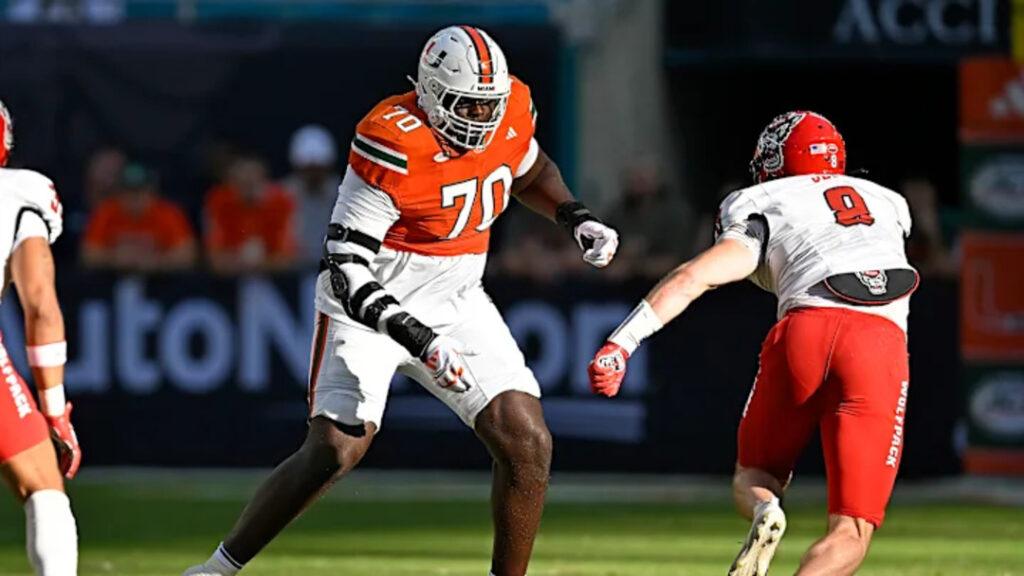
The success of any college football program often begins in the trenches, where offensive linemen provide the foundation for both the running game and passing attack. For the Miami Hurricanes football, strengthening the offensive line has become one of the top priorities as the team prepares for the upcoming 2026 season.
Coaches and analysts widely agree that a consistent and powerful offensive line can transform an entire offense. It protects the quarterback, creates running lanes for ball carriers, and allows an offensive system to function at its full potential. Miami’s coaching staff has emphasized the importance of improving the front line as part of a broader effort to return the program to national prominence.
As offseason workouts, spring practices, and recruiting efforts continue, the Hurricanes are focusing heavily on building depth, experience, and cohesion along the offensive line.
The program’s recent success in developing professional-level talent has also boosted the team’s reputation among recruits. Several Hurricanes players have already seen their professional prospects rise, highlighting the program’s ability to prepare athletes for the next level. This trend is explored further in Miami Hurricanes NFL draft stock on the rise in 2026, which examines how Miami players are gaining attention from NFL scouts.
Why the Offensive Line Matters in Modern College Football
In today’s college football landscape, offensive production is often measured by explosive plays, passing efficiency, and scoring totals. However, none of these elements are possible without effective line play.
The offensive line serves as the first layer of protection for the quarterback while also creating space for running backs to advance the ball. When the line performs well, offenses can maintain balance between the passing and rushing attack, forcing defenses to defend multiple threats.
For teams competing in the highly competitive Atlantic Coast Conference, controlling the line of scrimmage can be the difference between winning and losing close games.
Miami’s coaching staff understands that consistent offensive line play will be critical as the team faces tough conference opponents throughout the season.
Evaluating the Hurricanes’ Offensive Line Depth
One of the primary goals during offseason training is evaluating which players will take on key roles along the offensive line. College football teams typically rotate several linemen during practices and scrimmages to determine the most effective combinations.
Miami has several returning players who bring valuable experience from previous seasons. These athletes have already spent time competing at the college level and are familiar with the speed and physical demands of major conference football.
At the same time, younger players are pushing for opportunities to earn more playing time. Freshmen recruits and second-year athletes are often eager to prove themselves during spring practice sessions, where coaches carefully observe their technique, strength, and decision-making.
Building depth is particularly important for offensive lines because injuries are common during a long football season. Having multiple players capable of stepping into starting roles can help maintain stability throughout the year.
Recruiting Efforts Target Future Offensive Line Talent
Recruiting remains one of the most significant factors shaping Miami’s offensive line strategy. The Hurricanes have long been known for attracting talented athletes from across the country, and the program continues to pursue highly rated offensive line prospects.
High school recruits with size, strength, and strong blocking fundamentals are especially valuable for programs seeking to develop dominant offensive fronts. Coaches spend considerable time evaluating potential recruits through game film, scouting visits, and recruiting camps.
The state of Florida itself is one of the most productive regions for high-school football talent in the United States. This provides Miami with an opportunity to recruit elite offensive line prospects close to home.
Securing commitments from top recruits can strengthen the program for years to come. Many successful college football teams build their offensive lines through multiple recruiting classes, allowing players to develop physically and mentally before taking on starting roles.
The Role of the Transfer Portal in Roster Building
In addition to traditional recruiting, college football programs now rely heavily on the transfer portal to improve their rosters.
The NCAA transfer portal allows players to move between schools more easily than in previous eras. This system has dramatically changed how coaches build and maintain competitive rosters.
Miami has taken advantage of the portal to add experienced offensive linemen who have already competed at the collegiate level. These transfers can provide immediate impact because they arrive with game experience and physical maturity.
For teams looking to address specific weaknesses quickly, the portal can be an effective solution. Coaches can identify players who fit their offensive scheme and bring them into the program without waiting several years for development.
However, balancing transfers with long-term recruiting remains essential. Programs that rely exclusively on transfers may struggle to maintain continuity, so Miami continues to develop players through both pathways.
Coaching Philosophy and Offensive Line Development
Coaching plays a major role in the success of any offensive line unit. Technique, communication, and discipline are essential for linemen working together as a coordinated group.
Miami’s coaching staff has focused on refining fundamentals during spring practices. These sessions emphasize footwork, hand placement, blocking angles, and situational awareness.
Offensive linemen must also develop strong communication skills because they are responsible for recognizing defensive formations and adjusting protection schemes.
During practices, players repeatedly run drills that simulate real game scenarios. These exercises allow the coaching staff to observe how linemen respond to defensive pressure, blitz packages, and shifting defensive fronts.
By strengthening these fundamentals, the Hurricanes hope to create a more cohesive and reliable offensive unit.
Supporting the Quarterback and Running Game
Improving the offensive line could have a significant impact on the Hurricanes’ overall offensive production.
Quarterbacks depend on reliable pass protection to make accurate throws and read defensive coverages. When linemen provide sufficient time in the pocket, quarterbacks can execute complex passing plays more effectively.
Similarly, running backs rely on offensive linemen to open rushing lanes. Well-executed blocking schemes can allow running backs to reach the second level of the defense, leading to larger gains.
A strong offensive line also helps control the tempo of the game. Teams that establish a consistent running attack can manage the clock, maintain possession, and keep opposing offenses off the field.
For Miami, improving this area could lead to a more balanced and productive offensive strategy during the upcoming season.
Expectations for the 2026 Season
As the Hurricanes continue preparing for the next college football season, expectations remain high among fans and analysts.
The program has invested heavily in recruiting, player development, and coaching improvements. Strengthening the offensive line represents a key step in building a more competitive team capable of contending in conference play and community economic development events.
Spring practices and offseason workouts will play a crucial role in determining which players emerge as starters. Coaches will continue evaluating performance, chemistry, and consistency before finalizing the lineup for the season opener.
If the Hurricanes succeed in developing a reliable offensive line, the team could see noticeable improvements in both scoring production and overall performance.
Conclusion
The Miami Hurricanes football are placing a strong emphasis on improving their offensive line as they prepare for the 2026 college football season. Through a combination of recruiting, transfer portal additions, and intensive offseason training, the program aims to build a deeper and more effective unit in the trenches.
Offensive line development may not always receive the same attention as quarterbacks or skill position players, but it remains one of the most important factors in determining a team’s success.
For Miami, strengthening this area could provide the foundation needed to elevate the entire offense and compete more effectively within the Atlantic Coast Conference. As the season approaches, the progress made along the offensive line will likely play a major role in shaping the Hurricanes’ performance on the field.