

The Revenue Sharing Math Reshaping The Swamp
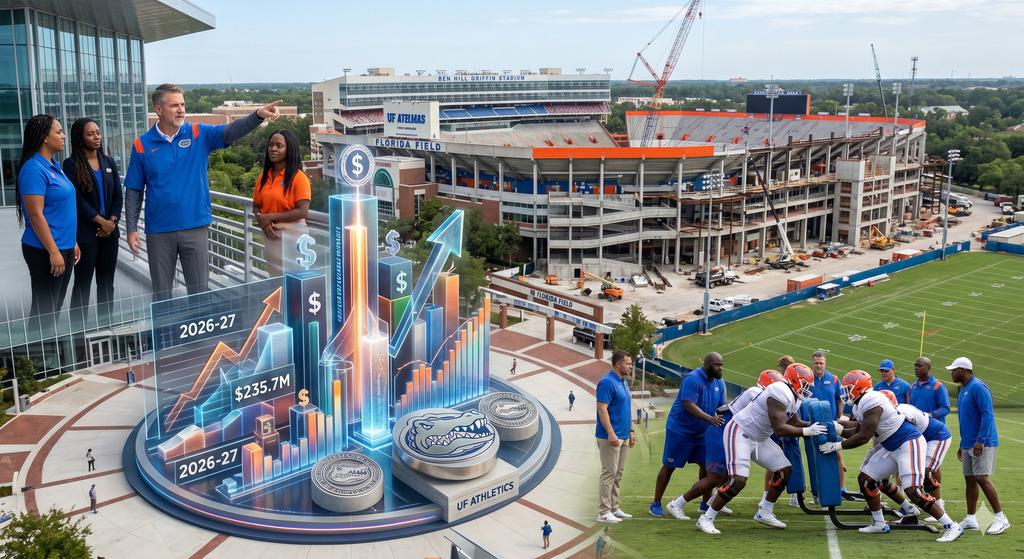
The University of Florida recently approved a 2026-27 athletics budget that expands total spending to $235.7 million. This $30.4 million year-over-year increase reveals exactly how the University Athletic Association is adapting to the post-Napier era. Spending jumped by an aggressive $55 million over the past two years. The new financial structure directly correlates to on-field product quality and betting market valuation.
Revenue sharing models have drastically altered how college football programs operate in the modern SEC. Florida allocated a massive $46.2 million for scholarships and athlete revenue-sharing expenses in this exact budget. This represents a $7 million increase from the previous fiscal year alone. The expanded SEC television contract and the newly negotiated College Football Playoff agreement provide the capital required to sustain this aggressive compensation model. SEC and NCAA distributions alone are projected to inject $74.1 million into the athletic department this year.
Florida’s financial baseline impacts how oddsmakers view the program’s long-term stability. The betting market prices in institutional backing when setting season win totals and future lines. Programs capable of absorbing massive payroll shifts without compromising their recruiting infrastructure consistently hold higher market floors. Sharp bettors track these financial indicators by reviewing SEC revenue distribution models to see how Florida stacks up against regional conference rivals. The exact financial data provides a transparent look at which programs possess the resources to survive a brutal twelve-game schedule.
Football Drives the University Athletic Association

Jon Sumrall took over a roster requiring immediate schematic adjustments and cultural realignment. The coaching transition incurred significant turnover costs, pushing salaries across Florida’s 21 athletic programs to $100.1 million. The football staff payroll represents a heavy percentage of that astronomical figure. Sumrall secured a six-year deal paying $7.5 million annually, a clear signal that the administration expects rapid returns on their investment.
Football functions as the undisputed financial engine for the entire UAA structure in Gainesville. The program is projected to generate $140.5 million in 2026-27. This single sport accounts for a staggering 60 percent of total university athletic revenue. By comparison, the men’s basketball program is budgeted to produce just $21.2 million. The massive surplus generated by football covers the deficit run by non-revenue sports and funds massive capital infrastructure projects.
| 2026-27 Florida Athletics Financials | Projected Value |
| Total UAA Budget | $235.7 Million |
| Total Football Revenue | $140.5 Million |
| SEC & NCAA Distributions | $74.1 Million |
| Athlete Revenue-Sharing & Scholarships | $46.2 Million |
| Total Program Salaries | $100.1 Million |
The efficiency of this financial engine dictates the caliber of talent Sumrall can acquire via the transfer portal. The offshore betting market adjusts point spreads based on perceived roster depth. A fully funded NIL operation and high-end positional coaching staffs create the depth required to cover tight SEC spreads late in the fourth quarter. You can find more context on how market perception shapes expectations by reading our piece on analyzing early 2026 betting lines. Depth in the trenches wins football games in November. The Gators now possess the checking account required to buy that depth.
The Ben Hill Griffin Stadium Renovation Project

The UF Board of Trustees authorized a massive $1.45 billion renovation for Ben Hill Griffin Stadium. Construction begins immediately after the 2026 season concludes. The project represents the most expensive stadium renovation in college football history. The athletic department expects this infrastructure overhaul to add $65 million in annual revenue upon completion prior to the 2030 campaign.
The administration chose to maintain the 88,548 seating capacity. Keeping the capacity protects the noisy home-field advantage that directly influences point spreads on Saturday nights. Home-field advantage in The Swamp traditionally accounts for a full three-point swing in offshore betting markets. The renovations will expand concourses, upgrade the stadium sound system, and modernize premium seating options to maximize donor contributions.
Capital projects of this magnitude send a loud message to elite high school recruits. The investment proves the university will spare no expense to maintain a top-tier SEC environment. Sumrall can leverage these blueprints during recruiting visits to secure commitments from elite defensive linemen and boundary cornerbacks. Modern facilities attract the premium athletes necessary to execute his high-pressure defensive schemes. Evaluate how facilities impact overall program ratings by checking current college football futures markets. Elite programs build elite stadiums to house elite rosters.
Schematic Returns on Institutional Investment
Sumrall built an impeccable reputation for defensive efficiency at Troy and Tulane. His scheme relies heavily on athletic linebackers and a disruptive defensive front. Executing this system in the SEC requires highly compensated assistant coaches and top-tier talent acquisition. The $100.1 million total salary pool allows Sumrall to hire and retain elite coordinators like Brad White on defense and Buster Faulkner on offense.
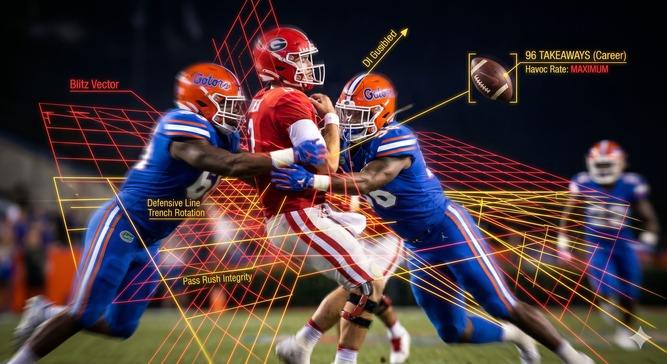
The defensive baseline shifts dramatically when a program flexes its financial muscle. Florida’s newly expanded budget guarantees the Gators can stockpile talent on the defensive line. A deep defensive trench rotation keeps pass rushers fresh late in games. Fresh pass rushers force errant throws, creating the exact turnovers that define the Sumrall coaching tenure. His teams produced an astonishing 96 takeaways over his four previous seasons as a head coach.
We can track the relationship between athletic spending and defensive success metrics. Top-spending programs consistently rank higher in defensive Havoc rates and lower in explosive passing plays allowed. The financial backing gives the defensive coordinator the schematic freedom to run complex bracket coverages and aggressive blitz packages. If you want to track how these defensive metrics rank nationally, look at the advanced defensive metrics data. Money buys the athletes capable of executing complex defensive geometry.
Betting Futures and the Sumrall Valuation
Oddsmakers face a challenging valuation process with the 2026 Gators roster. The program possesses elite financial resources and a proven defensive-minded head coach. The transition year variables make establishing accurate win totals difficult for the sportsbooks. The $235.7 million budget guarantees Florida will compete financially for impact transfers at critical positions like quarterback and offensive tackle.
Early market signals suggest sharp bettors respect the Sumrall hire. His 43-12 overall head coaching record commands immediate respect from offshore syndicates. The market expects Florida to play tight, low-scoring games defined by defensive stops and calculated offensive ball control. This distinct style of play often creates value on the under for team totals.
The structural financial changes within the UAA provide a sturdy floor for the entire football program. A $140.5 million revenue stream guarantees Florida remains competitive in the SEC arms race. The administration aligned the financial reality of the modern era with aggressive coaching acquisitions. The betting public will soon recognize how this specific budget translates into on-field execution. Keep an eye on line movement throughout the summer to spot value before the public catches up to the new economic reality in Gainesville. Florida is spending the money required to win football games.
The Path Forward for Florida Athletics
The numbers dictate a clear path forward for the university. Increased spending brings increased expectations from the fan base and the alumni network. Sumrall must translate the $30.4 million budget increase into tangible results on the gridiron. The SEC forgives many things, but it rarely forgives a poor return on a massive financial investment.
The defensive unit will carry the burden of these expectations early in the season. Brad White will deploy his athletes to mask any offensive inconsistencies. The defensive line must generate pressure without relying on exotic blitz packages. A reliable four-man pass rush allows the secondary to sit back in two-high safety shells, neutralizing the explosive passing attacks found throughout the conference.
Florida positioned itself to absorb the financial shockwaves hitting college athletics. The administration secured the funding required to operate at the highest level of the sport. The focus now shifts entirely to the coaching staff and the players. The front office delivered the resources. Sumrall must now deliver the victories. Track the financial data alongside the on-field metrics to find the true value of the 2026 Florida Gators. The blueprint is fully funded and ready for execution.