

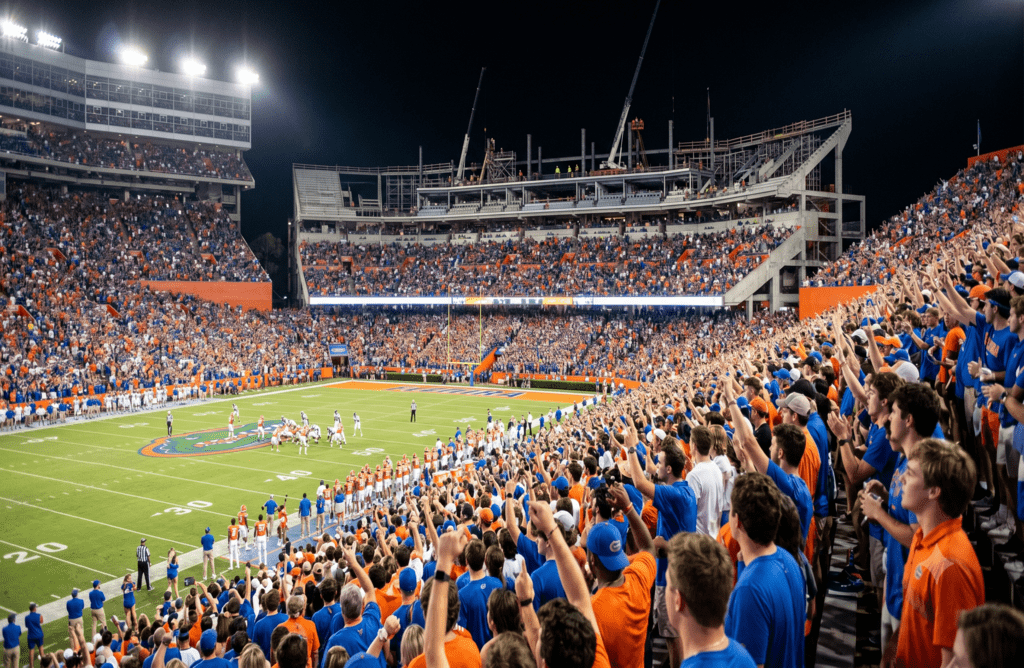
The University of Florida Board of Trustees finalized contract negotiations with Manhattan Construction and AECOM Hunt to greenlight a massive $1.45 billion transformation of Ben Hill Griffin Stadium. This historic project represents the single most expensive stadium renovation in college football history, dwarfing prior modern arena capital modernizations across the SEC and Big Ten landscapes. While structural changes will introduce brand-new open-air luxury suites, expanded concourses, and state-of-the-art sensory technology, the athletic department made a deliberate operational decision that caught the immediate attention of college football syndicates and professional odds compilers.
The stadium will maintain its exact historical capacity of 88,548 seats. Early projections from structural consultants suggested cutting overall seating down to roughly 84,399 in order to ease modern space constraints. However, preserving the physical footprint ensures the continuation of the precise acoustic environment that defines Saturday nights in Gainesville. From an institutional finance perspective, keeping the seating bowl intact while layering high-yield premium inventory allows the venue to act as an enhanced revenue driver without diluting the home-field environment. Sharp sports bettors track these infrastructure configurations because stadium design directly correlates with home-field point spread adjustments in the offshore market.
Institutional layout changes frequently shift how Vegas operators price season win totals and early autumn game lines. When a high-profile program artificially reduces seating or moves the student section away from the opposing bench, the market responds by shaving fractions of a point off the home-team advantage baseline. Maintaining maximum seating volume protects the raw crowd density that disrupts visiting offensive lines. Football analytics firms monitor these arena adjustments via specialized college football futures markets to identify which historic venues retain their mathematical edge under revised structural frameworks.
Acoustic Geometry and the Three-Point Spread Premium

Home-field advantage in the modern SEC is a tangible financial asset priced directly into weekly point spreads. For decades, a standard home-field assignment across the collegiate gridiron guaranteed a flat three-point premium for the hosting team. Advanced tracking metrics and point-spread efficiency models show that uniform calculation has vanished. Today, generic modern venues frequently receive an edge of merely 1.5 to 2 points, whereas top-tier structures like The Swamp retain a full three-point swing. The physical architecture of Ben Hill Griffin Stadium features steep, vertical seating banks wrapped tightly around the playing surface, effectively trapping crowd noise and reflecting it directly onto the field.
This specific acoustic setup exerts immense psychological pressure on opposing communication systems, forcing silent counts and leading to pre-snap penalties. The financial engine of the program relies heavily on preserving this home-field edge to sustain its long-term market floor. If the school had moved forward with a reduced seating capacity, offshore betting markets likely would have trimmed Florida’s home-field advantage projection down to 2.5 points. Over the course of a seven-game home schedule, that half-point reduction carries significant mathematical weight for betting syndicates managing heavy volume.
| Stadium Capacity and Home-Field Scenario | Acoustic Value Rating | Estimated Spread Impact |
|---|---|---|
| Current / Post-Renovation Seating (88,548) | Elite Baseline | +3.0 Points |
| Proposed ADA-Reduced Seating Blueprint (84,399) | Moderate Dilution | +2.5 Points |
| Standard FBS Neutral Site Adjustment | Zero Weight | +0.0 Points |
Roster construction models under new head coach Jon Sumrall depend heavily on this stadium configuration to maximize defensive performance indicators. A noisy stadium environment accelerates the pass rush by delaying opposing offensive tackle jump-off times by fractions of a second. This structural reality allows a defensive front to create standard pressure packages without requiring heavy blitzing. Analytical bettors evaluate how structural changes and roster turnover intersect by reviewing specialized betting insights to spot discrepancies between historical crowd noise performance and newly integrated coaching philosophies.
Revenue Generation in the Athlete Pay Era

The $1.45 billion structural overhaul is engineered to nearly double the annual returns of a stadium that already operates as a high-performing financial vehicle. Currently, the athletic department generates approximately $75 million annually through the stadium via ticketing, concessions, and traditional corporate sponsorships. Upon completion of the multi-year project ahead of the 2030 season, the facility is projected to deliver a massive $65 million annual revenue lift, bringing total stadium-generated income to $140 million per fiscal year. This aggressive capital growth aligns directly with the economic shifts sweeping through the power conferences.
The modern athletic landscape requires historic programs to identify independent cash flows to support changing player compensation frameworks. The University Athletic Association recently approved a record-setting $235.7 million total athletic budget for the 2026-27 fiscal year, representing a sharp 12.9 percent year-over-year jump. A heavy portion of that increase stems from the $46.2 million earmarked for player scholarships and direct athlete revenue-sharing expenses following recent national legal settlements. Because football drives the financial health of the entire athletic ecosystem, expanding premium stadium revenue ensures the program can fully fund its roster acquisition pipeline.
| Metric | Amount |
|---|---|
| Current Annual Revenue | $75.0 Million |
| Projected Annual Revenue Increase | +$65.0 Million |
| Projected Annual Revenue After 2030 | $140.0 Million |
The corporate strategy underlying the renovation replaces low-yield seating space with highly monetized open-air inventory. The project adds 63 premium suites on the east side of the facility while revamping 82 existing luxury boxes. This approach generates a much higher average revenue per seat, allowing the department to hit its new financial targets while keeping the total bowl size at 88,548. Corporate analysts track these collegiate fiscal expansions by examining SEC revenue distribution models to gauge how regional programs balance expanding operational debt with immediate player roster funding needs.
Recruiting Metrics and Long-Term Program Valuation
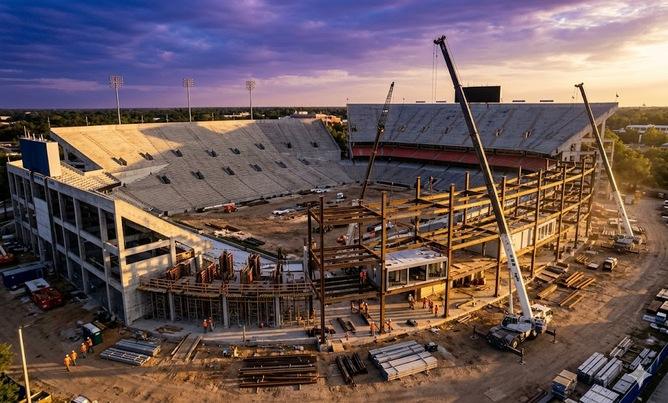
The capital commitment to Ben Hill Griffin Stadium serves a clear dual purpose, operating as an immediate financial driver while functioning as an essential tool for high-end talent acquisition. High school prospects and transfer portal targets prioritize modern training spaces and high-end game-day presentation when selecting a program. Maintaining an active stadium environment that packs 88,548 fans into an engineered acoustic bowl sends a strong message to elite defensive linemen and edge rushers who want to showcase their skills in front of a national audience.
Sumrall can leverage these upcoming facility upgrades during intensive summer recruiting visits. When elite athletes look at architectural blueprints showing expanded open-air player facilities and upgraded premium zones, it increases the long-term stability rating of the program. The institutional decision to carry significant long-term debt to build a premier collegiate facility proves that the administration intends to keep pace with top-tier athletic spending trends nationwide. Roster analytics verify that top-tier talent acquisition underpins point spread durability over a multi-year window.
Line movement throughout the summer months often reflects how professional betting groups view institutional investment. Programs that secure major facility backing and maintain a stable home-field advantage floor consistently attract early market interest. The public often looks solely at returning production and depth charts, missing the deeper financial realities that dictate whether an organization can sustain its roster depth through the grueling late-season stretches of an SEC calendar. The strategic decisions made in the boardroom in Gainesville ensure the team will possess both the financial capacity and the home-field environment needed to compete at the highest level of the sport.